

Class: Primary Five
Term: First Term
Subject: Pre-vocational Studies
Curriculum Theme: Agricultural Science
Previous Lesson: How To Grow Crops, Weeding And Staking
Topic: Application of Pesticides
Content/Learning Area: Explain what pesticides are and why thay are used in crop production, Appreciate the importance of using pesticides safely to protect crops and the environment, demonstrate the correct method of applying pesticides to crops
Time Allocation: [Time Allocation to be inserted here]
Performance Objectives
By the end of the lesson, pupils should be able to:
- Cognitive Domain:
– Explain what pesticides are and their uses in crop production.
– Identify different types of pests controlled by pesticides.
– Describe the steps involved in applying pesticides.
– Explain the importance of safe pesticide use.
- Affective Domain:
– Appreciate the importance of using pesticides safely.
– Show concern for environmental protection during pesticide application.
– Develop responsible attitudes towards pesticide use.
- Psychomotor Domain:
– Demonstrate the correct method of preparing pesticides for application.
– Show the proper way to apply pesticides to crops using appropriate tools.
– Practice safe handling and disposal of pesticides.
- Social Domain:
– Work cooperatively with peers during practical activities.
– Share knowledge and understanding of pesticide application with others.
– follow instructions and safety guidelines during the lesson.
Reference Materials
- 9 – years Basic Education Curriculum
- Abuja Educational Resource Centre Scheme of work
- NAPPS National Unified Scheme of Work
- Relevant Textbooks
Instructional Materials
To deliver this lesson, the teacher will make use of the following materials:
- Whiteboard or chart
- Markers or chalk
- Pictures or diagrams of pesticides and their application
- Sample pesticide containers (empty and properly labeled)
- Spray bottles
- Gloves and protective clothing (optional)
Rationale for the Lesson
this lesson is crucial for equipping pupils with the knowledge and skills necesary for safe and effective pesticide application. Understanding this process is vital for accomplished crop production and contributes to food security. safe pesticide use also protects the environment and human health.
Prerequisite/Previous Knowledge
The teacher will begin by asking pupils what they remember from the previous lesson on weeding and staking.A brief review will be conducted, followed by introducing the topic of pesticide application as the next crucial step in crop production. The teacher will then pose a question: “What are some challenges farmers face in protecting their crops from pests and diseases?”
Lesson Content
How To Grow Crops: Application Of Pesticides
Pesticides are substances used to control pests that harm crops, including insects, rodents, weeds, and diseases. They help protect crops and ensure good harvests.
what are Pesticides?
Pesticides are chemicals used to control pests. They come in liquid, powder, or granule forms. They kill or repel pests, preventing crop damage.
Why are Pesticides Used?
Pesticides are used for several reasons in crop production. These include:
- To protect crops from pests that damage leaves,stems,and fruits,or spread diseases.
- To increase crop yields and the amount of food produced.
- to reduce the cost of food production by minimizing crop loss to pests.
- To improve the quality of crops by preventing pest-related defects.
- To ensure a stable food supply by reducing crop losses due to pests.
How to Apply Pesticides
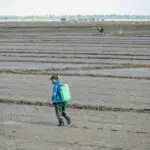
Applying pesticides correctly is essential for effective pest control and safety. The following are the steps involved in applying pesticides:
- Prepare the Pesticide: Carefully read the label instructions, measure the correct amount, and mix with water if needed.
- Apply with Care: Use a spray bottle or other suitable tool to apply evenly, covering all plant parts but avoiding over-spraying.
- Wear Protective Gear: Always wear gloves, a mask, and protective clothing to avoid exposure.
- Apply on a Calm Day: Choose a calm day to prevent chemicals from drifting.
- Follow Up: Monitor crops to ensure pest control and plant health.
- Clean Equipment: After use, clean all equipment thoroughly to prevent contamination.
- Document Application: Keep a record of the pesticides used, the date of application, and the area treated.
importance of Safe Pesticide Use
Safe pesticide use is crucial to protect human health and the environment. The following are some guidelines for safe pesticide use:
- Always read and follow label instructions: The label provides crucial information for safe and effective use.
- Store pesticides properly: Store in a locked cabinet or shed, out of reach of children and pets.
- Dispose of pesticides properly: Do not pour down the drain or into the garbage. Follow label instructions for disposal.
- Use pesticides only when necessary: Explore choice pest control methods first.
- Wear protective gear: Always wear gloves, a mask, and protective clothing when handling pesticides.
- Wash hands thoroughly: After handling pesticides, wash hands with soap and water.
- Keep children and pets away: Ensure children and pets are not present during pesticide application.
Teaching Methods
To deliver this lesson, the teacher will adopt the following methods: Description, Demonstration, Question and Answer, and Practical Activity.
Instructional Procedures
To deliver this lesson, the teacher will adopt the following steps:
Step 1: Introduction
Time: 5 minutes
Teaching Skill: Set Induction
Teacher’s Activity: Briefly review the previous lesson.Introduce the topic of pesticide application and its importance.
Pupils’ Activity: Participate in the review, listen attentively to the introduction.
Step 2: Explanation of Key Concepts
Time: 15 minutes
Teaching Skill: Explaining, Defining
Teacher’s Activity: Explain what pesticides are, their types, and why they are used.
Pupils’ Activity: Listen attentively, take notes, and ask clarifying questions.
Step 3: Demonstration/Guided Practice
Time: 15 minutes
Teaching Skill: Demonstrating, Guiding
Teacher’s Activity: Demonstrate the correct method of preparing and applying pesticides, emphasizing safety precautions.
Pupils’ Activity: Observe the demonstration carefully, ask questions, and participate in guided practice.
Step 4: Autonomous Practice
Time: 10 minutes
Teaching Skill: Monitoring, Guiding
Teacher’s Activity: Supervise pupils as they practice applying pesticides (using water and empty spray bottles).
Pupils’ Activity: Practice applying pesticides under teacher supervision.
Step 5: Note-Taking
Time: 5 minutes
Teaching Skill: Guiding, Summarizing
Teacher’s Activity: Guide pupils in summarizing key points and writing notes.
Pupils’ Activity: Take notes and summarize key concepts.
Step 6: Evaluation/Review
Time: 10 minutes
Teaching skill: Questioning, Assessing
Teacher’s Activity: Ask questions to assess pupils’ understanding.Pupils’ Activity: Answer questions to demonstrate their understanding.
Step 7: Conclusion
Time: 5 minutes
teaching Skill: Summarizing,Concluding
Teacher’s Activity: Summarize the lesson and assign homework.
Pupils’ Activity: Listen attentively and take note of homework.
Lesson Keywords
- Pesticides – Substances used to control pests that harm crops.
- Pests – Organisms that damage crops, including insects, rodents, weeds, and diseases.
- Crop Yield – The amount of crops produced per unit area.
- Protective Gear – Equipment worn to protect against pesticide exposure, such as gloves, masks, and clothing.
- Safety Precautions – Measures taken to ensure safe handling and application of pesticides.
Lesson Evaluation
To evaluate the learning, the teacher asks pupils to:
- What are pesticides, and why are they important in growing crops?
- Name two safety precautions when applying pesticides.
- List the steps involved in applying pesticides to crops.
- Why is it important to apply pesticides on a calm day?
- How can you ensure pesticides are applied correctly and safely?
Assignment/Homework
- Draw a picture illustrating the correct way to apply pesticides while wearing protective gear.
- List three types of pests that can damage crops and explain how pesticides can definitely help control them.
- Write a short paragraph explaining the importance of following label instructions when using pesticides.
Differentiation
- For slower learners: Provide one-on-one assistance and simplified explanations.
- For advanced learners: Encourage them to research different types of pesticides and their effects on the environment.
- For visual/auditory/kinesthetic learners: Use visual aids, demonstrations, and hands-on activities to cater to different learning styles.
Note for Teachers
Ensure pupils understand the importance of safety when handling pesticides. Emphasize the need to always follow label instructions and wear protective gear. Use real-life examples to illustrate the impact of pests on crop production and the benefits of using pesticides responsibly.
Community Join the conversation Open discussion +