

Class: Pre-School Level 4
Term: First Term
Week: 6
Age: 5 years
Duration: 30 minutes
Subject: Basic Science and Technology
Curriculum Theme: Basic Science and Technology
Previous Lesson: Not separately stated in the scheme.
Topic: Types of Wounds and Care for Wounds
Subject Matter: Body Care for Wounds: Types of wounds and Care for wounds.
Specific Objectives
By the end of the lesson, pupils should be able to:
Cognitive Domain
- Identify common types of wounds such as cuts, bruises, and burns.
- State simple ways to care for minor wounds.
Affective Domain
- Share simple experiences of minor injuries and express how they felt.
- Show concern for a friend who has a minor wound.
Psychomotor Domain
- Demonstrate how to tell an adult when they or a friend get a wound.
Social Domain
- Understand the importance of seeking help from a trusted adult for wounds.
Reference Materials
- NAPPS National Unified Teaching Scheme for Pre-School Level 4
- Early Childhood Care and Education resources
Instructional Materials
- Pictures of different types of wounds (e.g., a small cut, a bruise, a minor burn)
- Chart showing basic first aid steps for minor wounds
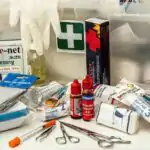
- A small, empty first aid box
- Video documentary on basic wound care for children
Rationale for the Lesson
This lesson helps pupils understand that injuries can happen and how to recognise common types of wounds. It teaches them the crucial habit of informing a trusted adult when they or a friend get hurt, which is a vital safety skill for their age.
Prerequisite/Previous Knowledge
Pupils can identify different parts of their body and understand simple safety rules at home and school.
Lesson Content/Board Summary
TYPES OF WOUNDS AND CARE FOR WOUNDS
A wound is an injury to the body, usually when the skin is broken or damaged. It can make you feel pain.
Types of Wounds
There are different types of wounds we can get:
- Cuts: These happen when something sharp like paper or a small stone cuts the skin. They might bleed a little.
- Bruises: These happen when you bump into something hard. The skin does not break, but the area turns blue or purple.
- Burns: These happen when you touch something very hot, like hot water or a hot iron. The skin can become red and painful.
Care for Wounds (First Aid)
When you get a wound, the most important thing to do is:
- Tell an adult immediately! (Mummy, Daddy, Teacher, or another trusted grown-up).
- For a small cut: An adult will clean it gently with water and put a plaster or bandage on it.
- For a bruise: An adult might put something cool on it to help it feel better.
- For a small burn: An adult will put the burned area under cool running water and then cover it.
Never try to treat a wound by yourself. Always ask an adult for help!
Key Words
- Wound – an injury to the body, often on the skin.
- Cut – a wound made by something sharp.
- Bruise – a dark mark on the skin from a bump, without breaking the skin.
- Burn – an injury caused by heat.
- First Aid – the first help given to someone who is hurt.
What the Teacher Should Show or Draw
- Show pictures of a small cut, a bruise, and a minor burn.
- Display a small, empty first aid box and explain its purpose (to keep things for helping wounds).
Tell an Adult Song
Tune: “Twinkle, Twinkle Little Star”
Oh, I got a little hurt,
Oh, I got a little hurt.
What should I do? What should I do?
Tell a grown-up, quick, it’s true!
Mummy, Daddy, Teacher too,
They will know just what to do!
Actions:
- “Oh, I got a little hurt”: Point to a pretend hurt spot.
- “What should I do?”: Shrug shoulders.
- “Tell a grown-up, quick, it’s true!”: Point to an adult, then make a “quick” gesture.
- “Mummy, Daddy, Teacher too”: Point to self, then to different directions.
- “They will know just what to do!”: Nod head confidently.
How to use the rhyme: Sing the song together after discussing what to do when hurt, reinforcing the message of telling an adult.
Watch and Learn About First Aid
The teacher will play a short video showing simple first aid for common minor wounds, reinforcing the importance of adult help.
Teaching Methods/Instructional Techniques
Picture Talk, Question and Answer, Demonstration, Guided Practice, Songs and Rhymes, Video Presentation, Storytelling, Role-play.
Instructional Procedures
Step 1: Introduction
Time: 3 minutes
Teaching Skill: Engaging, Revising
Teacher’s Activity: The teacher greets the pupils and asks them to name some parts of their body. The teacher then asks if they have ever gotten a “boo-boo” or a small hurt on their body.
Pupils’ Activity: Pupils greet the teacher, name body parts, and raise hands or nod if they have experienced a small hurt.
Learning Point: Pupils recall body parts and connect to the idea of injuries.
Step 2: Presentation (What are wounds?)
Time: 5 minutes
Teaching Skill: Explaining, Visual Aid
Teacher’s Activity: The teacher explains that a “wound” is when our body gets hurt, like when the skin is broken. The teacher shows a picture of a small, clean cut and asks pupils what they see.
Pupils’ Activity: Pupils listen to the explanation and describe what they see in the picture (e.g., “skin is open,” “red”).
Learning Point: Pupils understand the basic concept of a wound.
Step 3: Presentation (Types of Wounds)
Time: 5 minutes
Teaching Skill: Identifying, Categorising
Teacher’s Activity: The teacher introduces “cuts,” “bruises,” and “burns” using clear pictures for each. For each type, the teacher gives a simple explanation and asks pupils to identify the wound type in the picture.
Pupils’ Activity: Pupils look at the pictures, listen to the explanations, and identify the types of wounds as “cut,” “bruise,” or “burn” when prompted.
Learning Point: Pupils can identify different types of minor wounds.
Step 4: Activity (Sharing Experiences)
Time: 4 minutes
Teaching Skill: Encouraging, Listening
Teacher’s Activity: The teacher asks pupils if they have ever had a small cut, bruise, or burn and how it felt. The teacher reminds them to only share minor experiences and to use simple words.
Pupils’ Activity: A few pupils volunteer to share their experiences of minor injuries, describing what happened and how it felt (e.g., “It was painful,” “It turned blue”).
Learning Point: Pupils connect the lesson to their personal experiences and express feelings.
Step 5: Demonstration/Video (Care for Wounds)
Time: 6 minutes
Teaching Skill: Demonstrating, Visual Learning
Teacher’s Activity: The teacher emphasises the most important rule: “Always tell an adult!” The teacher then briefly demonstrates (or explains using a chart) very simple first aid for a small cut (e.g., “clean with water, cover with plaster”). The teacher then plays the short educational video on basic first aid for children.
Pupils’ Activity: Pupils watch the teacher’s demonstration and the video, paying attention to the steps and the message of telling an adult.
Learning Point: Pupils learn the primary rule of wound care (tell an adult) and observe simple first aid steps.
Step 6: Reinforcement (Rhyme and Role-play)
Time: 3 minutes
Teaching Skill: Reinforcing, Practising
Teacher’s Activity: The teacher leads the pupils in singing the “Tell an Adult Song” with actions. The teacher then asks pupils to practice saying “Mummy, I got a cut!” or “Teacher, my friend fell down!”
Pupils’ Activity: Pupils sing the song with actions and practice role-playing telling an adult about a minor injury.
Learning Point: Pupils reinforce the habit of telling an adult through song and practice.
Step 7: Evaluation/Review
Time: 4–5 minutes
Teaching Skill: Questioning/Assessment
Teacher’s Activity: The teacher checks pupils’ understanding through short questions and practical tasks.
- Show me a picture of a cut.
- What is this injury called? (Teacher points to a picture of a bruise).
- If you accidentally touch something hot and get a small burn, what is the first thing you should do?
- What should you do if your friend gets a small cut on their finger?
Pupils’ Activity: Pupils respond orally and demonstrate the required skill where appropriate (e.g., pointing to pictures, saying “tell an adult”).
Learning Point: Pupils demonstrate understanding of the lesson.
Step 8: Conclusion
Time: 1 minute
Teaching Skill: Summarising
Teacher’s Activity: The teacher summarises the lesson by reminding pupils to always be careful, but if they get hurt, they must always tell an adult right away. The teacher praises pupils for their participation.
Pupils’ Activity: Pupils listen and repeat the key message about telling an adult.
Learning Point: Pupils internalise the main safety message.
Lesson Keywords
- Wound – an injury to the body.
- Cut – a wound where the skin is broken by something sharp.
- Bruise – a dark mark on the skin from a bump.
- Burn – an injury caused by heat.
- First Aid – the first help given to someone who is hurt.
Differentiation
- Support: For pupils who struggle to identify wound types, the teacher can use fewer pictures, focus on one type at a time, and provide more verbal cues and repetition. Use hand-over-hand to point to pictures.
- Extension: For pupils who quickly grasp the concepts, the teacher can ask them to suggest other situations where they might get a cut or bruise, or to explain in their own words why it’s important to tell an adult.
Note for teachers using this lesson plan
Before the lesson, prepare clear, child-friendly pictures of a minor cut, a bruise, and a small, non-severe burn. Ensure the first aid box is empty or contains only safe, child-appropriate items for demonstration. The main idea children must understand is that *any* wound, no matter how small, requires telling a trusted adult immediately. Emphasise that they should *never* try to treat wounds themselves, especially burns or deeper cuts. The video should be previewed to ensure it is age-appropriate and reinforces the “tell an adult” message. Observe pupils’ ability to identify wound types and their readiness to role-play telling an adult as key indicators of understanding.

Community Join the conversation Open discussion +