

Class: Pre-School Level 4
Term: Second Term
Week: 6
Age: 5 years
Duration: 30 minutes
Subject: Basic Science and Technology
Curriculum Theme: Basic Science and Technology
Previous Lesson: Parts of a plant and their uses.
Topic: Growth in Plants
Subject Matter: Stages of plant growth from seed to maturity.
Specific Objectives
By the end of the lesson, pupils should be able to:
Cognitive Domain
- Identify the main stages of plant growth (seed, sprout, seedling, mature plant) using a chart.
- Name simple things a seed needs to grow (water, soil, sunlight).
Affective Domain
- Show curiosity and interest in observing plant growth.
- Appreciate the process of nature as a plant grows.
Psychomotor Domain
- Participate in planting a seed in a small container.
- Point to the different stages of plant growth on a labelled chart.
Social Domain
- Work cooperatively with peers during the planting activity.
- Share observations about their planted seeds.
Reference Materials
- NAPPS National Unified Teaching Scheme for Pre-School Level 4.
- Early Childhood Care and Education resources on plant life cycles.
- Relevant picture books on plant growth.
Instructional Materials
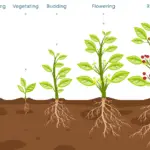
- Well-labelled chart showing stages of plant growth (seed, sprout, seedling, young plant, mature plant).
- Video clip/documentary on plant growth (from seed to maturity).
- Samples of bean or rice seeds.
- Small pots or plastic cups with drainage holes.
- Potting soil.
- Small watering can.
- Hand trowels (child-safe, if available).
Rationale for the Lesson
This lesson introduces pupils to the fascinating journey of a plant from a tiny seed to a full-grown plant. Understanding plant growth helps children appreciate nature, develop observation skills, and learn about the living world around them, connecting to their everyday experiences with food and plants.
Prerequisite/Previous Knowledge
Pupils can identify common plants in their environment and may know that plants need water and sunlight to live.
Lesson Content/Board Summary
Stages of Plant Growth from Seed to Maturity
Plants are living things, just like us! They start small and grow bigger. Let’s see how a plant grows from a tiny seed.
- Seed: This is where it all begins! A seed is like a tiny package with a baby plant inside. It needs water and warmth to wake up.
- Germination (Sprout): When the seed gets enough water and warmth, it breaks open! A tiny root grows down into the soil, and a tiny shoot (stem) grows up towards the sun. We call this a “sprout.”
- Seedling: The sprout grows bigger and gets its first few leaves. It is now a “seedling.” It needs sunlight, water, and good soil to keep growing.
- Young Plant: The seedling continues to grow. Its stem gets stronger, and it grows more leaves. It looks more like a small plant now.
- Mature Plant: The plant grows to its full size. It might grow flowers, fruits, or more seeds. This is a “mature plant.” It can then make new seeds to start the cycle all over again!
What the Teacher Should Show or Draw
- Display the well-labelled chart showing all stages of plant growth.
- Show real bean or rice seeds.
- If possible, show a sprouted seed and a small seedling for a concrete example.
- Demonstrate how to plant a seed.
Plant Growth Song
Tune: “Twinkle, Twinkle, Little Star”
Lyrics:
Little seed, down in the ground,
Water, sun, all around.
Pop! A sprout, tiny and new,
Growing, growing, just for you.
Leaves so green, stem so tall,
A beautiful plant for one and all!
Actions:
- “Little seed, down in the ground”: Crouch down, hands cupped together like a seed.
- “Water, sun, all around”: Wiggle fingers like rain, then make a circle with arms for the sun.
- “Pop! A sprout, tiny and new”: Slowly stand up, stretching one arm up like a sprout.
- “Growing, growing, just for you”: Stretch both arms up higher.
- “Leaves so green, stem so tall”: Wiggle fingers for leaves, stand tall.
- “A beautiful plant for one and all!”: Open arms wide like a big plant.
How to use the rhyme: Sing the song with actions after explaining the stages of growth to reinforce the sequence and vocabulary.
Watch and Learn: How a Plant Grows
Let’s watch a short video to see how a tiny seed becomes a big plant!
This video shows the amazing journey of a plant from a tiny seed.
Key Words
- Seed – a tiny part from which a plant grows.
- Sprout – when a tiny shoot and root start to come out of a seed.
- Seedling – a very young plant with a few leaves.
- Plant – a living thing that grows in the earth, usually with a stem, leaves, and roots.
- Grow – to get bigger and develop.
Teaching Methods/Instructional Techniques
Play-based Learning, Demonstration, Guided Practice, Songs and Rhymes, Picture Talk, Question and Answer, Observation, Practical Activity.Instructional Procedures
Step 1: Introduction
Time: 3 minutes
Teaching Skill: Engagement/Recall
Teacher’s Activity: The teacher greets the pupils and asks them what they know about plants. “What do plants need to live? Where do plants come from?” The teacher shows a picture of a tiny seed and asks, “Can this tiny seed become a big plant?”
Pupils’ Activity: Pupils respond to questions, sharing their ideas about plants and seeds.
Learning Point: Pupils recall prior knowledge about plants and are introduced to the concept of a seed.
Step 2: Introducing the Seed and Its Needs
Time: 5 minutes
Teaching Skill: Demonstration/Explanation
Teacher’s Activity: The teacher shows real seeds (beans/rice) to the pupils. “Look at these tiny seeds! Inside each one is a baby plant waiting to grow. What do you think a seed needs to start growing?” The teacher guides them to say water, soil, and sunlight.
Pupils’ Activity: Pupils observe the seeds, touch them, and suggest what they think seeds need to grow.
Learning Point: Pupils identify seeds and understand their basic needs for growth.
Step 3: Exploring Stages of Growth with Charts and Video
Time: 7 minutes
Teaching Skill: Visual Aid/Explanation
Teacher’s Activity: The teacher displays the well-labelled chart showing the stages of plant growth (seed, sprout, seedling, young plant, mature plant). The teacher points to each stage, explains it simply, and uses the video clip to show the process visually. “First, it’s a seed, then it sprouts, then it’s a seedling, and finally a big plant!”
Pupils’ Activity: Pupils watch the video and observe the chart, pointing to and repeating the names of the growth stages after the teacher.
Learning Point: Pupils recognise and begin to name the stages of plant growth.
Step 4: Practical Activity – Planting a Seed
Time: 8 minutes
Teaching Skill: Guided Practice/Practical Application
Teacher’s Activity: The teacher demonstrates how to plant a seed: put soil in a cup, make a small hole, place a seed, cover lightly with soil, and water gently. The teacher then guides pupils to plant their own seeds in small pots/cups. “Let’s plant our own seeds and watch them grow!”
Pupils’ Activity: Pupils follow the teacher’s instructions to plant their own seeds in individual cups, with assistance as needed.
Learning Point: Pupils gain hands-on experience in planting a seed.
Step 5: Reinforcement through Song and Discussion
Time: 3 minutes
Teaching Skill: Repetition/Engagement
Teacher’s Activity: The teacher leads the pupils in singing the “Plant Growth Song” with actions. The teacher asks, “What was the first thing we did? What will happen next?”
Pupils’ Activity: Pupils sing the song with actions and answer simple questions about the planting process and future growth.
Learning Point: Pupils reinforce their understanding of the growth stages through song and discussion.
Step 6: Discussing Ongoing Observation
Time: 2 minutes
Teaching Skill: Planning/Encouragement
Teacher’s Activity: The teacher explains that the planted seeds will need care. “Now we have planted our seeds. What must we do to help them grow? We will watch them every day!” The teacher encourages pupils to observe their plants at home or in the classroom.
Pupils’ Activity: Pupils listen and commit to observing their seeds, understanding the need for care.
Learning Point: Pupils understand the importance of continuous observation and care for plants.
Step 7: Evaluation/Review
Time: 4–5 minutes
Teaching Skill: Questioning/Assessment
Teacher’s Activity: The teacher checks pupils’ understanding through short questions and practical tasks.
- “Point to the seed on our chart.”
- “What comes after the seed starts to grow?” (Point to sprout)
- “What do we call a very young plant with a few leaves?” (Seedling)
- “What three things does a seed need to grow?” (Water, soil, sun)
Pupils’ Activity: Pupils respond orally and demonstrate the required skill where appropriate (e.g., pointing to stages on the chart).
Learning Point: Pupils demonstrate understanding of the lesson.
Step 8: Conclusion
Time: 1 minute
Teaching Skill: Summary
Teacher’s Activity: The teacher praises the pupils for their participation and reminds them to care for their planted seeds. “Well done, everyone! Remember, every big plant started as a tiny seed, and with our care, our seeds will grow too!”
Pupils’ Activity: Pupils respond positively and look forward to observing their seeds.
Learning Point: Pupils conclude the lesson with a reinforced understanding of plant growth and a sense of responsibility.
Lesson Keywords
- Seed – a tiny part from which a plant grows.
- Sprout – when a tiny shoot and root start to come out of a seed.
- Seedling – a very young plant with a few leaves.
- Plant – a living thing that grows in the earth, usually with a stem, leaves, and roots.
- Grow – to get bigger and develop.
Differentiation
- Support: For pupils who need extra help, the teacher can focus on identifying just two main stages (seed and plant) and provide more one-on-one guidance during the planting activity. Use hand-over-hand assistance for planting.
- Extension: For pupils who grasp the concept quickly, the teacher can ask them to draw the different stages of plant growth or describe what they think will happen to their planted seed first. They can also name other things plants give us.
Note for teachers using this lesson plan
Before the lesson, ensure you have all materials ready: the labelled chart, a tested video clip, enough seeds (beans or rice are good as they sprout relatively quickly), small cups/pots (recycled plastic cups with holes poked in the bottom work well), potting soil, and a small watering can. Prepare a demonstration pot for yourself. During the planting activity, supervise closely, ensuring pupils handle soil and seeds gently. Emphasize that plants need care (water, sunlight) to grow. Encourage pupils to take their planted seeds home or designate a classroom spot for observation. The main idea children must grasp is the sequence of growth from seed to plant. Observable actions showing understanding include pointing to stages on the chart, naming a stage, and correctly planting a seed.

Community Join the conversation Open discussion +