

Class: Pre-School Level 4
Term: Third Term
Week: 4
Age: 5 years
Duration: 30 minutes
Subject: Physical and Health Education
Curriculum Theme: Physical and Health Education
Previous Lesson: Basic body movements
Topic: SPORTS FACILITIES AND EQUIPMENT: MEANING AND EXAMPLES
Subject Matter: SPORT FACILITIES AND EQUIPMENT – Meaning of Sport Facilities. – Examples of sport facilities: Field or playground, stopwatch, whistle, balls, gym, bibs, boots, chin guard, etc. Weekly focus: Sports Facilities and Equipment: Meaning and Examples.
Specific Objectives
By the end of the lesson, pupils should be able to:
Cognitive Domain
- Define sports facilities and equipment in simple terms.
- Identify examples of sports facilities from pictures or real objects.
- Name examples of sports equipment when shown.
Affective Domain
- Show interest in identifying different sports items.
- Appreciate the importance of sports and play.
Psychomotor Domain
- Point to specific sports facilities and equipment.
- Demonstrate simple movements associated with using some equipment (e.g., kicking a ball).
Social Domain
- Participate actively in classroom discussions and activities.
- Take turns mentioning sports facilities and equipment.
Reference Materials
- NAPPS National Unified Teaching Scheme for Pre-School Level 4
- Early Childhood Care and Education resources
- Relevant early-years physical education charts
Instructional Materials
- Charts showing different sports facilities (e.g., playground, football field, gym)
- Pictures of various sports equipment (e.g., different types of balls, whistle, bibs, skipping rope, cones, goalpost, stopwatch, boots, shin guard)
- Real examples of simple sports equipment (e.g., a ball, a whistle, a bib, a skipping rope)
- Video clips showing children playing with different facilities and equipment
Rationale for the Lesson
This lesson helps pupils understand the places where they can play and the things they use for physical activities. Recognising sports facilities and equipment encourages active play, promotes physical development, and helps children understand their environment, fostering a healthy lifestyle from an early age.
Prerequisite/Previous Knowledge
Pupils can already identify common objects around them and participate in simple play activities like running, jumping, and kicking a ball.
Lesson Content/Board Summary
SPORTS FACILITIES AND EQUIPMENT: MEANING AND EXAMPLES
What are Sports Facilities?
Sports facilities are the places or areas where we play sports and do physical activities. They are the ‘where’ we play.
- Examples of Sports Facilities:
- Playground: A place with swings, slides, and open space for children to play.
- Football Field: A big grassy area for playing football.
- Basketball Court: A flat area with hoops for playing basketball.
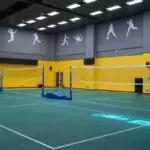
- Gym: An indoor place with equipment for exercise and sports.
What is Sports Equipment?
Sports equipment are the tools or items we use to play sports. They are the ‘what’ we use to play.
- Examples of Sports Equipment:
- Balls: (e.g., football, basketball, tennis ball) used for kicking, throwing, or bouncing.
- Whistle: Used by a teacher or referee to start or stop a game.
- Bibs: Coloured vests worn by players to tell teams apart.
- Skipping Rope: Used for jumping and skipping.
- Cones: Used to mark areas or paths for games.
- Stopwatch: Used to measure time in races or games.
- Boots: Special shoes worn for some sports like football.
- Shin Guard: Worn on the leg to protect it during sports.
Key Words
- Sports: Games or activities that involve physical effort and skill.
- Facilities: Places where we do sports.
- Equipment: Things we use for sports.
- Playground: An outdoor area for children to play.
- Ball: A round object used in many games.
What the Teacher Should Show or Draw
- Display charts with pictures of a playground, football field, and gym.
- Show real examples of a ball, whistle, and bib.
- Draw a simple sketch of a ball and a field on the board.
Movement Rhyme
Tune: “Twinkle, Twinkle Little Star”
Lyrics:
Playground fun, a happy place,
Run and jump with a smiling face.
Ball to kick, a whistle too,
Lots of sports for me and you.
Equipment helps us play and learn,
Taking turns, taking turns!
Actions:
- “Playground fun”: Point around the room.
- “Run and jump”: Mimic running and jumping.
- “Ball to kick”: Mimic kicking a ball.
- “Whistle too”: Bring hand to mouth like blowing a whistle.
- “Lots of sports”: Stretch arms wide.
- “Taking turns”: Make a circular hand motion.
How to use the rhyme: Sing the rhyme together, encouraging pupils to do the actions. Repeat it several times to reinforce the concepts of facilities and equipment.
Video Demonstration
The teacher will show a short video clip demonstrating various sports equipment and facilities.
Teaching Methods/Instructional Techniques
Play-based Learning, Demonstration, Guided Practice, Songs and Rhymes, Picture Talk, Question and Answer, Imitation, Manipulation of Objects, Repetition, Practical Activity.Instructional Procedures
Step 1: Introduction
Time: 3 minutes
Teaching Skill: Engaging/Motivation
Teacher’s Activity: The teacher greets the pupils and asks them what they like to do for fun. “Who likes to play outside? What games do you play?” The teacher then introduces the topic by saying, “Today, we will learn about the places we play and the things we use to play sports!”
Pupils’ Activity: Pupils respond to the teacher’s questions, mentioning games they play.
Learning Point: Pupils are engaged and ready for the lesson.
Step 2: Explanation of Sports Facilities
Time: 5 minutes
Teaching Skill: Explanation/Visual Aid
Teacher’s Activity: The teacher explains what sports facilities are in simple terms: “Sports facilities are the places where we play sports.” The teacher shows charts/pictures of a playground, a football field, and a gym. “Look, this is a playground. We play here! This is a football field. We play football here!”
Pupils’ Activity: Pupils listen, look at the pictures, and point to the different facilities as the teacher names them.
Learning Point: Pupils understand that facilities are places for sports and can identify common examples.
Step 3: Explanation of Sports Equipment
Time: 5 minutes
Teaching Skill: Demonstration/Object Manipulation
Teacher’s Activity: The teacher explains what sports equipment is: “Sports equipment are the things we use to play sports.” The teacher brings out real examples like a ball, a whistle, and a bib. “This is a ball, we kick it! This is a whistle, it makes a sound! This is a bib, we wear it!” The teacher also shows pictures of other equipment like skipping ropes, cones, stopwatch, boots, and shin guards.
Pupils’ Activity: Pupils observe the real objects and pictures, repeating the names of the equipment.
Learning Point: Pupils understand that equipment are things used for sports and can identify common examples.
Step 4: Rhyme and Movement Activity
Time: 4 minutes
Teaching Skill: Song/Movement
Teacher’s Activity: The teacher leads the pupils in singing the “Playground Fun” rhyme, encouraging them to perform the actions. “Let’s sing our rhyme about playing and the things we use!” The teacher repeats the rhyme a few times.
Pupils’ Activity: Pupils sing the rhyme and perform the actions, reinforcing the concepts of facilities and equipment.
Learning Point: Pupils associate movement and song with the lesson content, aiding memory.
Step 5: Video and Discussion
Time: 4 minutes
Teaching Skill: Multimedia/Questioning
Teacher’s Activity: The teacher plays the short educational video clip showing various sports equipment and facilities. After the video, the teacher asks, “What did you see in the video? Did you see any balls? Did you see a playground?”
Pupils’ Activity: Pupils watch the video attentively and respond to the teacher’s questions, naming items they saw.
Learning Point: Pupils see real-life examples and reinforce their understanding through visual and auditory input.
Step 6: Pupil Application – “Show Me” Game
Time: 4 minutes
Teaching Skill: Guided Practice/Interactive Game
Teacher’s Activity: The teacher spreads out pictures of different facilities and equipment. “Now, let’s play a game! I will say something, and you point to it.” The teacher says, “Show me a ball!” “Show me a playground!” “Show me a whistle!” The teacher encourages pupils to mention as many sports facilities and equipment as they can recall.
Pupils’ Activity: Pupils enthusiastically point to the correct pictures or objects and take turns mentioning items they remember.
Learning Point: Pupils actively apply their knowledge by identifying and naming items.
Step 7: Evaluation/Review
Time: 4 minutes
Teaching Skill: Questioning/Assessment
Teacher’s Activity: The teacher checks pupils’ understanding through short questions and practical tasks.
- What is a place where we play sports called? (Show picture of a playground)
- What is this? (Show a real ball)
- Can you name one thing we use to play sports?
- Point to the picture of a football field.
Pupils’ Activity: Pupils respond orally and demonstrate the required skill where appropriate.
Learning Point: Pupils demonstrate understanding of the lesson.
Step 8: Conclusion
Time: 1 minute
Teaching Skill: Summarizing/Encouragement
Teacher’s Activity: The teacher praises the pupils for their participation. “You all did so well today! Now you know about sports facilities and equipment. Keep playing and stay active!”
Pupils’ Activity: Pupils respond cheerfully.
Learning Point: Pupils feel encouraged and the lesson is brought to a close.
Lesson Keywords
- Sports – Games and activities that make us move our bodies.
- Facilities – The places where we play sports, like a playground.
- Equipment – The things we use to play sports, like a ball or a whistle.
- Playground – A fun place with swings and slides where children play.
- Ball – A round toy used in many games.
Differentiation
- Support: For pupils who are struggling, use larger, clearer pictures and real objects only. Focus on identifying just 2-3 key facilities (playground, field) and 2-3 key equipment (ball, whistle). Provide hand-over-hand guidance for pointing. Repeat names slowly and clearly.
- Extension: For pupils who grasp the concepts quickly, ask them to name a sport that uses a particular piece of equipment (e.g., “What sport uses a football?”). Encourage them to draw their favourite sports equipment or facility.
Note for teachers using this lesson plan
Before the lesson, ensure all instructional materials (charts, pictures, real objects like a ball, whistle, bib) are ready and easily accessible. Test the video link to ensure it plays smoothly. Start by relating the lesson to pupils’ personal experiences of playing. Keep definitions simple and concrete. Emphasize visual learning by showing actual items and clear pictures. Encourage active participation by having pupils point, name, and mimic actions. Repeat the rhyme and key terms frequently. Observe pupils’ ability to identify and name items during the “Show Me” game and evaluation to gauge understanding. Ensure enough space for any movement activities.

Community Join the conversation Open discussion +