

Class: Pre-School Level 4
Term: Third Term
Week: 7
Age: 5 years
Duration: 30 minutes
Subject: Physical and Health Education
Curriculum Theme: Physical and Health Education
Previous Lesson: Simple Outdoor Games
Topic: INDOOR GAMES: CHESS, LUDO, CARDS AND VIDEO GAMES
Subject Matter: INDOOR GAMES – Examples of indoor games: Chess, Ludo game, Card, Video games, etc. Weekly focus: Indoor Games: Chess, Ludo, Cards and Video Games.
Specific Objectives
By the end of the lesson, pupils should be able to:
Cognitive Domain
- Identify different indoor games like Ludo, cards, chess, and video games.
- Name examples of indoor games.
- Describe their favourite indoor game in simple terms.
Affective Domain
- Show interest in playing indoor games.
- Appreciate the fun and learning from indoor games.
Psychomotor Domain
- Demonstrate simple actions related to indoor games, such as rolling a dice or moving a game piece.
- Participate in a simple game activity.
Social Domain
- Practise taking turns when playing games.
- Share game materials with friends.
Reference Materials
- NAPPS National Unified Teaching Scheme for Pre-School Level 4
- Early Childhood Care and Education resources
- Relevant early-years activity books
Instructional Materials
- Charts and posters showing different indoor games (Ludo, Chess, Playing Cards, Video Games)
- Actual Ludo board, dice, and counters
- A Chess board and pieces
- A deck of playing cards
- Pictures or a toy video game controller
- Pictures of children playing various indoor games
Rationale for the Lesson
This lesson helps pupils understand and appreciate indoor games, which are important for developing cognitive skills like thinking, problem-solving, and memory. It also encourages social interaction, turn-taking, and fine motor skills, providing fun and engaging activities for children when outdoor play is not possible.
Prerequisite/Previous Knowledge
Pupils are familiar with the concept of playing games and may have played some simple games at home or school, including some outdoor games.
Lesson Content/Board Summary
INDOOR GAMES: CHESS, LUDO, CARDS AND VIDEO GAMES
Indoor games are games we play inside a building, like our homes or classrooms. They are fun activities that help us think, learn, and play with friends and family.
Examples of Indoor Games:
- Ludo Game: This is a board game where players roll a dice and move their coloured counters around the board to reach home. It teaches us about counting and taking turns.
- Playing Cards: We can play many different games with a deck of cards. Some games involve matching numbers or colours.
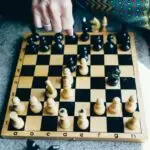
- Chess: This is a thinking game played on a checkered board with special pieces. It helps us to plan and solve problems.
- Video Games: These are electronic games played on a screen, like a TV or tablet. They can be very exciting and help with hand-eye coordination.
Indoor games are good for:
- Making us think and solve problems.
- Learning to take turns and share.
- Having fun with friends and family.
- Improving our hand and eye movements.
Key Words
- Indoor – inside a building.
- Game – an activity played for fun.
- Ludo – a board game with dice and counters.
- Cards – small pieces of stiff paper used for playing games.
- Chess – a strategic board game.
- Video games – electronic games played on a screen.
What the Teacher Should Show or Draw
The teacher should display charts and posters of Ludo, Chess, playing cards, and video games. The teacher should also show the actual Ludo board, dice, counters, Chess board, and a deck of playing cards. Demonstrate how to roll a dice for Ludo or shuffle cards.
Indoor Games Rhyme
Tune: “Twinkle, Twinkle Little Star”
Lyrics:
Indoor games, so much fun,
Playing games till day is done.
Ludo, cards, or chess we play,
Happy times throughout the day.
Video games are fun too,
Lots of joy for me and you!
Actions: Clap hands, pretend to roll dice, shuffle cards, move chess pieces, pretend to hold a game controller.
How to use the rhyme: Sing the rhyme together, encouraging pupils to do the actions. Repeat it several times to help them remember the names of indoor games and associate them with fun activities.
Watch and Play
Let’s watch a short video about different fun activities we can do indoors, some of which are games!
Teaching Methods/Instructional Techniques
Play-based Learning, Demonstration, Guided Practice, Picture Talk, Question and Answer, Repetition, Practical Activity, Songs and Rhymes.
Instructional Procedures
Step 1: Introduction
Time: 3 minutes
Teaching Skill: Engaging/Recalling
Teacher’s Activity: The teacher greets the pupils and asks them about games they like to play. “Who likes to play games? What games do you play at home or school?” The teacher then introduces the topic: “Today, we will learn about games we play inside, called indoor games!”
Pupils’ Activity: Pupils respond to the teacher’s questions, mentioning games they know. They listen attentively to the introduction.
Learning Point: Pupils recall prior knowledge of games and are introduced to the lesson topic.
Step 2: Meaning of Indoor Games
Time: 4 minutes
Teaching Skill: Explaining/Visualising
Teacher’s Activity: The teacher explains what indoor games are using simple language and gestures. “Indoor games are games we play inside our houses or classrooms, especially when it’s raining or too hot outside. We don’t need a big field, just a table or a mat!” The teacher shows pictures of children playing games indoors.
Pupils’ Activity: Pupils listen and look at the pictures. They repeat “indoor games” after the teacher.
Learning Point: Pupils understand the meaning of indoor games.
Step 3: Examples – Ludo and Cards
Time: 5 minutes
Teaching Skill: Demonstrating/Identifying
Teacher’s Activity: The teacher shows the Ludo board, dice, and counters. “This is a Ludo game! We roll the dice and move our pieces. It’s fun!” The teacher demonstrates rolling the dice and moving a piece. Then, the teacher shows a deck of playing cards. “These are playing cards. We can play many matching games with them.” The teacher shows a few cards.
Pupils’ Activity: Pupils observe the Ludo board and cards. They may touch the dice or cards gently. They name “Ludo” and “Cards” as the teacher points.
Learning Point: Pupils identify Ludo and playing cards as indoor games.
Step 4: Examples – Chess and Video Games
Time: 5 minutes
Teaching Skill: Presenting/Describing
Teacher’s Activity: The teacher displays the Chess board and pieces. “This is Chess. It’s a game that makes us think hard!” The teacher briefly shows how some pieces move. Next, the teacher shows pictures of video games or a toy game controller. “These are video games! We play them on a screen with a controller.” The teacher asks if anyone has seen or played a video game.
Pupils’ Activity: Pupils look at the Chess board and video game pictures. Some may share if they have played video games. They repeat “Chess” and “Video games.”
Learning Point: Pupils identify Chess and video games as indoor games.
Step 5: Rhyme and Benefits of Indoor Games
Time: 4 minutes
Teaching Skill: Reinforcing/Discussing
Teacher’s Activity: The teacher leads the pupils in singing the “Indoor Games Rhyme” with actions. After the rhyme, the teacher briefly discusses why indoor games are good for us: “They help us think, learn to share, and have fun!”
Pupils’ Activity: Pupils sing the rhyme with actions. They listen to the benefits and repeat simple phrases like “think” and “share.”
Learning Point: Pupils reinforce their knowledge of indoor games through song and understand their benefits.
Step 6: Pupil Application – Favourite Indoor Games
Time: 4 minutes
Teaching Skill: Encouraging/Sharing
Teacher’s Activity: The teacher asks pupils to mention their favourite indoor game and describe it in one simple sentence. “Who wants to tell us their favourite indoor game?” The teacher encourages all pupils to participate, providing prompts if needed.
Pupils’ Activity: Pupils raise their hands and take turns mentioning their favourite indoor game and a simple reason why they like it (e.g., “I like Ludo because I roll the dice”).
Learning Point: Pupils apply their learning by identifying and describing their favourite indoor games.
Step 7: Evaluation/Review
Time: 4 minutes
Teaching Skill: Questioning/Assessment
Teacher’s Activity: The teacher checks pupils’ understanding through short questions and practical tasks.
- “What are games we play inside called?”
- “Can you name one indoor game?” (Show pictures of Ludo, Chess, Cards, Video Games and ask pupils to point and name them.)
- “What do we use to play Ludo?” (Show dice and counters.)
- “Why are indoor games good for us?”
Pupils’ Activity: Pupils respond orally and demonstrate the required skill where appropriate, such as pointing to the correct game or object.
Learning Point: Pupils demonstrate understanding of the lesson.
Step 8: Conclusion
Time: 1 minute
Teaching Skill: Summarising/Reinforcing
Teacher’s Activity: The teacher summarises the lesson: “Today we learned about many fun indoor games like Ludo, cards, chess, and video games. Remember, they help us learn and play together!” The teacher encourages pupils to play indoor games safely at home.
Pupils’ Activity: Pupils listen and say “Thank you, teacher.”
Learning Point: Pupils recap the main points of the lesson.
Lesson Keywords
- Indoor – happening or done inside a building.
- Game – an activity that people play for fun, often with rules.
- Ludo – a board game where players race their four tokens from start to finish according to the rolls of a single die.
- Cards – small rectangular pieces of stiff paper, pasteboard, or plastic, used for playing games.
- Chess – a strategy board game played between two players on a checkered board with 64 squares arranged in an 8×8 grid.
- Video games – electronic games played by manipulating images on a television screen or other display screen.
Differentiation
- Support: For pupils who are struggling, the teacher can use larger, more distinct pictures of each game. They can focus on identifying just one or two games and repeat the names slowly. Peer support can be encouraged, where a quicker learner helps a slower one.
- Extension: For quicker learners, the teacher can ask them to describe one rule of their favourite game or mention another indoor game not discussed in class (e.g., Snakes and Ladders, puzzles). They can also be encouraged to draw their favourite indoor game.
Note for teachers using this lesson plan
Before the lesson, ensure all instructional materials like the Ludo board, Chess board, cards, and pictures are readily available and in good condition. It is important to bring actual game items for pupils to see and touch, as this makes the learning concrete for 5-year-olds. When demonstrating, keep the explanations very simple and focus on the visual aspect and basic actions (e.g., rolling dice, shuffling cards). Encourage all pupils to participate in naming games and sharing their favourites, providing gentle prompts for shy children. Emphasise the social aspects like taking turns and sharing. For video games, focus on the concept of playing on a screen rather than specific game details, and always stress that video games should be played for a limited time. Understanding can be observed by pupils correctly pointing to and naming the games shown.

Community Join the conversation Open discussion +