

Class: Pre-School Level 4
Term: First Term
Week: 4
Age: 5 years
Duration: 30 minutes
Subject: Physical and Health Education
Curriculum Theme: Physical and Health Education
Previous Lesson: Simple Body Movements
Topic: BODY EXERCISE: STRETCHING, BENDING, RAISING LIMBS AND SKIPPING
Subject Matter: BODY EXERCISE – Stretching and bending. – Raising arms and legs. – Skipping. Weekly focus: Body Exercise: Stretching, Bending, Raising Limbs and Skipping.
Specific Objectives
By the end of the lesson, pupils should be able to:
Cognitive Domain
- Explain in simple terms what body exercise means.
- Name at least two benefits of exercising.
- Identify different body parts used in exercise.
Affective Domain
- Show enthusiasm for participating in body exercises.
- Appreciate the importance of staying active and healthy.
- Listen attentively to instructions during exercise.
Psychomotor Domain
- Demonstrate stretching movements (e.g., reaching up, touching toes).
- Perform bending movements (e.g., bending knees, waist).
- Raise their arms and legs in different directions.
- Attempt to skip independently or with a rope.
Social Domain
- Participate cooperatively in group exercise activities.
- Follow simple rules during play and exercise.
Reference Materials
- NAPPS National Unified Teaching Scheme for Pre-School Level 4
- Early Childhood Care and Education resources on physical development
- Relevant early-years physical education charts and pictures
Instructional Materials
- Charts showing children exercising (stretching, bending, skipping)
- Pictures of people engaging in various exercises
- Music player with child-friendly exercise songs
- Skipping rope (for demonstration and supervised use)
- Open playground or clear classroom space
- Video clips of children exercising
Rationale for the Lesson
This lesson is important for 5-year-olds as it introduces them to the concept and practice of body exercise. Engaging in stretching, bending, raising limbs, and skipping helps develop their gross motor skills, coordination, balance, and overall physical health. Regular exercise at this age promotes strong bones and muscles, boosts energy, and establishes healthy habits for life.
Prerequisite/Previous Knowledge
Pupils can identify some major parts of their body and perform simple movements like walking, running, and jumping.
Lesson Content/Board Summary
BODY EXERCISE: Stretching, Bending, Raising Limbs and Skipping
What is Exercise?
Exercise means moving our body parts to make us strong and healthy. When we exercise, our muscles get stronger, and we feel happy and full of energy.
Types of Exercise We Will Do Today:
-
Stretching
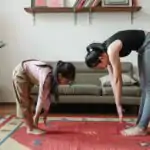
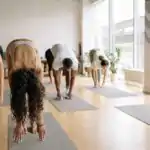
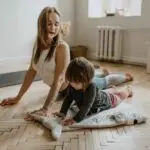
This is when we make our body parts long. We can stretch our arms up high like we want to touch the sky, or stretch our legs by reaching for our toes.
-
Bending
This is when we fold or curve our body parts. We can bend our knees, bend our waist to touch the floor, or bend our arms.
-
Raising Limbs
This means lifting our arms and legs up. We can raise our arms up, out to the sides, or march our legs up high.
-
Skipping
This is a fun way to move! It’s like a little hop and a step, moving forward. We can skip without a rope or use a skipping rope.
Why Do We Exercise? (Benefits)
- It makes our body strong.
- It makes us healthy and helps us grow.
- It gives us energy to play and learn.
- It makes us happy!
Key Words
- Exercise – Moving our body to be strong and healthy.
- Stretch – Making our body parts long.
- Bend – Folding or curving our body parts.
- Raise – Lifting something up.
- Skip – A movement like a hop and a step.
- Healthy – Being strong and not sick.
- Strong – Having power in our muscles.
What the Teacher Should Show or Draw
Display charts or pictures of children stretching, bending, raising limbs, and skipping. Demonstrate each movement clearly and safely.
Movement Rhyme: “Let’s Exercise!”
Tune: “Twinkle, Twinkle Little Star”
Lyrics:
Stretch up high, touch the sky,
Bend down low, don’t be shy.
Raise your arms, raise your feet,
Skipping makes our bodies sweet.
Exercise, so strong and grand,
Best way to move in all the land!
Actions:
- “Stretch up high, touch the sky” – Reach arms high above head.
- “Bend down low, don’t be shy” – Bend at waist to touch toes or knees.
- “Raise your arms, raise your feet” – Lift arms up, then march feet up.
- “Skipping makes our bodies sweet” – Do a skipping motion in place.
- “Exercise, so strong and grand” – Flex arm muscles.
- “Best way to move in all the land!” – Nod head and smile.
How to use the rhyme: Sing the rhyme slowly, demonstrating each action. Repeat several times, encouraging pupils to join in with both singing and actions.
Watch and Move Along
The teacher will play a short, child-friendly exercise video to demonstrate different movements and encourage pupils to follow along.
Teaching Methods/Instructional Techniques
Play-based Learning, Demonstration, Guided Practice, Songs and Rhymes, Video Demonstration, Imitation, Question and Answer, Practical Activity.
Instructional Procedures
Step 1: Introduction
Time: 3 minutes
Teaching Skill: Engagement/Motivation
Teacher’s Activity: The teacher greets pupils and asks, “Who likes to play and run around? Why is it good for us to move our bodies?” The teacher then introduces the topic: “Today, we are going to learn about body exercise: stretching, bending, raising our arms and legs, and skipping!”
Pupils’ Activity: Pupils respond to questions, express their excitement, and listen to the introduction.
Learning Point: Pupils are engaged and introduced to the lesson’s focus on body exercise.
Step 2: Explanation of Exercise
Time: 4 minutes
Teaching Skill: Explanation/Visual Aid
Teacher’s Activity: The teacher explains what exercise means in simple words: “Exercise is when we move our body parts to make us strong and healthy.” The teacher shows charts or pictures of children exercising and briefly mentions benefits like being strong and happy.
Pupils’ Activity: Pupils listen to the explanation, observe the charts/pictures, and repeat “Exercise makes us strong and healthy.”
Learning Point: Pupils understand the basic meaning and purpose of exercise.
Step 3: Demonstration and Practice of Stretching and Bending
Time: 5 minutes
Teaching Skill: Demonstration/Guided Practice
Teacher’s Activity: The teacher demonstrates stretching (e.g., reaching arms high, touching toes) and bending (e.g., bending knees, bending waist). The teacher guides pupils to imitate these movements, ensuring they have enough space.
Pupils’ Activity: Pupils observe the teacher’s demonstration and actively participate in stretching their bodies and bending their knees and waist.
Learning Point: Pupils practise stretching and bending movements, improving flexibility.
Step 4: Demonstration and Practice of Raising Limbs
Time: 4 minutes
Teaching Skill: Demonstration/Guided Practice
Teacher’s Activity: The teacher demonstrates raising arms (up, out to the sides) and raising legs (marching in place, gentle kicks). The teacher guides pupils to perform these movements, encouraging them to lift their limbs as high as they can comfortably.
Pupils’ Activity: Pupils watch and imitate the teacher, raising their arms and legs according to instructions.
Learning Point: Pupils practise raising their arms and legs, developing coordination.
Step 5: Demonstration and Practice of Skipping
Time: 5 minutes
Teaching Skill: Demonstration/Guided Practice
Teacher’s Activity: The teacher first demonstrates skipping without a rope, explaining the hop-step motion. Then, if a skipping rope is available, the teacher demonstrates how to use it safely, inviting pupils to try skipping without the rope or with very close supervision if using a rope. The teacher can play some upbeat music.
Pupils’ Activity: Pupils observe the skipping demonstration, attempt to skip without a rope, and move their bodies to the music.
Learning Point: Pupils practise skipping movements, enhancing balance and coordination.
Step 6: Exercise Rhyme and Video Reinforcement
Time: 4 minutes
Teaching Skill: Reinforcement/Song/Video
Teacher’s Activity: The teacher leads the pupils in singing the “Let’s Exercise!” rhyme with actions. After the rhyme, the teacher plays the short exercise video, encouraging pupils to follow the movements shown on the screen.
Pupils’ Activity: Pupils sing the rhyme, perform the actions, and follow the movements from the video clip.
Learning Point: Pupils reinforce their understanding and practice of various exercises through song and visual demonstration.
Step 7: Evaluation/Review
Time: 3 minutes
Teaching Skill: Questioning/Assessment
Teacher’s Activity: The teacher checks pupils’ understanding through short questions and practical tasks.
- “Show me how to stretch your arms up high!”
- “Show me how to bend your knees!”
- “Can you show me how to skip?”
- “Why is it good to exercise?” (Accept simple answers like “makes us strong,” “healthy,” “happy”).
Pupils’ Activity: Pupils respond orally and demonstrate the required skill where appropriate.
Learning Point: Pupils demonstrate understanding of the lesson by performing movements and stating benefits.
Step 8: Conclusion
Time: 2 minutes
Teaching Skill: Summarization/Encouragement
Teacher’s Activity: The teacher praises the pupils for their active participation and summarises the lesson by reminding them that exercising every day helps them stay strong, healthy, and happy. The teacher encourages them to exercise at home too.
Pupils’ Activity: Pupils listen to the summary and promise to keep exercising.
Learning Point: Pupils consolidate their learning and are encouraged to adopt healthy habits.
Lesson Keywords
- Exercise – Moving our body to be strong and healthy.
- Stretch – Making our body parts long.
- Bend – Folding or curving our body parts.
- Raise – Lifting something up.
- Skip – A movement like a hop and a step.
- Healthy – Being strong and not sick.
- Strong – Having power in our muscles.
Differentiation
- Support: For pupils who find it difficult to perform movements, the teacher can provide hand-over-hand guidance, simplify the movements (e.g., just lifting one arm instead of both), or pair them with a more capable peer. Use slower music or demonstrate movements at a slower pace.
- Extension: For pupils who quickly master the movements, the teacher can challenge them to create a short sequence of movements, skip for a longer duration, or name more benefits of exercise. They could also try to lead a simple movement for the class.
Note for teachers using this lesson plan
Before the lesson, ensure the classroom or playground is clear and safe for movement activities. Emphasize safety throughout the lesson, reminding pupils to be mindful of their personal space and not to bump into others. Start with a brief warm-up (e.g., gentle marching in place) and end with a cool-down (e.g., slow, deep breaths and gentle stretches). Encourage all pupils to participate, regardless of their skill level. Observe pupils’ engagement and physical coordination. Understanding can be observed through their ability to imitate and perform the movements correctly and enthusiastically. Use positive reinforcement to build confidence. The skipping rope should be introduced carefully and used under strict supervision, or focus primarily on skipping without a rope for this age group.
Community Join the conversation Open discussion +