

Class: Pre-School Level 4
Term: First Term
Week: 10
Age: 5 years
Duration: 30 minutes
Subject: Physical and Health Education
Curriculum Theme: Physical and Health Education
Previous Lesson: Simple body movements like walking, jogging, and hopping.
Topic: TRACK EVENTS: 25-METRE SHORT-DISTANCE RACE
Subject Matter: Meaning of track events and a 25-metre short-distance race.
Specific Objectives
By the end of the lesson, pupils should be able to:
Cognitive Domain
- Explain in simple terms what track events are.
- Describe what a short-distance race means.
- Identify the distance of a 25-metre race.
Affective Domain
- Show enthusiasm for participating in a race.
- Listen carefully to instructions for running safely.
Psychomotor Domain
- Demonstrate proper running technique for a short distance.
- Participate actively in a 25-metre short-distance race.
Social Domain
- Take turns and wait for their turn during the race.
- Follow simple rules for racing safely with others.
Reference Materials
- NAPPS National Unified Teaching Scheme for Pre-School Level 4
- Early Childhood Care and Education resources
- Relevant Physical and Health Education workbook for early years
Instructional Materials
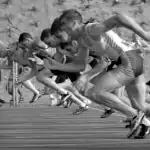
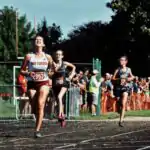
- Charts showing pictures of people running in a race
- Video clip of children running a short race
- Open field or clear space for running
- Cones or markers to mark the start and finish lines
- Whistle or clapper for signalling start
Rationale for the Lesson
This lesson is important for 5-year-olds as it introduces them to basic track events and promotes physical activity. Engaging in a 25-metre race helps develop their gross motor skills, coordination, balance, and endurance. It also teaches them about following rules, taking turns, and the joy of healthy competition, contributing to their overall physical and social development.
Prerequisite/Previous Knowledge
Pupils can already walk, jog, and follow simple instructions for movement. They have some understanding of moving their bodies in different ways.
Lesson Content/Board Summary
TRACK EVENTS: 25-METRE SHORT-DISTANCE RACE
What are Track Events?
- Track events are sports where people run, jump, or throw things.
- Today, we will talk about running events!
What is a Short-Distance Race?
- A short-distance race is when you run a short way very fast.
- It is like a quick sprint!
The 25-Metre Race
- A 25-metre race means we will run a distance of 25 big steps or metres.
- It is a short distance, so we will try to run as fast as we can from the start to the finish line.
Key Words
- Track – A special place where people run races.
- Race – A competition to see who is fastest.
- Run – To move quickly on your feet.
- Fast – Moving with great speed.
- Start – The beginning of the race.
- Finish – The end of the race.
What the Teacher Should Show or Draw
- A chart with pictures of children running a race.
- Simple drawing of a start line and a finish line with a path in between.
Movement Rhyme
Tune: “Twinkle, Twinkle Little Star”
Lyrics:
Run, run, run, so very fast,
From the start, the race will last.
To the finish, we will go,
Run, run, run, don’t be slow!
One, two, three, and off we sprint,
Running fast, with every hint!
Actions:
- “Run, run, run, so very fast”: Pump arms and pretend to run in place.
- “From the start, the race will last”: Point forward.
- “To the finish, we will go”: Point to an imaginary finish line.
- “Run, run, run, don’t be slow!”: Continue running in place.
- “One, two, three, and off we sprint”: Count on fingers, then clap and pretend to push off.
- “Running fast, with every hint!”: Continue running in place with enthusiasm.
How to use the rhyme: Sing the rhyme with the pupils while doing the actions to get them excited and ready to run. Repeat it a few times to reinforce the idea of running fast.
Watch and Practise
The teacher will show a short video clip of children running in a short-distance race to help pupils visualise the activity.
Teaching Methods/Instructional Techniques
- Demonstration
- Guided Practice
- Play-based Learning
- Songs and Rhymes
- Picture Talk
- Question and Answer
- Practical Activity
Instructional Procedures
Step 1: Introduction
Time: 2 minutes
Teaching Skill: Engaging/Recalling
Teacher’s Activity: The teacher greets the pupils and asks them about different ways they can move their bodies (e.g., walk, jump, hop). The teacher then introduces the topic: “Today, we will learn about running races, especially a short one called a 25-metre race!”
Pupils’ Activity: Pupils greet the teacher and name different body movements. They listen attentively to the introduction.
Learning Point: Pupils are introduced to the lesson topic and prepared for active learning.
Step 2: Explanation of Track Events
Time: 4 minutes
Teaching Skill: Explaining/Visualising
Teacher’s Activity: The teacher displays charts showing pictures of various track events, focusing on running. The teacher explains in simple terms that “track events” are sports where people run, jump, or throw, and today’s focus is on running.
Pupils’ Activity: Pupils look at the pictures, listen to the explanation, and repeat “track events” after the teacher.
Learning Point: Pupils understand the basic concept of track events, specifically running.
Step 3: Understanding Short-Distance Race
Time: 4 minutes
Teaching Skill: Defining/Illustrating
Teacher’s Activity: The teacher explains what a “short-distance race” means: running a short way very fast. The teacher gives examples like running to the door quickly or running to a friend. The teacher then introduces the “25-metre race” as a specific short distance.
Pupils’ Activity: Pupils listen, give their own examples of running fast, and repeat “short-distance race” and “25-metre race.”
Learning Point: Pupils grasp the meaning of a short-distance race and the specific distance of 25 metres.
Step 4: Video Demonstration
Time: 5 minutes
Teaching Skill: Visual Learning/Observation
Teacher’s Activity: The teacher plays a short, child-friendly video clip showing children participating in a short-distance race. The teacher points out how the children start, run fast, and cross the finish line.
Pupils’ Activity: Pupils watch the video, observe the children running, and clap along with the actions in the video.
Learning Point: Pupils visually understand how a short-distance race is conducted.
Step 5: Movement Rhyme and Practice
Time: 5 minutes
Teaching Skill: Rhyming/Physical Engagement
Teacher’s Activity: The teacher leads the pupils in singing the “Run, Run, Run, So Very Fast” rhyme with actions. The teacher encourages them to pump their arms and pretend to run in place, getting their bodies ready for the race.
Pupils’ Activity: Pupils sing the rhyme with the teacher, perform the actions, and practice running in place with enthusiasm.
Learning Point: Pupils engage physically and build excitement for the race through a fun rhyme.
Step 6: The 25-Metre Race Activity
Time: 5 minutes
Teaching Skill: Demonstration/Guided Practice/Supervision
Teacher’s Activity: The teacher takes pupils to the designated open field. The teacher marks a clear start and finish line (25 metres apart) using cones or markers. The teacher demonstrates how to stand at the start, listen for the signal, run straight to the finish line, and then slow down. The teacher organises pupils into small groups to take turns running the 25-metre race, ensuring safety and fair play.
Pupils’ Activity: Pupils observe the teacher’s demonstration, line up at the start, listen for the signal, and run the 25-metre race in their groups, taking turns.
Learning Point: Pupils actively participate in a 25-metre short-distance race, practising running skills and following rules.
Step 7: Evaluation/Review
Time: 4-5 minutes
Teaching Skill: Questioning/Assessment
Teacher’s Activity: The teacher checks pupils’ understanding through short questions and practical tasks.
- What did we do today? (Show running action)
- What is a “short-distance race”?
- How many metres did we run today? (Show 25 with fingers if needed)
- Can you show me how you run fast?
Pupils’ Activity: Pupils respond orally and demonstrate the required skill where appropriate.
Learning Point: Pupils demonstrate understanding of the lesson.
Step 8: Conclusion
Time: 1 minute
Teaching Skill: Summarising/Praising
Teacher’s Activity: The teacher praises the pupils for their participation and effort in the race. The teacher reminds them that running is a good way to keep their bodies strong and healthy. The teacher leads them back to the classroom.
Pupils’ Activity: Pupils listen to the teacher, feel proud of their efforts, and follow the teacher back to the classroom.
Learning Point: Pupils appreciate the importance of physical activity and conclude the lesson on a positive note.
Lesson Keywords
- Track – A path or area used for running races.
- Race – A competition where people run to see who is fastest.
- Run – To move quickly using your legs.
- Short-distance – A small or brief length.
- 25-metre – A specific length for running, like 25 big steps.
Differentiation
- Support: For pupils who are less confident, the teacher can allow them to run a shorter distance (e.g., 10-15 metres) or run alongside them for encouragement. They can also be paired with a more confident peer.
- Extension: For pupils who grasp the concept quickly and run well, the teacher can challenge them to run a little faster or focus on their starting technique. They can also help set up the cones or cheer for their classmates.
Note for teachers using this lesson plan
Before the lesson, ensure you have a safe, clear, open space for the race, free from obstacles. Mark the start and finish lines clearly with cones or other visible markers. Prepare your charts and have the video clip ready to play. Emphasise safety rules before, during, and after the race, such as looking where they are going, not pushing others, and slowing down gradually after crossing the finish line. Observe each child’s running style and provide gentle encouragement. The main goal is participation and enjoyment, not just speed. Repeat the rhyme as needed to keep energy levels high. Judge understanding by observing their active participation and their ability to follow instructions during the race.
Community Join the conversation Open discussion +