

Class: Pre-School Level 4
Term: Third Term
Week: 9
Age: 5 years
Duration: 30 minutes
Subject: Basic Science and Technology
Curriculum Theme: Basic Science and Technology
Previous Lesson: Identifying different tools and objects used at home.
Topic: SIMPLE MACHINES USED AT HOME
Subject Matter: Meaning, examples and uses of simple machines at home.
Specific Objectives
By the end of the lesson, pupils should be able to:
Cognitive Domain
- Tell what a simple machine is in their own words.
- Identify common simple machines found at home from pictures or real objects.
- State one use for each identified simple machine.
Affective Domain
- Show interest in learning about tools that make work easier.
- Appreciate how simple machines help people in their daily lives at home.
Psychomotor Domain
- Point to specific simple machines when named.
- Demonstrate (mimic) the action of using some simple machines like a broom or hammer.
Social Domain
- Participate in discussions about simple machines used at home.
- Take turns sharing their observations about the tools.
Reference Materials
- NAPPS National Unified Teaching Scheme for Pre-School Level 4.
- Relevant Early Childhood Care and Education resources.
Instructional Materials
- Real objects: broom, bottle opener, small toy hammer (for demonstration, or a real hammer for teacher display only).
- Pictures/flashcards of: rake, hammer, broom, bottle opener, screwdriver, knife.
- Chart showing different simple machines and their uses at home.
Rationale for the Lesson
This lesson introduces 5-year-olds to the concept of simple machines using familiar household items. Understanding how these tools make work easier helps children observe their environment more keenly and appreciate the practical application of basic science in everyday life. It also lays a foundation for understanding more complex machines later.Prerequisite/Previous Knowledge
Pupils are familiar with various objects and tools used by their parents and guardians for daily chores at home. They can recognise common household items.Lesson Content/Board Summary
SIMPLE MACHINES USED AT HOME
A simple machine is a tool that helps us do work more easily and quickly. It makes our muscles work less hard to get a job done.
Examples and Uses of Simple Machines at Home:
- Broom: Used for sweeping dirt and dust from the floor. (It helps us move dirt easily).
- Hammer: Used for hitting nails into wood or removing nails. (It helps us push or pull with force).
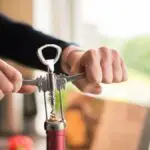
- Bottle Opener: Used for opening bottles with caps. (It helps us lift the cap easily).
- Knife: Used for cutting food or other soft materials. (It helps us split things apart).
- Rake: Used for gathering leaves or clearing debris in the garden. (It helps us pull things together).
- Screwdriver: Used for turning screws to fasten or unfasten things. (It helps us twist things easily).
Key Words
- Simple machine – a tool that helps us do work easily.
- Broom – used for sweeping.
- Hammer – used for hitting nails.
- Knife – used for cutting.
What the Teacher Should Show or Draw
The teacher should display real simple machines like a broom and bottle opener. For others like a hammer, rake, screwdriver, and knife, clear pictures or flashcards should be shown, with emphasis on safe handling for the knife and hammer.
Simple Machines Song
Tune: Twinkle, Twinkle Little Star
Lyrics:
Machines, machines, help us all,
Make our work not big, but small.
Broom to sweep, and hammer strong,
Help us work the whole day long.
Machines, machines, in our home,
Help us work and never roam.
Actions: Pupils can mimic sweeping with a broom, hitting with a hammer, or opening a bottle while singing.
How to use the rhyme: Sing the song together after introducing a few examples of simple machines. Use the actions to reinforce the uses of each machine.
Video Demonstration
The teacher can show a short educational video to further illustrate simple machines and their uses in a fun, engaging way.
Teaching Methods/Instructional Techniques
Play-based Learning, Demonstration, Guided Practice, Question and Answer, Picture Talk, Manipulation of Objects, Repetition, Songs and Rhymes.Instructional Procedures
Step 1: Introduction
Time: 3 minutes
Teaching Skill: Engagement/Recall
Teacher’s Activity: The teacher greets the pupils and starts with a short song about helping at home. The teacher asks pupils what tools their parents use to do chores like sweeping, cutting food, or fixing things.
Pupils’ Activity: Pupils respond to greetings, sing along, and name some tools they see at home (e.g., broom, knife, spoon).
Learning Point: Pupils recall familiar household items and engage with the lesson’s theme.
Step 2: Introducing Simple Machines
Time: 4 minutes
Teaching Skill: Explanation/Concept Introduction
Teacher’s Activity: The teacher explains that many of the tools they named are called “simple machines” because they help us do work easily. The teacher defines a simple machine in simple terms: “things that help us work with less effort.”
Pupils’ Activity: Pupils listen attentively and repeat the phrase “simple machine” after the teacher.
Learning Point: Pupils understand the basic meaning of a simple machine.
Step 3: Examples and Uses (Broom and Hammer)
Time: 5 minutes
Teaching Skill: Demonstration/Identification
Teacher’s Activity: The teacher shows a real broom and a picture of a hammer. For each, the teacher asks, “What is this?” and “What do we use it for?” The teacher demonstrates the action of sweeping with the broom and mimics hammering with a toy hammer or hand gesture, explaining how it makes work easier.
Pupils’ Activity: Pupils identify the broom and hammer, state their uses, and mimic the actions demonstrated by the teacher.
Learning Point: Pupils identify and understand the uses of a broom and hammer as simple machines.
Step 4: Examples and Uses (Bottle Opener and Knife)
Time: 5 minutes
Teaching Skill: Demonstration/Safety Awareness
Teacher’s Activity: The teacher shows a real bottle opener and a picture of a knife. For each, the teacher asks about its name and use. The teacher demonstrates opening a bottle with the opener and explains that a knife cuts things, emphasizing that knives are sharp and only adults should use them. “Children should not touch knives.”
Pupils’ Activity: Pupils identify the bottle opener and knife, state their uses, and repeat the safety rule about knives.
Learning Point: Pupils identify and understand the uses of a bottle opener and knife, and learn knife safety.
Step 5: Examples and Uses (Rake and Screwdriver)
Time: 4 minutes
Teaching Skill: Visual Identification/Application
Teacher’s Activity: The teacher shows pictures of a rake and a screwdriver. The teacher asks pupils if they have seen these tools and what they are used for, guiding them to understand their functions (raking leaves, turning screws).
Pupils’ Activity: Pupils identify the rake and screwdriver from pictures and describe their uses based on teacher guidance.
Learning Point: Pupils identify and understand the uses of a rake and screwdriver.
Step 6: Rhyme and Reinforcement
Time: 4 minutes
Teaching Skill: Musical Reinforcement
Teacher’s Activity: The teacher leads the pupils in singing the “Simple Machines Song” with actions. The teacher encourages pupils to remember how each machine helps.
Pupils’ Activity: Pupils sing the song with enthusiasm and perform the actions, reinforcing their understanding of simple machines.
Learning Point: Pupils consolidate their learning through song and movement.
Step 7: Evaluation/Review
Time: 4 minutes
Teaching Skill: Questioning/Assessment
Teacher’s Activity: The teacher checks pupils’ understanding through short questions and practical tasks.
- “What is a simple machine?”
- “Point to the broom. What is it used for?”
- “Show me how you would use a hammer (mimic action).”
- “Name one simple machine we use for cutting.”
Pupils’ Activity: Pupils respond orally and demonstrate the required skill where appropriate.
Learning Point: Pupils demonstrate understanding of the lesson.
Step 8: Conclusion
Time: 1 minute
Teaching Skill: Summarisation/Closure
Teacher’s Activity: The teacher praises the pupils for their participation and reminds them that simple machines make our lives easier. The teacher encourages them to look for more simple machines at home.
Pupils’ Activity: Pupils listen and respond to the teacher’s praise.
Learning Point: Pupils conclude the lesson with a reinforced understanding of simple machines.
Lesson Keywords
- Simple machine – a tool that helps us do work easily.
- Broom – a tool for sweeping floors.
- Hammer – a tool for hitting nails.
- Knife – a tool for cutting.
- Bottle opener – a tool for opening bottles.
Differentiation
- Support: For pupils who are struggling, the teacher can use larger pictures, provide more repetition, and focus on only two or three key simple machines. Hand-over-hand guidance can be used for mimicking actions.
- Extension: For pupils who grasp the concept quickly, the teacher can ask them to name other simple machines they have seen at home or describe in more detail how a particular machine makes work easier. They can also be asked to draw one simple machine and its use.

Community Join the conversation Open discussion +