

Class: Pre-School Level 4
Term: Second Term
Week: 8
Age: 5 years
Duration: 30 minutes
Subject: Physical and Health Education
Curriculum Theme: Physical and Health Education
Previous Lesson: Basic body movements like swinging and twisting.
Topic: BODY EXERCISE: JUMPING AND BENDING
Subject Matter: Jumping and bending as body exercises and how to perform them.
Specific Objectives
By the end of the lesson, pupils should be able to:
Cognitive Domain
- Identify jumping and bending as body exercises.
- State at least one importance of jumping and bending.
Affective Domain
- Show enthusiasm for physical activities.
- Listen attentively to instructions for performing exercises.
Psychomotor Domain
- Demonstrate jumping safely.
- Demonstrate bending safely.
Social Domain
- Participate actively in group exercises.
- Follow the teacher’s guidance during physical activities.
Reference Materials
- NAPPS National Unified Teaching Scheme for Pre-School Level 4.
- Early Childhood Care and Education curriculum resources.
- Relevant Physical and Health Education textbooks for early years.
Instructional Materials
- Charts showing pictures of children jumping and bending.
- Open space (classroom or playground).
- Music player (optional, for exercise music).
Rationale for the Lesson
This lesson is important for 5-year-olds as it introduces fundamental body exercises that enhance their gross motor skills, coordination, and overall physical development. Learning to jump and bend safely helps children build strength, flexibility, and body awareness, which are crucial for their health and everyday activities.
Prerequisite/Previous Knowledge
Pupils have previously engaged in simple body movements like swinging their arms and twisting their bodies, and they can follow basic movement instructions.
Lesson Content/Board Summary
BODY EXERCISE: JUMPING AND BENDING
Jumping and bending are fun ways to move our bodies and keep them strong and healthy!
What is Jumping?
Jumping is when you push off the ground with both feet and land back down. It makes your legs strong!
- How to Jump:
- Stand tall with feet together.
- Bend your knees a little.
- Swing your arms up and push off the ground.
- Land softly on both feet.
What is Bending?
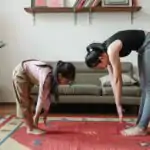
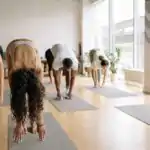
Bending is when you move a part of your body so it is not straight, like bending your knees or bending down to touch your toes. It makes your body flexible!
- How to Bend:
- Bending Knees: Stand tall, then slowly bend your knees as if you are going to sit on a chair, keeping your back straight.
- Bending Forward: Stand tall, then slowly bend your body forward from your waist, trying to touch your toes with your hands.
Importance of Jumping and Bending (Why we do them):
- They make our muscles strong.
- They help us run, play, and move easily.
- They keep our bodies healthy.
- They make us feel happy and energetic!
Movement Rhyme
Tune: “The Wheels on the Bus”
Lyrics:
We jump, jump, jump, all around the room,
All around the room, all around the room.
We jump, jump, jump, all around the room,
To make our bodies strong!
We bend, bend, bend, to touch our toes,
Touch our toes, touch our toes.
We bend, bend, bend, to touch our toes,
To make our bodies stretch!
Actions: For “jump, jump, jump” pupils jump lightly. For “bend, bend, bend” pupils bend forward to touch their toes or bend their knees.
How to use the rhyme: Sing the rhyme while demonstrating the actions. Encourage pupils to follow along, first jumping, then bending, then combining both.
What the Teacher Should Show or Draw
- Display charts with clear pictures of children jumping and bending.
- Demonstrate correct and safe ways to jump and bend.
- Draw simple stick figures showing the different stages of jumping and bending.
Watch and Move Along
Let’s watch a short video to see more jumping and bending exercises and try to do them together!
Key Words
- Jump – To push off the ground with both feet and land.
- Bend – To move a part of your body so it is not straight.
- Exercise – Movement that makes your body strong and healthy.
- Strong – Having power in your muscles.
- Flexible – Able to bend easily.
Teaching Methods/Instructional Techniques
Play-based Learning, Demonstration, Guided Practice, Songs and Rhymes, Imitation, Practical Activity, Question and Answer.Instructional Procedures
Step 1: Introduction
Time: 3 minutes
Teaching Skill: Warming up/Engagement
Teacher’s Activity: The teacher greets the pupils and leads a short warm-up activity like marching in place or stretching arms up high. The teacher reminds them of previous body movements like swinging and twisting.
Pupils’ Activity: Pupils greet the teacher, participate in the warm-up, and recall previous movements.
Learning Point: Pupils prepare their bodies for activity and connect to prior knowledge.
Step 2: Introduction to Jumping
Time: 5 minutes
Teaching Skill: Demonstration/Explanation
Teacher’s Activity: The teacher introduces “jumping” as a body exercise. The teacher displays pictures of children jumping and demonstrates a simple jump, explaining how to push off with both feet and land softly. The teacher emphasizes safety (looking where you jump, not bumping into others).
Pupils’ Activity: Pupils observe the pictures and the teacher’s demonstration, listening to the explanation and safety tips.
Learning Point: Pupils understand what jumping is and observe how to perform it safely.
Step 3: Guided Practice – Jumping
Time: 5 minutes
Teaching Skill: Guided Practice/Correction
Teacher’s Activity: The teacher guides pupils to practice jumping in place. The teacher provides verbal cues (“Bend your knees, push up, land soft!”) and offers individual feedback and encouragement. The teacher ensures enough space for each child.
Pupils’ Activity: Pupils practice jumping, imitating the teacher’s movements and following instructions.
Learning Point: Pupils develop their jumping skills with guided support.
Step 4: Introduction to Bending
Time: 5 minutes
Teaching Skill: Demonstration/Explanation
Teacher’s Activity: The teacher introduces “bending” as another body exercise. The teacher displays pictures of children bending (e.g., touching toes, bending knees) and demonstrates different types of bending. The teacher explains how bending helps the body stretch.
Pupils’ Activity: Pupils observe the pictures and the teacher’s demonstration, listening to the explanation.
Learning Point: Pupils understand what bending is and observe how to perform it.
Step 5: Guided Practice – Bending and Rhyme Integration
Time: 5 minutes
Teaching Skill: Guided Practice/Song
Teacher’s Activity: The teacher guides pupils to practice bending their knees and bending forward to touch their toes. The teacher then leads the class in singing the “Jumping and Bending” rhyme, encouraging pupils to perform the actions as they sing.
Pupils’ Activity: Pupils practice different bending movements and sing the rhyme while performing the actions.
Learning Point: Pupils improve their bending skills and reinforce learning through song and movement.
Step 6: Importance of Exercises and Combined Movements
Time: 2 minutes
Teaching Skill: Discussion/Reinforcement
Teacher’s Activity: The teacher briefly discusses why jumping and bending are good for their bodies (strong muscles, healthy, energetic). The teacher then leads pupils in a short sequence combining a jump and a bend (e.g., “Jump up! Now bend down!”).
Pupils’ Activity: Pupils listen and repeat the importance of exercises. They follow the teacher’s combined movement sequence.
Learning Point: Pupils understand the benefits of the exercises and practice combining movements.
Step 7: Evaluation/Review
Time: 4 minutes
Teaching Skill: Questioning/Assessment
Teacher’s Activity: The teacher checks pupils’ understanding through short questions and practical tasks.
- “Can you show me how to jump?”
- “Can you show me how to bend down and touch your toes?”
- “What do jumping and bending do for our bodies?” (Accept “make us strong,” “make us healthy,” “help us play”).
Pupils’ Activity: Pupils respond orally and demonstrate the required skill where appropriate.
Learning Point: Pupils demonstrate understanding of the lesson.
Step 8: Conclusion
Time: 1 minute
Teaching Skill: Recap/Cool-down
Teacher’s Activity: The teacher praises the pupils for their participation and reminds them to keep their bodies active. The teacher leads a short cool-down stretch.
Pupils’ Activity: Pupils participate in the cool-down and acknowledge the importance of staying active.
Learning Point: Pupils end the lesson feeling positive about physical activity.
Lesson Keywords
- Jump – To push off the ground with both feet and land.
- Bend – To move a part of your body so it is not straight.
- Exercise – Movement that makes your body strong and healthy.
- Body – The whole physical structure of a person.
Differentiation
- Support: For pupils who find it difficult to jump, encourage them to do small hops. For bending, guide them to bend their knees first if touching toes is too hard. Provide hand-over-hand support for bending if needed. Use visual cues and one-on-one demonstration.
- Extension: For pupils who quickly grasp the movements, challenge them to jump higher or further (within safe limits), or to try bending and touching their ankles instead of toes. Encourage them to lead a small group in the rhyme and actions.
Note for teachers using this lesson plan
Ensure a clear, open space for pupils to move freely without bumping into each other. Emphasize safety instructions before and during the activities, such as looking where they are going and landing softly. Demonstrate each movement clearly and slowly before asking pupils to try. Provide plenty of positive reinforcement and encouragement, especially for those who may be shy or less coordinated. Observe pupils’ movements to correct any unsafe practices gently. The main idea children should grasp is that jumping and bending are fun ways to make their bodies strong and healthy. Observable actions like correctly performing a jump or a bend will show understanding.
Community Join the conversation Open discussion +