

Class: Primary 4
Term: 3rd Term
Week: 8
Age: 9 years
Duration: 45 minutes
Subject: General Mathematics
Curriculum Theme: Geometry
Previous Lesson: Identification, Properties and Construction of Three Dimensional Shapes.
Topic: Three Dimensional Shapes
Subject Matter: Uses of cubes cuboids and cylinders at home, identification of 3-dimensional shapes in homes and environments, completing table of faces edges and vertices for common objects, problem solving on 3-dimensional shapes, quantitative aptitude on 3-dimensional shapes.
Specific Objectives
By the end of the lesson, pupils should be able to:
Cognitive Domain:
- Define three-dimensional shapes.
- Identify uses of cubes, cuboids, and cylinders at home.
- Identify three-dimensional shapes in their homes and environments.
- State the number of faces, edges, and vertices for common 3D shapes.
- Solve simple problems involving 3D shapes.
Affective Domain:
- Appreciate the presence and importance of 3D shapes in their daily lives.
- Show interest in identifying and describing 3D objects around them.
Psychomotor Domain:
- Complete a table showing the faces, edges, and vertices of given objects.
- Draw simple representations of 3D shapes.
Social Domain:
- Participate actively in group discussions about 3D shapes.
- Work collaboratively with peers to identify shapes.
Reference Materials
The following resources were used in planning this lesson:
- 9 Years Basic Education Curriculum.
- State Unified Scheme of Work for Primary 4.
- New General Mathematics for Primary Schools 4.
- https://www.education.gov.ng/
- https://www.nerdc.gov.ng/
Instructional Materials
The teacher will teach this lesson with the aid of:
- Charts showing various 3-dimensional shapes (e.g., cube, cuboid, cylinder, sphere).
- Real-life objects such as a dice (cube), matchbox (cuboid), tin can (cylinder), ball (sphere).
- A table showing faces, edges, and vertices of common 3D shapes.
- Pupils’ textbooks and mathematical sets.
Rationale for the Lesson
This lesson helps pupils understand the shapes of objects around them in their daily lives. Recognizing three-dimensional shapes enables pupils to better describe their environment and solve practical problems related to space and measurement.
Prerequisite/Previous Knowledge
Pupils have prior knowledge of two-dimensional (2D) shapes like squares, rectangles, and circles. They can also identify basic objects in their homes and environment.
Lesson Content/Board Summary
Three Dimensional (3D) Shapes
What are Three-Dimensional (3D) Shapes?
Three-dimensional (3D) shapes are solid shapes that have length, width, and height (or depth). Unlike 2D shapes which are flat, 3D shapes take up space.
Common Examples of 3D Shapes
The following are common 3D shapes:
- Cube
- Cuboid
- Cylinder
- Sphere
- Cone
- Pyramid
Uses of Cubes, Cuboids, and Cylinders at Home
The following are uses of these shapes:
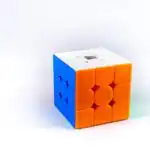
- Cube: Dice, sugar cubes, some building blocks.
- Cuboid: Books, shoeboxes, refrigerators, cupboards, bricks.
- Cylinder: Tin cans, water pipes, drums, batteries, rollers.
Identification of 3D Shapes in Homes and Environments
Pupils can identify 3D shapes in many objects around them:
- A football is a sphere.
- A juice pack is a cuboid.
- A tin of Milo is a cylinder.
- A room is often a cuboid.
- An ice cream cone is a cone.
Faces, Edges, and Vertices of 3D Shapes
Three-dimensional shapes have specific parts:
- Faces: These are the flat surfaces of a 3D shape.
- Edges: These are the lines where two faces meet.
- Vertices: These are the corners or points where edges meet.
The following table shows the parts of common 3D shapes:
| Shape | Faces | Edges | Vertices |
|---|---|---|---|
| Cube | 6 | 12 | 8 |
| Cuboid | 6 | 12 | 8 |
| Cylinder | 3 (2 circular, 1 curved) | 2 (curved) | 0 |
| Sphere | 1 (curved) | 0 | 0 |
Problem Solving on 3-Dimensional Shapes
Problem solving on 3D shapes involves questions about identifying shapes, counting their faces, edges, or vertices, and relating them to real-life objects.
Quantitative Aptitude on 3-Dimensional Shapes
Quantitative aptitude questions on 3D shapes may involve identifying patterns, comparing features of different shapes, or simple calculations related to their properties.
Teaching Methods/Instructional Techniques
Discussion, Lecture, Demonstration, Question and Answer, Visual Aids
Instructional Procedures
Step 1: Introduction
Time: 5 minutes
Teaching Skill: Set Induction
Teacher’s Activity: The teacher greets the pupils and asks them to look around the classroom. The teacher then asks pupils to name some objects they see and describe their general shapes (e.g., “The board is flat,” “The box is solid”). The teacher introduces the topic by explaining that some objects are flat (2D) while others are solid (3D).
Pupils’ Activity: Pupils respond to greetings, name objects, and describe shapes as prompted by the teacher.
Learning Point: Pupils are introduced to the concept of shapes and distinguish between flat and solid objects.
Step 2: Explanation of 3D Shapes and Examples
Time: 6 minutes
Teaching Skill: Explanation/Demonstration
Teacher’s Activity: The teacher defines three-dimensional (3D) shapes as solid shapes with length, width, and height. The teacher shows real-life examples of 3D shapes like a dice (cube), a matchbox (cuboid), and a tin can (cylinder), naming each one.
Pupils’ Activity: Pupils listen attentively, observe the examples, and repeat the names of the 3D shapes.
Learning Point: Pupils understand the definition of 3D shapes and can identify basic examples.
Step 3: Uses of Cubes, Cuboids, and Cylinders at Home
Time: 7 minutes
Teaching Skill: Discussion/Brainstorming
Teacher’s Activity: The teacher asks pupils to think of objects in their homes that are shaped like a cube, cuboid, or cylinder. The teacher guides the discussion, listing the uses on the board.
Pupils’ Activity: Pupils share examples of objects from their homes and state their uses.
Learning Point: Pupils connect 3D shapes to everyday objects and understand their practical uses.
Step 4: Identification of 3D Shapes in Homes and Environments
Time: 7 minutes
Teaching Skill: Observation/Question and Answer
Teacher’s Activity: The teacher displays charts with pictures of various objects found at home and in the environment (e.g., a ball, a building, a water tank). The teacher asks pupils to identify the 3D shapes represented by these objects.
Pupils’ Activity: Pupils observe the charts and identify the 3D shapes of the objects.
Learning Point: Pupils improve their ability to identify 3D shapes in different contexts.
Step 5: Faces, Edges, and Vertices of 3D Shapes
Time: 8 minutes
Teaching Skill: Demonstration/Explanation
Teacher’s Activity: Using the real-life objects (dice, matchbox, tin can), the teacher demonstrates and explains what faces, edges, and vertices are for each shape. The teacher then presents a table of faces, edges, and vertices for common 3D shapes and guides pupils to copy and complete it in their notebooks.
Pupils’ Activity: Pupils observe the demonstration, listen to explanations, and copy the table, filling in the correct numbers for faces, edges, and vertices.
Learning Point: Pupils learn and understand the distinct features (faces, edges, vertices) of 3D shapes.
Step 6: Problem Solving and Quantitative Aptitude
Time: 6 minutes
Teaching Skill: Problem Solving/Application
Teacher’s Activity: The teacher presents simple problems on the board, such as “A box has 6 rectangular faces, 12 edges, and 8 vertices. What shape is it?” or “How many curved edges does a cylinder have?”. The teacher guides pupils to solve these problems.
Pupils’ Activity: Pupils attempt to solve the problems presented by the teacher, either individually or in pairs.
Learning Point: Pupils apply their knowledge of 3D shapes to solve simple problems and quantitative aptitude questions.
Step 7: Evaluation/Review
Time: 5 minutes
Teaching Skill: Questioning/Assessment
Teacher’s Activity: The teacher evaluates the learning by asking the following questions:
- What are three-dimensional shapes?
- Mention two uses of a cuboid at home.
- Name two 3D shapes you can find in your school environment.
- How many faces, edges, and vertices does a cube have?
Pupils’ Activity: Pupils answer orally and in writing.
Learning Point: Pupils demonstrate understanding of the lesson.
Step 8: Conclusion
Time: 1 minute
Teaching Skill: Summarization
Teacher’s Activity: The teacher summarizes the lesson by reiterating the importance of 3D shapes in everyday life and encourages pupils to identify more 3D shapes around them. The teacher assigns homework.
Pupils’ Activity: Pupils listen to the summary and copy the homework.
Learning Point: Pupils consolidate their learning and are encouraged to continue observing their environment for 3D shapes.
Home Task: Solve three new exercises on Three Dimensional Shapes. Show each step and check each answer.
Lesson Keywords
- Three-dimensional (3D) shapes – Shapes that have length, width, and height.
- Cube – A 3D shape with 6 equal square faces, 12 edges, and 8 vertices.
- Cuboid – A 3D shape with 6 rectangular faces, 12 edges, and 8 vertices.
- Cylinder – A 3D shape with two circular bases and one curved surface.
- Faces – The flat surfaces of a 3D shape.
- Edges – The lines where two faces of a 3D shape meet.
- Vertices – The corners or points where edges of a 3D shape meet.
Differentiation
For pupils who grasp concepts quickly, the teacher can challenge them to identify more complex 3D shapes or draw them. For pupils who need more support, the teacher will provide additional real-life examples and one-on-one guidance, using physical objects to help them count faces, edges, and vertices.
Note for teachers using this lesson plan
Encourage pupils to bring in examples of 3D objects from home for a practical demonstration. Emphasize the connection between the abstract mathematical concepts and the tangible objects in their environment. Ensure clear demonstration of faces, edges, and vertices using physical models.

Community Join the conversation Open discussion +