

Note for teachers using this lesson plan
Before this lesson, ensure you have a functional clock or a clear time chart to visually demonstrate the relationships between seconds, minutes, and hours. The central concept is converting between these units using multiplication and division. Guide pupils through practical examples and ensure they understand when to apply each operation. By the end, pupils should be able to confidently convert simple quantities of seconds to minutes and minutes to hours.
Class: Primary 4
Term: First Term
Week: 2
Age: 9 years
Duration: 45 minutes
Subject: Mathematics
Curriculum Theme: Number and Numeration
Focal competence: Counting up to one million and in groups of 5’s, 7’s 12’s and 60 ’s
Key competencies/values: Information Literacy
Skills:
- Converting seconds into minutes and hours
Previous Lesson: Whole Numbers to One Million with Counting in Groups of 5s, 7s, 12s and 60s
Topic: Whole Numbers: Time Conversion
Subject Matter: Converting seconds to minutes and minutes to hours
Specific Objectives
By the end of the lesson, pupils should be able to:
Cognitive Domain
- State the relationship between seconds and minutes.
- State the relationship between minutes and hours.
- Recall the rule for converting smaller units to larger units.
Psychomotor Domain
- Convert given quantities of seconds into minutes.
- Convert given quantities of minutes into hours.
Reference Materials
The following resources were used in planning this lesson:
- 2025 Revised 9 Years Basic Education Curriculum
- Relevant State Unified Scheme of Work
- A suitable Mathematics textbook for Primary 4
- The HeadTeacher Scheme of work
Instructional Materials
The teacher will teach this lesson with the aid of:
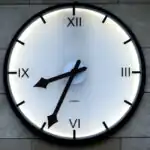
- A wall clock or wristwatch
- A time chart showing units of time
- Sticks
- Bottle covers
- Calendars
- Cartons of drinks
- Multimedia applications (if available)
Rationale for the Lesson
This lesson helps pupils understand how different units of time relate to each other, which is essential for managing daily schedules and understanding time-related problems. It builds foundational mathematical skills in unit conversion and reinforces the concepts of multiplication and division in practical contexts.
Prerequisite/Previous Knowledge
Pupils should be able to count, perform basic multiplication and division, and know the basic units of time such as seconds, minutes, and hours.
Lesson Content/Board Summary
Whole Numbers: Time Conversion
Units of Time
Time is measured in different units such as seconds, minutes, and hours. These units are related to each other:
- 60 seconds make 1 minute.
- 60 minutes make 1 hour.
Conversion Rule
When converting units of time:
- To convert from a smaller unit to a larger unit, we divide. For example, to convert seconds to minutes, we divide by 60. To convert minutes to hours, we divide by 60.
- To convert from a larger unit to a smaller unit, we multiply. For example, to convert minutes to seconds, we multiply by 60. To convert hours to minutes, we multiply by 60.
Converting Seconds to Minutes
To convert seconds to minutes, divide the number of seconds by 60.
( text{Minutes} = frac{text{Seconds}}{60} )
Example 1
Question: Convert 120 seconds to minutes.
Solution:
Step 1: Write the formula.
( text{Minutes} = frac{text{Seconds}}{60} )
Step 2: Substitute the values.
( text{Minutes} = frac{120}{60} )
Step 3: Simplify and write the answer.
( text{Minutes} = 2 )
Answer: 120 seconds is equal to 2 minutes.
Example 2
Question: Convert 300 seconds to minutes.
Solution:
Step 1: Write the formula.
( text{Minutes} = frac{text{Seconds}}{60} )
Step 2: Substitute the values.
( text{Minutes} = frac{300}{60} )
Step 3: Simplify and write the answer.
( text{Minutes} = 5 )
Answer: 300 seconds is equal to 5 minutes.
Converting Minutes to Hours
To convert minutes to hours, divide the number of minutes by 60.
( text{Hours} = frac{text{Minutes}}{60} )
Example 1
Question: Convert 180 minutes to hours.
Solution:
Step 1: Write the formula.
( text{Hours} = frac{text{Minutes}}{60} )
Step 2: Substitute the values.
( text{Hours} = frac{180}{60} )
Step 3: Simplify and write the answer.
( text{Hours} = 3 )
Answer: 180 minutes is equal to 3 hours.
Example 2
Question: Convert 240 minutes to hours.
Solution:
Step 1: Write the formula.
( text{Hours} = frac{text{Minutes}}{60} )
Step 2: Substitute the values.
( text{Hours} = frac{240}{60} )
Step 3: Simplify and write the answer.
( text{Hours} = 4 )
Answer: 240 minutes is equal to 4 hours.
Teaching Methods/Instructional Techniques
Discussion, Demonstration, Guided Practice, Question and Answer, Explanation, Individual Practice
Instructional Procedures
Step 1: Introduction
Time: 5 minutes
Teaching Skill: Engagement/Recalling
Teacher’s Activity: The teacher greets the pupils and asks them to name units of time they know. The teacher then introduces the topic: converting seconds to minutes and minutes to hours.
Pupils’ Activity: Pupils respond to greetings and name units of time like seconds, minutes, hours, days. They listen attentively to the introduction.
Learning Point: Introduction to time conversion
Step 2: Units of Time and Relationships
Time: 8 minutes
Teaching Skill: Explanation/Demonstration
Teacher’s Activity: The teacher uses a clock or time chart to show the relationship between seconds, minutes, and hours, emphasizing that 60 seconds make 1 minute and 60 minutes make 1 hour. The teacher explains that these are the key facts for conversion.
Pupils’ Activity: Pupils observe the clock/chart and repeat the relationships between the units of time.
Learning Point: Time unit relationships
Step 3: Conversion Rule Explained
Time: 7 minutes
Teaching Skill: Explanation/Questioning
Teacher’s Activity: The teacher explains the general rule for conversion: “When converting from a smaller unit to a larger unit, we divide. When converting from a larger unit to a smaller unit, we multiply.” The teacher asks pupils to state when to divide and when to multiply.
Pupils’ Activity: Pupils listen to the explanation and answer questions about when to divide or multiply for conversion.
Learning Point: Conversion rule application
Step 4: Converting Seconds to Minutes
Time: 7 minutes
Teaching Skill: Demonstration/Guided Practice
Teacher’s Activity: The teacher demonstrates how to convert seconds to minutes using examples like 120 seconds = 2 minutes, showing the division by 60. The teacher guides pupils through a similar example.
Pupils’ Activity: Pupils follow the teacher’s demonstration and participate in solving a guided example, converting seconds to minutes.
Learning Point: Seconds to minutes conversion
Step 5: Converting Minutes to Hours
Time: 7 minutes
Teaching Skill: Demonstration/Guided Practice
Teacher’s Activity: The teacher demonstrates how to convert minutes to hours using examples like 180 minutes = 3 hours, showing the division by 60. The teacher guides pupils through another example.
Pupils’ Activity: Pupils observe the demonstration and work through a guided example, converting minutes to hours.
Learning Point: Minutes to hours conversion
Step 6: Individual Practice
Time: 4 minutes
Teaching Skill: Individual Practice
Teacher’s Activity: The teacher gives pupils simple conversion problems to solve individually in their notebooks, such as “Convert 360 seconds to minutes” and “Convert 300 minutes to hours.”
Pupils’ Activity: Pupils solve the given conversion problems in their notebooks.
Learning Point: Independent conversion practice
Step 7: Evaluation/Review
Time: 5 minutes
Teaching Skill: Questioning/Assessment
Teacher’s Activity: The teacher evaluates the learning by asking the following questions:
- How many seconds are in 1 minute?
- How many minutes are in 1 hour?
- Convert 240 seconds to minutes.
- Convert 120 minutes to hours.
Pupils’ Activity: Pupils answer orally and in writing.
Learning Point: Understanding time conversion
Step 8: Note-Taking
Time: 4 minutes
Teaching Skill: Guided Writing
Teacher’s Activity: The teacher guides pupils to copy the essential Board Summary notes on converting seconds to minutes and minutes to hours into their notebooks.
Pupils’ Activity: Pupils copy the notes carefully into their notebooks.
Learning Point: Recording lesson notes
Step 9: Conclusion
Time: 2 minutes
Teaching Skill: Consolidation
Teacher’s Activity: The teacher briefly reminds pupils that knowing how to convert time units is useful in everyday life and encourages them to practice more. The teacher praises them for their participation.
Pupils’ Activity: Pupils listen attentively and respond to the teacher’s encouragement.
Learning Point: Reinforcing time conversion
Continuous Assessment/Further Study
Type: Homework
Instruction: Solve the following conversion problems in your Mathematics notebook:
- Convert 420 seconds to minutes.
- Convert 600 seconds to minutes.
- Convert 360 minutes to hours.
- Convert 480 minutes to hours.
- If a task takes 90 minutes, how many hours and minutes is that?
Lesson Keywords
- Second – A very small unit of time.
- Minute – A unit of time equal to 60 seconds.
- Hour – A unit of time equal to 60 minutes.
- Convert – To change from one unit to another.
- Division – An operation used to convert smaller units to larger units.
- Multiplication – An operation used to convert larger units to smaller units.
Differentiation
For pupils who find it challenging, provide a conversion table and more one-on-one guidance with simpler numbers. For faster learners, introduce more complex problems, such as converting seconds directly to hours (e.g., 7200 seconds to hours) or word problems involving time conversion.
Suggested Lesson Videos
Search on YouTube for: “Primary 4 time conversion seconds minutes hours”
Teacher Guide for Using This Lesson Plan
Ensure you have a clear visual aid like a clock or a prepared time chart to make the abstract concept of time conversion concrete. Begin by revising the basic units of time and their relationships. Clearly explain the rule of dividing for smaller-to-larger unit conversion. Demonstrate each conversion step-by-step with simple, whole numbers before moving to guided practice. Encourage pupils to actively participate in solving problems on the board and in their notebooks. Monitor their work during individual practice to identify common errors, especially with division. The Board Summary should be copied after the main teaching and practice, serving as a clear reference for pupils. Provide immediate feedback during the evaluation to correct any misconceptions and reinforce correct methods.
Community Join the conversation Open discussion +