

Class: Primary 1
Term: 3rd Term
Week: 6
Age: 6 years
Duration: 45 minutes
Subject: Mathematics
Curriculum Theme: Geometry (Shapes and Space)
Previous Lesson: .
Topic: 3 – Dimensional Shapes
Subject Matter: Identification of cubes, cuboids, cylinders, spheres; distinguishing between cubes and cuboids; collection and categorization of 3-dimensional objects.
Specific Objectives
By the end of the lesson, pupils should be able to:
Cognitive Domain:
- Identify examples of cubes, cuboids, cylinders, and spheres.
- Distinguish between a cube and a cuboid based on their appearance.
- Mention solid shapes found in their homes and environment.
Affective Domain:
- Appreciate the presence and importance of 3-dimensional shapes in everyday life.
Psychomotor Domain:
- Collect and sort various 3-dimensional objects.
- Point out 3-dimensional shapes from real-life objects.
Social Domain:
- Work cooperatively in groups to identify and categorize 3-dimensional objects.
Reference Materials
The following resources were used in planning this lesson:
- 9 Years Basic Education Curriculum for Primary 1.
- State Unified Scheme of Work.
- New General Mathematics for Primary Schools Book 1.
- Real-life examples of 3D shapes.
Instructional Materials
The teacher will teach this lesson with the aid of:
- A dice
- A matchbox
- A can of milk or soft drink
- A ball
- Pictures of various 3-dimensional shapes
- A collection of different household objects (e.g., sponge, small carton, bottle) for sorting.
Rationale for the Lesson
This lesson helps pupils understand and recognize 3-dimensional shapes in the world around them. It enables them to identify common objects by their geometric forms, which is an important skill for everyday observation and future mathematical learning.
Prerequisite/Previous Knowledge
Pupils have been taught 2-dimensional shapes (flat shapes) such as squares, circles, triangles, and rectangles.
Lesson Content/Board Summary
3-Dimensional Shapes (Solid Shapes)
What are 3-Dimensional Shapes?
3-dimensional shapes, also called solid shapes, are shapes that have length, width, and height. They are objects that can be held and seen from different sides, unlike flat shapes.
Examples of 3-Dimensional Shapes
Cube
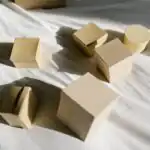
A cube is a solid shape with six flat square faces, all of equal size. It looks like a box with all sides being the same length.
Examples of cubes are:
- Dice
- Sugar cube
- Rubik’s cube
Cuboid
A cuboid is a solid shape with six flat faces, where all faces are rectangles. Some faces can be squares, but not all of them.
Examples of cuboids are:
- Matchbox
- Brick
- Book
- Eraser
Cylinder
A cylinder is a solid shape with two flat circular ends and one curved side. It can roll.
Examples of cylinders are:
- Tin of milk
- Soft drink can
- Battery
Sphere
A sphere is a perfectly round solid shape, like a ball. It has only one curved surface and no flat faces.
Examples of spheres are:
- Football
- Orange
- Marble
Distinguishing Between Cubes and Cuboids
The main difference between a cube and a cuboid is the shape of their faces:
- A cube has all its faces as squares (all sides are equal).
- A cuboid has faces that are rectangles (sides can be different lengths).
Solid Shapes in Our Environment
We see solid shapes everywhere around us. The following are some examples:
- Cube: A gift box, a building block.
- Cuboid: A refrigerator, a wardrobe, a lunch box.
- Cylinder: A water bottle, a drum, a pillar.
- Sphere: A globe, a tennis ball, a round balloon.
Teaching Methods/Instructional Techniques
Discussion, Lecture, Demonstration, Question and Answer, Visual Aids
Instructional Procedures
Lesson: 3-Dimensional Shapes
Step 1: Introduction
Time: 5 minutes
Teaching Skill: Set Induction
Teacher’s Activity: The teacher greets the pupils and shows them various real-life objects like a dice, a matchbox, a can, and a ball. The teacher asks pupils if they know the names of these objects.
Pupils’ Activity: Pupils respond to the teacher’s greetings and try to name the objects.
Learning Point: Pupils are engaged and their interest in the lesson is captured.
Step 2: Identifying 3D Shapes
Time: 10 minutes
Teaching Skill: Explanation/Demonstration
Teacher’s Activity: The teacher introduces the topic “3-Dimensional Shapes” and explains what they are using simple language. The teacher then shows examples of a cube (dice), cuboid (matchbox), cylinder (can), and sphere (ball), naming each shape clearly.
Pupils’ Activity: Pupils listen attentively, observe the objects, and repeat the names of the shapes after the teacher.
Learning Point: Pupils learn to identify and name common 3-dimensional shapes.
Step 3: Characteristics of Cubes and Cuboids
Time: 7 minutes
Teaching Skill: Description/Questioning
Teacher’s Activity: The teacher holds up a cube and a cuboid. The teacher guides pupils to observe the faces of each shape, pointing out that a cube has all square faces and a cuboid has rectangular faces.
Pupils’ Activity: Pupils observe the shapes carefully and describe what they see about the faces of the cube and cuboid.
Learning Point: Pupils begin to understand the visual characteristics that define cubes and cuboids.
Step 4: Distinguishing Cubes and Cuboids
Time: 5 minutes
Teaching Skill: Comparative Analysis
Teacher’s Activity: The teacher places a cube and a cuboid side-by-side and asks pupils to state one difference they notice between the two shapes, reinforcing that all faces of a cube are squares, while a cuboid has rectangular faces.
Pupils’ Activity: Pupils identify and state the differences between the cube and the cuboid.
Learning Point: Pupils can distinguish between a cube and a cuboid.
Step 5: Collection and Categorization
Time: 8 minutes
Teaching Skill: Practical Application/Group Work
Teacher’s Activity: The teacher divides pupils into small groups and provides each group with a collection of various household objects (e.g., small boxes, bottles, sponges, balls). The teacher instructs them to sort the objects into categories based on whether they are cubes, cuboids, cylinders, or spheres.
Pupils’ Activity: Pupils work in their groups to sort and categorize the provided objects according to their shapes.
Learning Point: Pupils apply their knowledge to categorize real-life objects into their respective 3-dimensional shapes.
Step 6: Solid Shapes in the Environment
Time: 5 minutes
Teaching Skill: Brainstorming
Teacher’s Activity: The teacher asks pupils to look around the classroom or think about their homes and mention objects that look like a cube, cuboid, cylinder, or sphere.
Pupils’ Activity: Pupils identify and mention various 3-dimensional objects they see in their environment.
Learning Point: Pupils recognize the prevalence of 3-dimensional shapes in their daily surroundings.
Step 7: Evaluation/Review
Time: 5 minutes
Teaching Skill: Questioning/Assessment
Teacher’s Activity: The teacher evaluates the learning by asking the following questions:
- Mention two examples of a cube.
- What is the difference between a cube and a cuboid?
- Give one example of a cylinder.
- Name an object in your house that looks like a sphere.
Pupils’ Activity: Pupils answer orally and in writing.
Learning Point: Pupils demonstrate understanding of the lesson.
Step 8: Conclusion
Time: 3 minutes
Teaching Skill: Summarization/Assignment
Teacher’s Activity: The teacher summarizes the lesson by quickly reviewing the names of the 3-dimensional shapes discussed and their examples. The teacher then gives homework: “Draw and label one cube, one cuboid, one cylinder, and one sphere.”
Pupils’ Activity: Pupils listen to the summary and copy down the homework.
Learning Point: The lesson is reinforced, and pupils are given a task to practice.
Home Task: Solve two new exercises on 3 – Dimensional Shapes. Show each step and check each answer.
Lesson Keywords
- Cube – A solid shape with six equal square faces.
- Cuboid – A solid shape with six rectangular faces.
- Cylinder – A solid shape with two circular ends and a curved side.
- Sphere – A perfectly round solid shape, like a ball.
- 3-Dimensional Shapes – Shapes that have length, width, and height.
Differentiation
For struggling learners, the teacher will provide more physical objects for them to manipulate and identify. The teacher will also use flashcards with pictures and names of shapes. For advanced learners, the teacher can challenge them to find more complex 3D shapes or describe more characteristics of the shapes, such as counting faces or edges (if appropriate for their level).
Note for teachers using this lesson plan
Ensure a variety of real-life objects are available for pupils to touch and feel. Encourage active participation and group work to make the learning experience interactive and engaging for young learners. Keep explanations simple and visual.


Community Join the conversation Open discussion +