

Note for teachers using this lesson plan
This lesson focuses on teaching pupils how to perform basic arithmetic operations (addition, subtraction, multiplication, and division) with capacities measured in litres. Prepare labelled containers of various sizes and water for practical demonstrations. Ensure pupils understand the concept of a litre and can accurately carry out calculations. By the end of the lesson, pupils should be able to solve practical problems involving capacities in litres.
Class: Primary 4
Term: Third Term
Week: 7
Age: 9 years
Duration: 45 minutes
Subject: General Mathematics
Curriculum Theme: Mensuration
Focal competence: Calculating liters using the basic arithmetic operations
Key competencies/values: Collaboration
Skills:
- add and subtract in liters
- multiply and divide in liters with whole numbers
- solve problems on quantitative aptitude related to addition, subtraction, multiplication and division involving liters
Previous Lesson: Area of Rectangles, Length × Breadth and Quantitative Reasoning
Topic: Capacity
Subject Matter: Addition, subtraction, multiplication and division of capacities in litres
Specific Objectives
By the end of the lesson, pupils should be able to:
Cognitive Domain
- add and subtract capacities in litres;
- multiply and divide capacities in litres with whole numbers;
- solve quantitative aptitude problems involving addition, subtraction, multiplication and division of capacities in litres.
Affective Domain
- appreciate the importance of accurate measurement in daily life;
- collaborate effectively with peers to solve capacity problems.
Psychomotor Domain
- demonstrate the calculation of capacities in litres using basic arithmetic operations.
Reference Materials
The following resources were used in planning this lesson:
- 2025 Revised 9 Years Basic Education Curriculum
- Relevant State Unified Scheme of Work
- Primary Mathematics for Nigerian Schools, Book 4
- The HeadTeacher Scheme of work
Instructional Materials
The teacher will teach this lesson with the aid of:
- Cardboard cut-outs representing containers
- Counters
- Multiplication tables
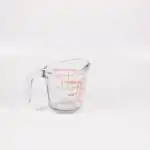
- Measuring jugs (e.g., 1-litre, 2-litre)
- Water
- Empty bottles and buckets
- Whiteboard and markers
Rationale for the Lesson
Understanding how to perform arithmetic operations with capacities in litres is essential for everyday tasks such as cooking, managing household liquids, and understanding fuel consumption. This lesson helps pupils develop practical mathematical skills that are applicable in real-world scenarios, fostering a deeper understanding of measurement and problem-solving.
Prerequisite/Previous Knowledge
Pupils should have a basic understanding of capacity, the unit ‘litre’, and be able to perform simple addition, subtraction, multiplication, and division with whole numbers.
Lesson Content/Board Summary
Addition, Subtraction, Multiplication and Division of Capacities in Litres
Addition of Capacities in Litres
To add capacities in litres, align the numbers vertically and add them just like ordinary numbers. Remember to include the unit ‘litres’ (L) in your answer.
Rule: Add the numerical values and keep the unit (litres).
Example 1
Question: A bucket contains 5 litres of water and another bucket contains 3 litres. How much water is there in total?
Solution:
Step 1: Write the capacities.
(5 text{ L})
(+ 3 text{ L})
Step 2: Add the numerical values.
(5 + 3 = 8)
Step 3: Write the answer with the unit.
(8 text{ L})
Answer: (8 text{ L})
Example 2
Question: A tank holds 15 litres of petrol and another tank holds 20 litres. What is the total capacity of petrol?
Solution:
Step 1: Write the capacities.
(15 text{ L})
(+ 20 text{ L})
Step 2: Add the numerical values.
(15 + 20 = 35)
Step 3: Write the answer with the unit.
(35 text{ L})
Answer: (35 text{ L})
Subtraction of Capacities in Litres
To subtract capacities in litres, align the numbers vertically and subtract them like ordinary numbers. The unit ‘litres’ (L) must be included in the answer.
Rule: Subtract the numerical values and keep the unit (litres).
Example 1
Question: A bottle contains 10 litres of juice. If 4 litres are poured out, how much juice is left?
Solution:
Step 1: Write the capacities.
(10 text{ L})
(- 4 text{ L})
Step 2: Subtract the numerical values.
(10 – 4 = 6)
Step 3: Write the answer with the unit.
(6 text{ L})
Answer: (6 text{ L})
Example 2
Question: A drum has 50 litres of kerosene. If 18 litres are used, how many litres remain?
Solution:
Step 1: Write the capacities.
(50 text{ L})
(- 18 text{ L})
Step 2: Subtract the numerical values.
(50 – 18 = 32)
Step 3: Write the answer with the unit.
(32 text{ L})
Answer: (32 text{ L})
Multiplication of Capacities in Litres
To multiply capacities in litres by a whole number, multiply the numerical value by the whole number. The unit ‘litres’ (L) remains the same in the product.
Rule: Multiply the numerical value by the whole number and keep the unit (litres).
Example 1
Question: A jug holds 2 litres of milk. How much milk will 3 such jugs hold?
Solution:
Step 1: Write the capacity and the multiplier.
(2 text{ L})
(times 3)
Step 2: Multiply the numerical values.
(2 times 3 = 6)
Step 3: Write the answer with the unit.
(6 text{ L})
Answer: (6 text{ L})
Example 2
Question: If a car uses 5 litres of fuel each day, how much fuel will it use in 7 days?
Solution:
Step 1: Write the capacity and the multiplier.
(5 text{ L})
(times 7)
Step 2: Multiply the numerical values.
(5 times 7 = 35)
Step 3: Write the answer with the unit.
(35 text{ L})
Answer: (35 text{ L})
Division of Capacities in Litres
To divide capacities in litres by a whole number, divide the numerical value by the whole number. The unit ‘litres’ (L) remains the same in the quotient.
Rule: Divide the numerical value by the whole number and keep the unit (litres).
Example 1
Question: 8 litres of water are shared equally among 4 children. How many litres does each child get?
Solution:
Step 1: Write the capacity and the divisor.
(8 text{ L})
(div 4)
Step 2: Divide the numerical values.
(8 div 4 = 2)
Step 3: Write the answer with the unit.
(2 text{ L})
Answer: (2 text{ L})
Example 2
Question: A dispenser contains 24 litres of water. If it is used to fill 6 bottles of equal size, how many litres does each bottle hold?
Solution:
Step 1: Write the capacity and the divisor.
(24 text{ L})
(div 6)
Step 2: Divide the numerical values.
(24 div 6 = 4)
Step 3: Write the answer with the unit.
(4 text{ L})
Answer: (4 text{ L})
Teaching Methods/Instructional Techniques
Discussion, Demonstration, Guided Practice, Question and Answer, Explanation, Problem Solving, Individual Practice
Instructional Procedures
Step 1: Introduction
Time: 5 minutes
Teaching Skill: Recalling/Engaging
Teacher’s Activity: The teacher asks pupils to recall what capacity means and names some things measured in litres. The teacher then introduces the topic of performing operations with capacities in litres.
Pupils’ Activity: Pupils respond to questions and listen attentively.
Learning Point: Capacity and litre recall
Step 2: Addition of Capacities
Time: 8 minutes
Teaching Skill: Demonstration/Explanation
Teacher’s Activity: The teacher uses two labelled measuring jugs (e.g., 2L and 3L) and water to demonstrate adding capacities. The teacher explains the process of adding numerical values while keeping the unit ‘L’. The teacher guides pupils through Example 1 and 2 from the Board Summary.
Pupils’ Activity: Pupils observe the demonstration, ask questions, and participate in solving the examples.
Learning Point: Adding litres concept
Step 3: Subtraction of Capacities
Time: 8 minutes
Teaching Skill: Demonstration/Guided Practice
Teacher’s Activity: The teacher uses a labelled measuring jug (e.g., 10L) and pours out a specific amount (e.g., 4L) to demonstrate subtraction. The teacher explains how to subtract numerical values and keep the unit ‘L’. The teacher guides pupils through Example 1 and 2 from the Board Summary.
Pupils’ Activity: Pupils watch the demonstration, answer questions, and solve subtraction problems with guidance.
Learning Point: Subtracting litres concept
Step 4: Multiplication of Capacities
Time: 8 minutes
Teaching Skill: Explanation/Problem Solving
Teacher’s Activity: The teacher explains how to multiply capacity in litres by a whole number, using counters or drawing diagrams to illustrate the concept (e.g., 3 groups of 2L). The teacher guides pupils through Example 1 and 2 from the Board Summary.
Pupils’ Activity: Pupils listen to the explanation, ask clarifying questions, and solve multiplication problems.
Learning Point: Multiplying litres concept
Step 5: Division of Capacities
Time: 8 minutes
Teaching Skill: Explanation/Problem Solving
Teacher’s Activity: The teacher explains how to divide capacity in litres by a whole number, using counters or by drawing to illustrate sharing. The teacher guides pupils through Example 1 and 2 from the Board Summary.
Pupils’ Activity: Pupils pay attention, engage in discussion, and solve division problems.
Learning Point: Dividing litres concept
Step 6: Practical Application
Time: 5 minutes
Teaching Skill: Application/Group Work
Teacher’s Activity: The teacher gives pupils simple word problems involving a combination of operations with capacities in litres to solve in pairs or small groups.
Pupils’ Activity: Pupils work in pairs/groups to solve the practical capacity problems.
Learning Point: Solving capacity problems
Step 7: Evaluation/Review
Time: 5 minutes
Teaching Skill: Questioning/Assessment
Teacher’s Activity: The teacher evaluates the learning by asking the following questions:
- Add (12 text{ L} + 7 text{ L}).
- Subtract (25 text{ L} – 10 text{ L}).
- Multiply (6 text{ L} times 4).
- Divide (30 text{ L} div 5).
Pupils’ Activity: Pupils answer orally and in writing.
Learning Point: Capacity operations assessment
Step 8: Note-Taking
Time: 4 minutes
Teaching Skill: Guided Writing
Teacher’s Activity: The teacher guides pupils to copy the essential Board Summary notes on addition, subtraction, multiplication, and division of capacities in litres into their notebooks.
Pupils’ Activity: Pupils copy the notes carefully into their notebooks.
Learning Point: Recording lesson notes
Step 9: Conclusion
Time: 2 minutes
Teaching Skill: Summarising
Teacher’s Activity: The teacher briefly reminds pupils that capacities in litres can be added, subtracted, multiplied, and divided just like ordinary numbers, always remembering to include the unit ‘L’.
Pupils’ Activity: Pupils listen and ask any final questions.
Learning Point: Capacity operations reinforced
Continuous Assessment/Further Study
Type: Homework
Instruction: Solve the following problems in your notebook:
- A water seller has two containers. One holds 25 litres and the other holds 17 litres. How many litres of water does he have in total?
- A tank contains 40 litres of diesel. If 15 litres are removed, how many litres are left?
- If a small bottle holds 3 litres of liquid soap, how much liquid soap will 9 such bottles hold?
- A company distributed 48 litres of sanitiser equally among 8 offices. How many litres did each office receive?
- A cook used 5 litres of oil for frying and 3 litres for stew. How many litres of oil did the cook use altogether?
Lesson Keywords
- Capacity – The amount a container can hold.
- Litre (L) – A standard unit for measuring liquid capacity.
- Addition – Combining quantities.
- Subtraction – Taking one quantity from another.
- Multiplication – Repeated addition of a quantity.
- Division – Sharing a quantity into equal parts.
Differentiation
For weaker learners, the teacher will provide more one-on-one guidance during practical demonstrations and use simpler, smaller numbers for calculations. They will also be given additional visual aids like more labelled containers. Faster learners will be challenged with more complex word problems involving multiple steps or larger numbers, and encouraged to create their own capacity problems for others to solve.
Suggested Lesson Videos
For further understanding, search on YouTube for: “Primary 4 Math capacity addition subtraction multiplication division litres”
Teacher Guide for Using This Lesson Plan
Before the lesson, ensure you have a variety of labelled containers (e.g., 1L, 2L, 5L jugs, buckets) and sufficient water for demonstrations. Review basic arithmetic operations with whole numbers. Begin by engaging pupils with practical examples of capacity in their daily lives. Follow the instructional procedures, demonstrating each operation clearly with the physical materials. Encourage pupils to actively participate in the demonstrations and problem-solving. Pay close attention to pupils’ understanding of the unit ‘litre’ and ensure they include it in their answers. Allow pupils to copy the Board Summary notes after the main teaching and practice activities are completed. Conclude by reinforcing the practical relevance of capacity calculations.

Community Join the conversation Open discussion +