

Note for teachers using this lesson plan
This lesson focuses on helping pupils understand and convert between different forms of fractions. Ensure you have all fractional charts, objects, and plane shapes ready to demonstrate the concepts visually. Guide pupils through each conversion step, emphasizing the practical application of fractions, and ensure they can confidently change improper fractions to mixed numbers, convert fractions to decimals, and form equivalent fractions by the end of the lesson.
Class: Primary 4
Term: First Term
Week: 6
Age: 9 years
Duration: 45 minutes
Subject: Mathematics
Curriculum Theme: Number and Numeration
Focal competence: Solving fraction-related problems in everyday life
Key competencies/values: ICT and Digital Competencies
Skills:
- Describing fractions using real-life situations
Previous Lesson: Proper and Improper Fractions, Identification and Representation
Topic: Fractions: Mixed, Decimal And Equivalent Fractions
Subject Matter: Changing improper fractions to mixed numbers and vice versa, converting fractions to decimals, forming equivalent fractions, quantitative reasoning
Specific Objectives
By the end of the lesson, pupils should be able to:
Cognitive Domain
- Change improper fractions into mixed numbers.
- Change mixed numbers into improper fractions.
- Convert fractions into decimals.
- Form equivalent fractions.
- Solve quantitative reasoning problems involving fractions.
Affective Domain
- Appreciate the importance of fractions in everyday life.
- Show interest in solving fraction-related problems.
Psychomotor Domain
- Demonstrate the conversion of fractions using fraction strips or diagrams.
- Accurately write down converted and equivalent fractions.
Social Domain
- Collaborate with peers to solve fraction problems.
Reference Materials
The following resources were used in planning this lesson:
- 2025 Revised 9 Years Basic Education Curriculum
- Relevant State Unified Scheme of Work
- Primary 4 Mathematics Textbook
- The HeadTeacher Scheme of work
Instructional Materials
The teacher will teach this lesson with the aid of:
- Objects (e.g., oranges, apples)
- Plane shapes (e.g., circles, rectangles divided into parts)
- Fractional charts
- Number lines
- Place value chart
- Whiteboard and markers
Rationale for the Lesson
This lesson is important because it builds on pupils’ foundational understanding of fractions, enabling them to manipulate and convert fractions into different forms. These skills are essential for solving real-life problems involving sharing, measurements, and understanding quantities, preparing them for more complex mathematical concepts.
Prerequisite/Previous Knowledge
Pupils should have a basic understanding of what fractions are, identifying numerators and denominators, and simple addition and subtraction of fractions with common denominators.
Lesson Content/Board Summary
Fractions: Mixed, Decimal And Equivalent Fractions
Understanding Improper and Mixed Fractions
A proper fraction has a numerator smaller than its denominator (e.g., (frac{1}{2}), (frac{3}{4})).
An improper fraction has a numerator that is equal to or larger than its denominator (e.g., (frac{5}{4}), (frac{7}{3})). This means it represents a value equal to or greater than one whole.
A mixed number is a whole number and a proper fraction combined (e.g., (1frac{1}{4}), (2frac{1}{3})).
Changing Improper Fractions to Mixed Numbers
To change an improper fraction to a mixed number, divide the numerator by the denominator. The quotient is the whole number, and the remainder becomes the new numerator over the original denominator.
Formula:
(text{Quotient} frac{text{Remainder}}{text{Denominator}})
Example 1
Question: Change (frac{5}{4}) to a mixed number.
Solution:
Step 1: Divide the numerator (5) by the denominator (4).
(5 div 4 = 1) remainder (1)
Step 2: Write the quotient as the whole number, the remainder as the new numerator, and the original denominator.
(1frac{1}{4})
Answer: (frac{5}{4} = 1frac{1}{4})
Example 2
Question: Convert (frac{7}{3}) to a mixed number.
Solution:
Step 1: Divide the numerator (7) by the denominator (3).
(7 div 3 = 2) remainder (1)
Step 2: Write the quotient as the whole number, the remainder as the new numerator, and the original denominator.
(2frac{1}{3})
Answer: (frac{7}{3} = 2frac{1}{3})
Changing Mixed Numbers to Improper Fractions
To change a mixed number to an improper fraction, multiply the whole number by the denominator, then add the numerator. This result becomes the new numerator over the original denominator.
Formula:
(frac{(text{Whole Number} times text{Denominator}) + text{Numerator}}{text{Denominator}})
Example 1
Question: Change (1frac{1}{4}) to an improper fraction.
Solution:
Step 1: Multiply the whole number (1) by the denominator (4).
(1 times 4 = 4)
Step 2: Add the numerator (1) to the result.
(4 + 1 = 5)
Step 3: Write this sum as the new numerator over the original denominator.
(frac{5}{4})
Answer: (1frac{1}{4} = frac{5}{4})
Example 2
Question: Convert (2frac{1}{3}) to an improper fraction.
Solution:
Step 1: Multiply the whole number (2) by the denominator (3).
(2 times 3 = 6)
Step 2: Add the numerator (1) to the result.
(6 + 1 = 7)
Step 3: Write this sum as the new numerator over the original denominator.
(frac{7}{3})
Answer: (2frac{1}{3} = frac{7}{3})
Converting Fractions to Decimals
To convert a fraction to a decimal, divide the numerator by the denominator.
Example 1
Question: Convert (frac{1}{2}) to a decimal.
Solution:
Step 1: Divide the numerator (1) by the denominator (2).
(1 div 2 = 0.5)
Answer: (frac{1}{2} = 0.5)
Example 2
Question: Convert (frac{3}{4}) to a decimal.
Solution:
Step 1: Divide the numerator (3) by the denominator (4).
(3 div 4 = 0.75)
Answer: (frac{3}{4} = 0.75)
Forming Equivalent Fractions
Equivalent fractions are fractions that represent the same value, even though they look different. You can form equivalent fractions by multiplying or dividing both the numerator and the denominator by the same non-zero number.
Example 1
Question: Find an equivalent fraction for (frac{1}{2}).
Solution:
Step 1: Multiply both the numerator and the denominator by the same number (e.g., 2).
(frac{1 times 2}{2 times 2} = frac{2}{4})
Answer: (frac{1}{2} = frac{2}{4})
Example 2
Question: Find an equivalent fraction for (frac{3}{5}).
Solution:
Step 1: Multiply both the numerator and the denominator by the same number (e.g., 3).
(frac{3 times 3}{5 times 3} = frac{9}{15})
Answer: (frac{3}{5} = frac{9}{15})
Quantitative Reasoning with Fractions
Quantitative reasoning involves using numbers and mathematical concepts to solve problems. For fractions, this often means applying the conversion or equivalence skills to real-world scenarios or puzzles.
Example
Question: If John ate (frac{1}{2}) of a pizza and Mary ate (frac{2}{4}) of the same pizza, who ate more?
Solution:
Step 1: Compare the fractions by finding equivalent fractions or converting to decimals.
We know (frac{1}{2} = frac{1 times 2}{2 times 2} = frac{2}{4}).
Step 2: Compare (frac{2}{4}) (John) and (frac{2}{4}) (Mary).
Since (frac{2}{4} = frac{2}{4}), they ate the same amount.
Answer: John and Mary ate the same amount of pizza.
Teaching Methods/Instructional Techniques
Discussion, Demonstration, Guided Practice, Question and Answer, Explanation, Observation, Problem Solving, Pair Work, Individual Practice
Instructional Procedures
Step 1: Introduction
Time: 5 minutes
Teaching Skill: Review/Engagement
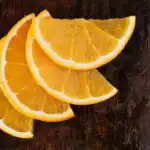
Teacher’s Activity: The teacher greets the pupils and reviews the previous lesson on basic fractions, asking questions like, “What is a fraction?” and “What are the parts of a fraction called?” The teacher then introduces the day’s topic by showing a whole object (e.g., an orange) and dividing it into parts, asking how many halves or quarters make a whole, leading to the idea of improper fractions.
Pupils’ Activity: Pupils respond to questions and observe the teacher’s demonstration, relating it to their prior knowledge of fractions.
Learning Point: Basic fraction recall
Step 2: Changing Improper Fractions to Mixed Numbers
Time: 8 minutes
Teaching Skill: Demonstration/Explanation
Teacher’s Activity: The teacher explains what an improper fraction and a mixed number are using fractional charts and diagrams (e.g., showing (frac{5}{4}) as one whole and one quarter). The teacher demonstrates how to convert an improper fraction (e.g., (frac{5}{4})) into a mixed number ((1frac{1}{4})) using division on the board, explaining each step clearly.
Pupils’ Activity: Pupils listen attentively, observe the demonstrations, and ask questions for clarification. They attempt a simple conversion with guidance.
Learning Point: Improper to mixed conversion
Step 3: Changing Mixed Numbers to Improper Fractions
Time: 7 minutes
Teaching Skill: Explanation/Guided Practice
Teacher’s Activity: The teacher explains how to convert a mixed number (e.g., (1frac{1}{4})) back into an improper fraction ((frac{5}{4})). The teacher demonstrates the process on the board, multiplying the whole number by the denominator and adding the numerator. Pupils are given a similar example to try in pairs.
Pupils’ Activity: Pupils follow the teacher’s explanation and work in pairs to convert a mixed number to an improper fraction.
Learning Point: Mixed to improper conversion
Step 4: Converting Fractions to Decimals
Time: 7 minutes
Teaching Skill: Demonstration/Application
Teacher’s Activity: The teacher introduces decimals as another way to represent parts of a whole, relating them to fractions with denominators of 10, 100, etc. Using a place value chart, the teacher demonstrates how to convert simple fractions like (frac{1}{2}) to (0.5) and (frac{3}{4}) to (0.75) by dividing the numerator by the denominator. Pupils are encouraged to use their knowledge of division.
Pupils’ Activity: Pupils observe the conversion process and practice converting simple fractions to decimals with teacher guidance.
Learning Point: Fraction to decimal conversion
Step 5: Forming Equivalent Fractions
Time: 6 minutes
Teaching Skill: Explanation/Visualisation
Teacher’s Activity: The teacher uses fractional strips or diagrams to show that fractions like (frac{1}{2}) and (frac{2}{4}) represent the same amount. The teacher then explains that equivalent fractions are formed by multiplying or dividing both the numerator and denominator by the same non-zero number. Examples like (frac{1}{2} = frac{2}{4}) and (frac{3}{5} = frac{9}{15}) are worked on the board.
Pupils’ Activity: Pupils observe the visual aids and participate in forming equivalent fractions, understanding the concept of equal value.
Learning Point: Equivalent fraction formation
Step 6: Solving Quantitative Reasoning Involving Fractions
Time: 3 minutes
Teaching Skill: Problem Solving/Application
Teacher’s Activity: The teacher presents a simple quantitative reasoning problem involving fractions, such as comparing two fractions or applying a conversion to a real-life scenario. The teacher guides pupils through the steps to solve the problem, encouraging them to use the skills learned.
Pupils’ Activity: Pupils attempt to solve the quantitative reasoning problem with teacher assistance, applying their understanding of fraction conversions and equivalence.
Learning Point: Fraction problem solving
Step 7: Evaluation/Review
Time: 5 minutes
Teaching Skill: Questioning/Assessment
Teacher’s Activity: The teacher evaluates the learning by asking the following questions:
- Change (frac{9}{2}) to a mixed number.
- Convert (3frac{1}{5}) to an improper fraction.
- Convert (frac{1}{4}) to a decimal.
- Form an equivalent fraction for (frac{2}{3}).
Pupils’ Activity: Pupils answer orally and in writing.
Learning Point: Fraction conversion assessment
Step 8: Note-Taking
Time: 4 minutes
Teaching Skill: Guided Writing
Teacher’s Activity: The teacher guides pupils to copy the essential Board Summary notes on changing improper fractions to mixed numbers, mixed numbers to improper fractions, converting fractions to decimals, and forming equivalent fractions into their notebooks.
Pupils’ Activity: Pupils copy the notes carefully into their notebooks.
Learning Point: Fraction concepts recorded
Step 9: Conclusion
Time: 0 minutes
Teaching Skill: Consolidation
Teacher’s Activity: The teacher quickly recaps the main points of the lesson, emphasizing the different ways fractions can be represented and converted. The teacher encourages pupils to practice these skills at home.
Pupils’ Activity: Pupils listen to the recap and prepare for the next lesson.
Learning Point: Lesson concepts reinforced
Continuous Assessment/Further Study
Type: Homework
Instruction: Complete the following exercises in your mathematics notebook.
- Change the following improper fractions to mixed numbers:
- (frac{11}{3})
- (frac{13}{5})
- Convert the following mixed numbers to improper fractions:
- (2frac{3}{4})
- (4frac{1}{2})
- Convert the following fractions to decimals:
- (frac{1}{5})
- (frac{7}{10})
- Form two equivalent fractions for (frac{3}{4}).
- A baker used (frac{6}{2}) cups of flour. Write this amount as a mixed number.
Lesson Keywords
- Improper fraction – A fraction where the numerator is greater than or equal to the denominator.
- Mixed number – A number consisting of a whole number and a proper fraction.
- Decimal – A way of writing numbers that are not whole numbers, using a decimal point.
- Equivalent fractions – Fractions that represent the same value, even if they have different numerators and denominators.
- Numerator – The top number in a fraction, showing how many parts are being considered.
- Denominator – The bottom number in a fraction, showing the total number of equal parts.
Differentiation
For pupils who grasp the concepts quickly, provide more challenging quantitative reasoning problems or ask them to find multiple equivalent fractions. For pupils who need more support, use additional visual aids like more fraction strips or number lines, and provide extra guided practice with simpler examples before moving to independent work.
Suggested Lesson Videos
Search on YouTube for: “Primary 4 converting fractions to decimals”, “Primary 4 improper to mixed fractions”, “Primary 4 equivalent fractions”
Teacher Guide for Using This Lesson Plan
Before the lesson, ensure all instructional materials, especially fractional charts, objects, and a place value chart, are prepared and easily accessible. Begin by reviewing basic fraction concepts to activate prior knowledge. When demonstrating conversions, use visual aids extensively to make the abstract concepts concrete for Primary 4 pupils. Guide pupils through each step of the conversion processes, providing clear, concise explanations and allowing ample time for questions and guided practice. Encourage pair work for peer learning and support. During the note-taking stage, ensure pupils copy the Board Summary accurately. Pay close attention to common errors such as incorrect division or multiplication during conversions and address them immediately. For faster learners, provide extension activities, while slower learners should receive additional one-on-one support and simplified practice questions.

Community Join the conversation Open discussion +