

Class: Primary 4
Term: 3rd Term
Week: 3
Age: 9 years
Duration: 45 minutes
Subject: General Mathematics
Curriculum Theme: Measurement (Capacity)
Previous Lesson: Area, Farmland, Classrooms, Towns and Practical Calculations.
Topic: CAPACITY
Subject Matter: Meaning and units of capacity ml cl dl and litres, addition involving litres, subtraction involving litres, addition and subtraction of decimals involving litres, quantitative aptitude involving litres sequences.
Specific Objectives
By the end of the lesson, pupils should be able to:
Cognitive Domain:
- Define capacity and state the standard units for measuring capacity (ml, cl, dl, litres).
- Solve addition problems involving litres.
- Solve subtraction problems involving litres.
- Perform addition and subtraction of decimals involving litres.
- Solve quantitative aptitude problems involving litres sequences.
Affective Domain:
- Appreciate the importance of capacity measurement in everyday life.
- Participate actively in class discussions and problem-solving activities.
Psychomotor Domain:
- Accurately calculate sums and differences of quantities in litres.
- Write out units of capacity correctly when solving problems.
Social Domain:
- Collaborate with peers to solve capacity-related problems.
- Share their solutions and reasoning with the class.
Reference Materials
The following resources were used in planning this lesson:
- 9 Years Basic Education Curriculum for Primary Schools (Mathematics)
- State Unified Scheme of Work for Primary 4 General Mathematics
- New General Mathematics for Primary Schools, Book 4
Instructional Materials
The teacher will teach this lesson with the aid of:
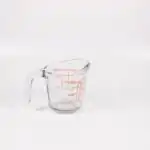
- Different sizes of containers (e.g., water bottles, measuring cups, jugs)
- Water or sand to demonstrate capacity
- Chart showing units of capacity and their relationships (ml, cl, dl, L)
- Table of dimensions
- Formula charts
- Textbooks
Rationale for the Lesson
This lesson helps pupils understand how to measure liquids and other contents, which is an important skill for daily activities like cooking, buying drinks, or filling fuel tanks. It enables pupils to accurately work with quantities in real-life situations.
Prerequisite/Previous Knowledge
Pupils should have basic knowledge of numbers, addition, subtraction, decimals, and the concept of measurement from previous lessons.
Lesson Content/Board Summary
CAPACITY
1. Meaning of Capacity
Capacity is the amount of liquid or substance that a container can hold. It tells us how much space is inside a container.
2. Units of Capacity
The standard unit for measuring capacity is the litre (L). Smaller units are millilitre (ml), centilitre (cl), and decilitre (dl).
The relationships between these units are:
- 1 Litre (L) = 1000 millilitres (ml)
- 1 Litre (L) = 100 centilitres (cl)
- 1 Litre (L) = 10 decilitres (dl)
- 1 decilitre (dl) = 10 centilitres (cl)
- 1 centilitre (cl) = 10 millilitres (ml)
3. Addition involving Litres
To add quantities in litres, we add the numbers as usual and keep the unit ‘L’.
Example:
- 3 L + 5 L = 8 L
- 12 L + 7 L = 19 L
- 25 L + 18 L = 43 L
4. Subtraction involving Litres
To subtract quantities in litres, we subtract the numbers as usual and keep the unit ‘L’.
Example:
- 10 L – 4 L = 6 L
- 20 L – 9 L = 11 L
- 50 L – 23 L = 27 L
5. Addition and Subtraction of Decimals involving Litres
When adding or subtracting decimals involving litres, align the decimal points before performing the operation.
Examples:
- Add 3.5 L and 2.7 L
  3.5 L
+ 2.7 L
-------
  6.2 L
- Subtract 1.8 L from 5.3 L
  5.3 L
- 1.8 L
-------
  3.5 L
6. Quantitative Aptitude involving Litres Sequences
These involve identifying patterns in quantities of litres.
Examples:
- Complete the sequence: 2 L, 4 L, 6 L, ___, ___ (Answer: 8 L, 10 L)
- What comes next? 10 L, 9 L, 8 L, ___ (Answer: 7 L)
- Find the missing number: 5 L, 10 L, ___, 20 L (Answer: 15 L)
Teaching Methods/Instructional Techniques
Discussion, Lecture, Demonstration, Question and Answer, Visual Aids
Instructional Procedures
Step 1: Introduction
Time: 5 minutes
Teaching Skill: Set Induction
Teacher’s Activity: The teacher greets the pupils and asks them to name things that hold liquids, like bottles, buckets, or tanks. The teacher then introduces the topic of Capacity as the amount these containers can hold.
Pupils’ Activity: Pupils respond by naming various containers. They listen attentively to the introduction.
Learning Point: Pupils recall everyday items that hold liquids and are introduced to the concept of capacity.
Step 2: Meaning and Units of Capacity
Time: 10 minutes
Teaching Skill: Explanation/Demonstration
Teacher’s Activity: The teacher defines capacity and shows different containers, demonstrating how they hold different amounts of water. The teacher then introduces the units of capacity (ml, cl, dl, L) and explains their relationships, writing them on the board.
Pupils’ Activity: Pupils listen, observe the demonstration, and state the meaning of capacity. They repeat and copy the units of capacity and their relationships into their notebooks.
Learning Point: Pupils understand the meaning of capacity and can state its various units.
Step 3: Addition and Subtraction involving Litres (Whole Numbers)
Time: 10 minutes
Teaching Skill: Problem Solving/Guided Practice
Teacher’s Activity: The teacher explains how to add and subtract whole numbers of litres, providing clear examples on the board. The teacher guides pupils through solving a few problems.
Pupils’ Activity: Pupils pay attention to the examples, ask questions, and solve practice problems with the teacher’s guidance.
Learning Point: Pupils learn to perform addition and subtraction operations with whole numbers of litres.
Step 4: Addition and Subtraction of Decimals involving Litres
Time: 8 minutes
Teaching Skill: Explanation/Drilling
Teacher’s Activity: The teacher explains the procedure for adding and subtracting decimals involving litres, emphasizing the importance of aligning the decimal points. The teacher provides examples and allows pupils to solve some independently.
Pupils’ Activity: Pupils observe, listen, and practice solving addition and subtraction problems involving decimal litres, ensuring decimal points are aligned.
Learning Point: Pupils can correctly add and subtract decimal quantities of litres.
Step 5: Quantitative Aptitude involving Litres Sequences
Time: 5 minutes
Teaching Skill: Critical Thinking/Pattern Recognition
Teacher’s Activity: The teacher introduces quantitative aptitude problems related to litres, focusing on simple sequences. The teacher gives examples and encourages pupils to identify the patterns.
Pupils’ Activity: Pupils analyze the sequences, identify the patterns, and complete them orally or by writing.
Learning Point: Pupils develop their ability to recognize patterns in capacity-related problems.
Step 6: Evaluation/Review
Time: 5 minutes
Teaching Skill: Questioning/Assessment
Teacher’s Activity: The teacher evaluates the learning by asking the following questions:
- What is capacity?
- Mention three units used to measure capacity.
- Add 15 L + 7 L.
- Subtract 9.5 L from 12.0 L.
- Complete the sequence: 3 L, 6 L, 9 L, ___, ___.
Pupils’ Activity: Pupils answer orally and in writing.
Learning Point: Pupils demonstrate understanding of the lesson.
Step 7: Conclusion
Time: 2 minutes
Teaching Skill: Summarization
Teacher’s Activity: The teacher summarizes the key points of the lesson, reiterating the meaning of capacity, its units, and how to perform basic operations with litres. The teacher gives homework.
Pupils’ Activity: Pupils listen to the summary and copy down the homework assignment.
Learning Point: Pupils review the main concepts of the lesson.
Home Task: Solve three new exercises on CAPACITY. Show each step and check each answer.
Lesson Keywords
- Capacity – The amount of liquid or substance a container can hold.
- Litre (L) – The standard unit for measuring capacity.
- Millilitre (ml) – A smaller unit of capacity, 1000 ml = 1 L.
- Centilitre (cl) – A unit of capacity, 100 cl = 1 L.
- Decilitre (dl) – A unit of capacity, 10 dl = 1 L.
Differentiation
For pupils who grasp concepts quickly, the teacher can provide more complex quantitative aptitude problems or conversion tasks between different units of capacity. For pupils needing more support, the teacher will provide additional one-on-one guidance, use more visual aids, and give simpler, repetitive practice problems.
Note for teachers using this lesson plan
Ensure to bring actual containers of varying capacities to class for a practical demonstration. Encourage pupils to relate capacity to their daily experiences. Emphasize neatness and correct alignment of decimal points when solving problems involving decimals.


Community Join the conversation Open discussion +