

Class: Primary 4
Term: 3rd Term
Week: 7
Age: 9 years
Duration: 45 minutes
Subject: General Mathematics
Curriculum Theme: Geometry
Previous Lesson: Plane Shapes, Angles, Cardinal Points and Vertical and Horizontal Lines.
Topic: THREE DIMENSIONAL SHAPES
Subject Matter: Identification of 3-dimensional shapes such as cubes, cuboids, cylinders; distinguishing open and closed shapes and features; properties of 3-dimensional shapes (faces, vertices, edges); drawing and construction of 3-dimensional shapes; quantitative practice on faces, edges, and vertices.
Specific Objectives
By the end of the lesson, pupils should be able to:
Cognitive Domain:
- Identify common 3-dimensional shapes like cubes, cuboids, and cylinders.
- Distinguish between open and closed shapes and state their features.
- Identify the properties of 3-dimensional shapes, including faces, vertices, and edges.
Affective Domain:
- Appreciate the presence and importance of 3-dimensional shapes in their environment.
- Develop an interest in learning about geometric shapes.
Psychomotor Domain:
- Draw simple representations of 3-dimensional shapes.
- Construct simple 3-dimensional shapes using appropriate materials.
Social Domain:
- Collaborate with peers during practical activities involving shape identification and construction.
Reference Materials
The following resources were used in planning this lesson:
- 9 Years Basic Education Curriculum (Primary 4, Mathematics)
- State Unified Scheme of Work (Primary 4, Mathematics)
- New General Mathematics for Primary Schools, Book 4.
Instructional Materials
The teacher will teach this lesson with the aid of:
- Charts displaying various 3-dimensional shapes (cubes, cuboids, cylinders).
- Physical models of cubes, cuboids, and cylinders.
- Nets of 3-dimensional shapes (e.g., cube net, cuboid net, cylinder net).
- Cardboard paper, scissors, glue, rulers, and pencils for construction.
- A table showing the number of faces, edges, and vertices for different shapes.
Rationale for the Lesson
This lesson helps pupils understand the shapes they see around them every day. It teaches them to identify, describe, and even build these shapes, which is an important skill for understanding space and design in their environment.
Prerequisite/Previous Knowledge
Pupils are expected to have prior knowledge of 2-dimensional shapes such as squares, rectangles, and circles, and their basic properties.
Lesson Content/Board Summary
THREE DIMENSIONAL SHAPES
Definition of 3-Dimensional Shapes
Three-dimensional (3D) shapes are solid figures that have length, width, and height. They occupy space and can be held.
Examples of 3-Dimensional Shapes
Common examples of 3-dimensional shapes include:
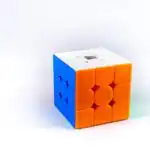
- **Cube:** A 3D shape with six equal square faces.
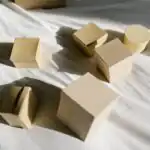
- **Cuboid:** A 3D shape with six rectangular faces (or some square faces).
- **Cylinder:** A 3D shape with two circular bases and one curved side.
Open and Closed Shapes
Shapes can be described as open or closed based on whether they fully enclose a space.
- **Closed Shape:** A shape that starts and ends at the same point, completely enclosing an area. Examples include a cube, a cuboid, or a cylinder.
- **Open Shape:** A shape that does not completely enclose an area. It has a start point and an end point that are not joined. Examples include a half-opened box or a cylinder without its top or bottom.
Properties of 3-Dimensional Shapes
Three-dimensional shapes have distinct features called faces, vertices, and edges.
- **Face:** A flat surface of a 3D shape.
- **Vertex (plural: Vertices):** A corner where edges meet.
- **Edge:** A line segment where two faces meet.
The properties of some common 3-dimensional shapes are:
- **Cube:** 6 faces, 12 edges, 8 vertices.
- **Cuboid:** 6 faces, 12 edges, 8 vertices.
- **Cylinder:** 3 faces (2 circular bases, 1 curved surface), 2 edges (where the curved surface meets the bases), 0 vertices.
Drawing and Construction of 3-Dimensional Shapes
3-dimensional shapes can be drawn on a 2-dimensional surface to represent their solid form. They can also be constructed using nets, which are 2-dimensional patterns that can be folded to form a 3D shape.
Quantitative Practice on Faces, Edges, and Vertices
Pupils should be able to count and state the number of faces, edges, and vertices for given 3-dimensional shapes.
Teaching Methods/Instructional Techniques
Discussion, Lecture, Demonstration, Question and Answer, Visual Aids
Instructional Procedures
Step 1: Introduction
Time: 5 minutes
Teaching Skill: Set Induction
Teacher’s Activity: The teacher greets the pupils and asks them to look around the classroom, identifying objects that are flat (like the whiteboard) and objects that are solid (like a textbook or a dustbin). The teacher then introduces the topic of 3-dimensional shapes as solid shapes.
Pupils’ Activity: Pupils respond to greetings, identify objects, and listen attentively to the introduction.
Learning Point: Pupils are introduced to the concept of 3-dimensional shapes and relate them to everyday objects.
Step 2: Identification of 3-Dimensional Shapes
Time: 8 minutes
Teaching Skill: Explanation/Identification
Teacher’s Activity: The teacher displays charts and models of cubes, cuboids, and cylinders. The teacher names each shape and asks pupils to repeat the names. The teacher also asks pupils to identify other objects in the classroom or outside that resemble these shapes.
Pupils’ Activity: Pupils observe the shapes, repeat their names, and identify similar objects in their surroundings.
Learning Point: Pupils can identify and name common 3-dimensional shapes.
Step 3: Open and Closed Shapes
Time: 7 minutes
Teaching Skill: Explanation/Comparison
Teacher’s Activity: The teacher uses examples like a closed box and an open box, or a complete cylinder and a cylinder without its top or bottom, to explain the difference between open and closed shapes. The teacher asks pupils to state features that distinguish them.
Pupils’ Activity: Pupils observe the examples, listen to the explanation, and state features that differentiate open and closed shapes.
Learning Point: Pupils understand the concept of open and closed shapes and can distinguish between them.
Step 4: Properties of 3-Dimensional Shapes (Faces, Vertices, Edges)
Time: 10 minutes
Teaching Skill: Demonstration/Explanation
Teacher’s Activity: The teacher uses the physical models of a cube, cuboid, and cylinder. For each shape, the teacher points out and explains what a face, an edge, and a vertex are. The teacher then guides pupils to count the number of faces, edges, and vertices for each shape, writing them on the board.
Pupils’ Activity: Pupils observe the demonstration, participate in counting, and note down the properties of the shapes.
Learning Point: Pupils can identify and count the faces, edges, and vertices of 3-dimensional shapes.
Step 5: Drawing and Construction of 3-Dimensional Shapes
Time: 8 minutes
Teaching Skill: Demonstration/Practical Activity
Teacher’s Activity: The teacher demonstrates how to draw a simple cube or cuboid on the board. The teacher then distributes nets of a cube or cuboid to pupils and demonstrates how to cut and fold them to construct the 3D shape.
Pupils’ Activity: Pupils attempt to draw the shapes and then carefully cut and fold the nets to construct their own 3D shapes.
Learning Point: Pupils gain practical experience in representing and building 3-dimensional shapes.
Step 6: Quantitative Practice on Faces, Edges, and Vertices
Time: 5 minutes
Teaching Skill: Questioning/Application
Teacher’s Activity: The teacher presents simple questions on the board, asking pupils to state the number of faces, edges, or vertices for a specific shape (e.g., “How many faces does a cuboid have?”).
Pupils’ Activity: Pupils provide oral answers to the questions, applying their knowledge of shape properties.
Learning Point: Pupils consolidate their understanding of the quantitative properties of 3-dimensional shapes.
Step 7: Evaluation/Review
Time: 5 minutes
Teaching Skill: Questioning/Assessment
Teacher’s Activity: The teacher evaluates the learning by asking the following questions:
- Define a 3-dimensional shape.
- Mention three examples of 3-dimensional shapes.
- Distinguish between an open shape and a closed shape.
- State the number of faces, edges, and vertices of a cuboid.
Pupils’ Activity: Pupils answer orally and in writing.
Learning Point: Pupils demonstrate understanding of the lesson.
Step 8: Conclusion
Time: 2 minutes
Teaching Skill: Summarization
Teacher’s Activity: The teacher briefly summarizes the key points of the lesson, reiterating the importance of 3-dimensional shapes in everyday life. The teacher then gives homework, asking pupils to identify and list five 3-dimensional objects they see at home.
Pupils’ Activity: Pupils listen to the summary and copy the homework.
Learning Point: Pupils recall the main concepts and apply them to their home environment.
Home Task: Solve three new exercises on THREE DIMENSIONAL SHAPES. Show each step and check each answer.
Lesson Keywords
- 3-Dimensional Shapes – Solid figures that have length, width, and height.
- Cube – A 3D shape with six equal square faces.
- Cuboid – A 3D shape with six rectangular faces.
- Cylinder – A 3D shape with two circular bases and one curved side.
- Face – A flat surface of a 3D shape.
- Vertex – A corner where edges meet on a 3D shape.
- Edge – A line segment where two faces meet on a 3D shape.
- Open shape – A shape that does not completely enclose an area.
- Closed shape – A shape that completely encloses an area.
Differentiation
For pupils who grasp concepts quickly, the teacher can challenge them to identify more complex 3D shapes or draw them from different perspectives. For pupils who need more support, the teacher will provide additional physical models and one-on-one guidance during counting and construction activities, simplifying instructions and providing pre-cut nets.
Note for teachers using this lesson plan
Ensure a variety of real-life objects are available to help pupils connect abstract shapes to their environment. Encourage hands-on activities, especially for constructing shapes, as this enhances understanding and engagement. Pay close attention to the correct pronunciation and understanding of terms like “vertices” and “edges.”

Community Join the conversation Open discussion +