

Class: Primary One
Term: First Term
Subject: Basic Science and Technology
Curriculum Theme: Basic Technology
Previous Lesson: Safety When Using Simple Machines at Home
Topic: Simple Machines in the House
Content/Learning Area: Simple Machines Found in the House
Time Allocation: 40 Minutes
Performance Objectives
By the end of the lesson, pupils should be able to:
Cognitive Domain:
-
Describe what simple machines in the house are.
-
Identify examples of simple machines found in the home.
-
Explain how these simple machines help to make work easier at home.
Affective Domain:
-
Show interest in identifying simple machines around the house.
-
Appreciate the usefulness of simple machines in daily household activities.
Psychomotor Domain:
-
Point out and name common simple machines used at home.
Social Domain:
-
Work cooperatively in groups to identify simple machines in pictures or displays.
Reference Materials
-
9-Year Basic Education Curriculum
-
Abuja Educational Resource Centre Scheme of Work
-
NAPPS National Unified Scheme of Work
-
Online resources: Simple Machines Around the House! (https://www.youtube.com/watch?v=dRnlrXYCUco)
-
Relevant textbooks
Instructional Materials
-
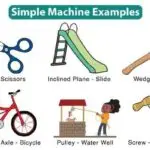
Pictures or charts showing common home tools (broom, scissors, knife, tap, etc.)
-
Real-life household tools (broom, spoon, door handle, bottle opener, etc.)
-
Flashcards or posters of different rooms in a house
-
Whiteboard and markers
Rationale for the Lesson
Pupils use simple machines daily at home—while cleaning, cooking, or playing. Recognizing these tools as simple machines helps them appreciate how technology makes work easier in their immediate environment.
Prerequisite/Previous Knowledge
Pupils already know the meaning of simple machines and have seen examples around them in previous lessons.
Lesson Content
Meaning of Simple Machines in the House
Simple machines in the house are the tools and objects we use every day at home to make our work easier.
They help us clean, cook, open, cut, lift, and move things easily.
Examples of Simple Machines in the House
In the Kitchen:
-
Spoon – for stirring or scooping food.
-
Knife – for cutting fruits and vegetables.
-
Grater – for shredding food.
-
Can opener – for opening tins easily.
-
Mortar and pestle – for pounding food.
In the Living Room:
-
Door handle – helps us open or close the door easily.
-
Ceiling or table fan – moves air around (wheel and axle).
-
Curtain pulley – helps pull curtains open and close.
In the Bathroom:
-
Tap handle – helps us turn water on and off easily.
-
Bucket handle – helps us carry water.
-
Soap dish or hanger – sometimes acts as a lever when lifting light things.
In the Bedroom:
-
Drawer handle – helps us pull drawers open.
-
Hanger hook – helps hang clothes.
In the Compound or Garden:
-
Broom – helps sweep the floor.
-
Rake – helps gather leaves.
-
Hoe – helps dig or loosen soil.
-
Wheelbarrow – helps carry heavy loads.
Teaching Methods
Discussion, Question and Answer, Demonstration, Group Activity
Instructional Procedures
Step 1: Introduction (Set Induction)
Time: 5 minutes
Teaching Skill: Questioning, Explaining
Teacher’s Activity:
-
Review the previous lesson on “Simple Machines Around Us.”
-
Ask: “Can you name some simple machines you use at home?”
-
Introduce today’s topic: Simple Machines in the House.
Pupils’ Activity: -
Respond to questions and share what they already know.
Step 2: Explanation of Key Concepts
Time: 10 minutes
Teaching Skill: Explaining, Illustrating
Teacher’s Activity:
-
Explain what “Simple Machines in the House” means.
-
Show pictures or real items and describe how they make work easier.
Pupils’ Activity: -
Observe and listen attentively.
-
Ask or answer questions about how each machine works.
Step 3: Guided Practice
Time: 10 minutes
Teaching Skill: Demonstrating, Guiding
Teacher’s Activity:
-
Display some household tools (e.g., broom, spoon, knife, bucket).
-
Guide pupils to identify them as simple machines and discuss their uses.
Pupils’ Activity: -
Participate in identifying and describing the tools.
Step 4: Individual Practice
Time: 5 minutes
Teaching Skill: Monitoring, Assessing
Teacher’s Activity:
-
Ask pupils to mention or draw simple machines they have at home.
Pupils’ Activity: -
List or draw simple machines individually.
Step 5: Note-Taking
Time: 5 minutes
Teaching Skill: Guiding, Summarizing
Teacher’s Activity:
-
Help pupils write down short notes on examples of simple machines in the house.
Pupils’ Activity: -
Copy notes correctly.
Step 6: Evaluation/Review
Time: 5 minutes
Teaching Skill: Questioning, Summarizing
Teacher’s Activity:
Ask pupils:
-
What are simple machines in the house?
-
Mention four simple machines you have at home.
-
What work does a knife help us do?
-
How does a wheelbarrow make our work easier?
Pupils’ Activity:
-
Answer questions orally.
Step 7: Conclusion
Time: 5 minutes
Teaching Skill: Reinforcing, Encouraging
Teacher’s Activity:
-
Summarize the lesson and praise pupils for participation.
-
Encourage them to identify and name more simple machines at home.
Pupils’ Activity: -
Share what they learned.
Lesson Keywords
-
Simple Machines in the House: Tools used at home to make work easier.
-
Lever: A tool that helps lift or move things.
-
Wheel and Axle: Helps things roll or move easily.
-
Wedge: Helps cut or split objects.
-
Pulley: Helps lift or move things using a rope and wheel.
Lesson Evaluation
The teacher shall evaluate the learning by asking the following questions:
-
What are simple machines in the house?
-
Name four simple machines found in your home.
-
What is the use of a spoon at home?
-
Which simple machine helps you sweep?
-
Mention one simple machine found in the kitchen and its use.
Assignment/Homework
-
Draw two simple machines you have at home.
-
Ask your parents to show you two more and write their names and uses.
Note for Teachers
Ensure to use real-life examples and demonstrations to make the lesson engaging and relatable for the pupils. Encourage active participation and questioning throughout the lesson.
Community Join the conversation Open discussion +