

Class: Primary Two
term: Third Term
subject: Basic Science and Technology
Curriculum Theme: Basic Science
previous Lesson: Floatation of Water
Topic: Mechanical Gadgets (Simple Machines)
Content/Learning Area: Definition of Simple Machines, Importance of Simple Machines, Examples of Simple Machines
Time Allocation: 40 minutes
Performance Objectives
By the end of the lesson, pupils should be able to:
- cognitive Domain:
1.Define simple machines.2. Describe the uses of simple machines.
3. Identify examples of simple machines in the classroom.
- Psychomotor Domain:
1. Identify simple machines in pictures.
2. Use simple machines to perform simple tasks.
- Affective Domain:
1. Show interest in learning about simple machines.
2. Appreciate the importance of simple machines in everyday life.
- Social Domain:
1. Work cooperatively with peers in group activities.
2. Share ideas and knowledge about simple machines.
Reference materials
- 9 – years Basic Education Curriculum
- Abuja Educational Resource Center Scheme of Work
- NAPPS National Unified scheme of Work
- Online details
- Relevant Textbooks
Instructional Materials
To deliver this lesson,the teacher will employ the help of the following materials:
- Charts showing examples of simple machines
- Real-life examples of simple machines (e.g., lever, wheelbarrow, pulley)
- Pictures of simple machines
- Whiteboard or chart paper
- Markers
Rationale for the Lesson
Understanding simple machines is crucial for pupils to grasp basic mechanical principles. This knowledge will be beneficial in future science lessons and in understanding how everyday tools and machines function.
Prerequisite/Previous Knowledge
The teacher will start by asking pupils what tools they use at home to make work easier. The teacher will then introduce the concept of simple machines as tools that make work easier.
lesson Content
Mechanical Gadgets (Simple Machines)
Simple machines are tools that make work easier. they are used in many tools that help in everyday life.
Definition of simple Machines
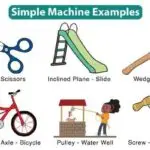
Simple machines are tools that make our work easier. They include levers, wheels, pulleys, inclined planes, screws, and wedges.
Importance of Simple Machines
simple machines make tasks easier and more efficient.The following are some of the reasons simple machines are meaningful:
- They reduce the effort needed to move objects.
- They help in lifting heavy loads.
- They allow us to move things over distances.
- They make tasks faster and more efficient.
- They are used in many tools that help in everyday life.
- They enable us to perform tasks that would be impractical without them.
- They improve productivity in various industries and daily activities.
Teaching Methods
to deliver this lesson, the teacher will adopt the following methods: Discussion, Exhibition, Group work, Question and answer.
Instructional Procedures
To deliver this lesson, the teacher will adopt the following steps:
Step 1: Introduction
Time: 5 minutes
Teaching Skill: Questioning
Teacher’s Activity: Asks pupils what tools they use at home to make work easier. Introduces the topic: Simple Machines.
Pupils’ Activity: Respond to the teacher’s questions and listen attentively.
Step 2: Clarification of Key Concepts
Time: 10 minutes
Teaching Skill: Explanation
Teacher’s Activity: Explains the definition and importance of simple machines using examples.Pupils’ Activity: Listen attentively and take notes.
Step 3: Demonstration/Guided Practice
Time: 10 minutes
Teaching Skill: Demonstration
Teacher’s Activity: Demonstrates the use of different simple machines using real-life examples or models.
Pupils’ activity: Observe the demonstration and ask questions.
Step 4: Autonomous Practice
Time: 5 minutes
Teaching Skill: guided Practice
Teacher’s Activity: Guides pupils to identify simple machines in the classroom.
Pupils’ Activity: Identify simple machines in the classroom.
Step 5: Note-Taking
Time: 5 minutes
Teaching Skill: Note-Taking
Teacher’s Activity: Guides pupils to take notes on the key concepts.
Pupils’ Activity: Take notes on the key concepts.
Step 6: Evaluation/Review
Time: 5 minutes
Teaching Skill: Questioning
Teacher’s Activity: Asks questions to assess pupils’ understanding.
Pupils’ Activity: Answer the questions.
Objective-aligned checks:
- Define simple machines.
- Describe the uses of simple machines.
- Identify examples of simple machines in the classroom.
Step 7: Conclusion
Time: 5 minutes
Teaching Skill: Summarization
Teacher’s Activity: Summarizes the key concepts and assigns homework.Pupils’ Activity: Listen attentively and ask questions.
Lesson Keywords
- Simple Machine – A tool that makes work easier.
- Lever – A simple machine that pivots to lift or move objects.
- Pulley – A wheel with a grooved rim around which a rope passes, used to lift objects.
- Inclined Plane – A flat surface set at an angle used to help raise or lower objects.
- Screw – An inclined plane wrapped around a cylinder, used to fasten objects.
- Wedge – A triangular-shaped tool used to separate or split objects.
Lesson evaluation
To evaluate the learning, the teacher asks pupils to:
- What is a simple machine?
- Name three simple machines you use at home and state their uses.
- How do simple machines make our work easier?
- Can you give an example of a simple machine that helps us move things over distances?
- Can you give an example of a simple machine that helps us lift heavy loads?
Assignment/Homework
- Find and draw five examples of simple machines they see at home.
- Write a short paragraph explaining how one of the simple machines you found makes work easier.
- List three ways simple machines are used in your community.
Differentiation
- For slower learners: Provide one-on-one assistance and use simpler examples.
- For advanced learners: Encourage them to research and present more complex examples of simple machines.
- For visual/auditory/kinesthetic learners: Use visual aids, verbal explanations, and hands-on activities to cater to different learning styles.
Note for Teachers
ensure to use real-life examples and hands-on activities to make the lesson engaging and relatable for the pupils. Encourage pupils to ask questions and share their experiences with simple machines.


Community Join the conversation Open discussion +