

Class: Primary Two
Term: Second Term
Subject: Basic Science and Technology
Curriculum theme: Physical & Health Education
Previous Lesson: Safety Rules in Basketball Game
Topic: Basic Skills In Swimming
Content/Learning Area: what are the Basic Skills in Swimming, The Four Basic Swimming strokes, Safety Tips for Swimming
Time Allocation: 40 minutes
Performance Objectives
By the end of the lesson, pupils should be able to:
- Cognitive domain:
1. Explain the basic skills in swimming.
2. Identify the four basic swimming strokes.
3. List safety tips for swimming.
- Psychomotor domain:
1. Demonstrate basic floating techniques.
2.Practice basic kicking techniques.
3. Practice basic arm movements in water.
- Affective Domain:
1. Show enthusiasm for learning swimming skills.
2. Appreciate the importance of water safety.
- social Domain:
1. Work cooperatively with peers during activities.
2. Follow instructions and safety guidelines.
Reference Materials
- 9 – Years Basic Education curriculum
- abuja educational Resource Center Scheme of Work
- NAPPS National Unified Scheme of Work
- Relevant Textbooks
Instructional Materials
To deliver this lesson, the teacher will use the following materials:
- Whiteboard or chart
- Markers or pens
- Pictures or videos of swimming techniques
Rationale for the Lesson
This lesson is crucial for teaching children essential life skills and promoting water safety. Understanding basic swimming techniques and safety procedures can prevent accidents and build confidence in the water.
Prerequisite/Previous Knowledge
The teacher will start by asking pupils if they have ever been swimming or seen people swimming. The teacher will then show pictures or a short video of people swimming, sparking curiosity and setting the stage for the lesson.
Lesson Content
What are the Basic Skills in Swimming?
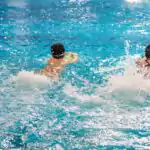
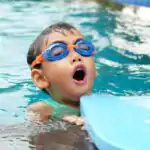
Swimming involves several key skills. Learning to float is the first step, allowing yoru body to rest on the water.This can be practiced on your back or stomach. kicking is crucial for movement, and can be practiced with a kickboard or by holding onto the pool edge. Arm movements propel you thru the water; practice with arm circles or a pull buoy. Proper breathing is essential to stay afloat and swim effectively.
The Four Basic Swimming Strokes
There are four main swimming strokes:
The following are the four main swimming strokes:
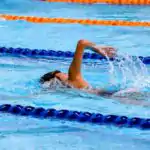
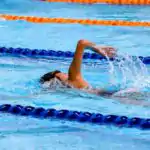
- Freestyle: Also known as front crawl, which uses alternating arm strokes and leg kicks.
- Backstroke: Performed on your back with similar arm and leg movements.
- Breaststroke: Involves a frog-like kick and sweeping arm motion.
- Butterfly stroke: The most challenging, involving a dolphin-like kick and powerful arm strokes.
- Sidestroke: A stroke were the swimmer lies on their side and uses scissor-like kicks and alternating arm movements.
- Elementary Backstroke: A relaxed backstroke using a breaststroke-like kick and simultaneous arm movements.
Safety tips for Swimming
Swimming safety is paramount.
The following are some safety tips for swimming:
- always swim with a buddy.
- Never swim in unsupervised areas.
- Avoid swimming when tired or after alcohol consumption.
- Learn basic rescue techniques.
- Obey all posted pool rules and lifeguard instructions.
- Ensure adequate supervision for children at all times.
- No the safety rules.
Teaching Methods
To deliver this lesson, the teacher will adopt the following methods: Discussion, Demonstration, Question and answer, Visual aids
instructional Procedures
to deliver this lesson, the teacher will adopt the following steps:
Step 1: introduction
Time: 5 minutes
Teaching Skill: Questioning, explaining
Teacher’s Activity: Introduce the topic, ask questions about prior swimming experiences, show pictures/videos.
Pupils’ Activity: Respond to questions, observe visuals.
Step 2: Description of Key Concepts
Time: 10 minutes
Teaching Skill: Explaining, clarifying
Teacher’s Activity: Explain the basic skills in swimming (floating, kicking, arm movements, breathing).
Pupils’ Activity: Listen attentively, ask clarifying questions.
Step 3: Demonstration/Guided Practice
Time: 10 minutes
Teaching Skill: Demonstrating, guiding
Teacher’s Activity: demonstrate basic swimming techniques (if possible, in a safe habitat). guide pupils in simple practice exercises.
Pupils’ Activity: Observe demonstrations, participate in guided practice.
Step 4: Independent Practice
Time: 5 minutes
Teaching Skill: Monitoring,assisting
Teacher’s Activity: Supervise pupils as they practice basic skills independently.
Pupils’ Activity: Practice basic swimming skills independently.
Step 5: Note-Taking
Time: 5 minutes
teaching Skill: Guiding note-taking
Teacher’s Activity: Guide pupils in taking notes on key concepts and safety tips.
Pupils’ Activity: Take notes on key concepts and safety tips.
Step 6: Evaluation/Review
Time: 5 minutes
Teaching Skill: questioning, summarizing
Teacher’s Activity: Ask review questions, summarize key learning points.
Pupils’ Activity: Answer review questions, participate in summary discussion.
Objective-aligned checks:
- Explain the basic skills in swimming.
- Identify the four basic swimming strokes.
- List safety tips for swimming.
Step 7: Conclusion
Time: 5 minutes
Teaching Skill: Summarizing, reinforcing
Teacher’s Activity: Summarize the lesson and assign homework.Pupils’ Activity: Listen to the summary and note the assignment.
lesson Keywords
- Floating – The ability to stay on the surface of the water without sinking.
- Kicking – Using leg movements to propel oneself through the water.
- Arm Movements – Using arm strokes to move forward in the water.
- Breathing – Coordinating inhalation and exhalation while swimming.
- Freestyle – A swimming stroke with alternating arm movements and flutter kicks.
- Backstroke – A swimming stroke performed on the back.
- Breaststroke – A swimming stroke with a frog-like kick and sweeping arm motion.
- Butterfly Stroke – A swimming stroke with a dolphin-like kick and powerful arm strokes.
lesson Evaluation
To evaluate the learning, the teacher asks pupils to:
- Name the four basic swimming strokes.
- List three safety tips for swimming.
- Why is learning to float critically vital in swimming?
- How can you practice kicking while learning to swim?
- Explain the importance of breathing while swimming.
Assignment/Homework
- Research and write a short paragraph on the history of swimming.
- Draw and label the four basic swimming strokes.
- List five additional safety tips for swimming not discussed in class.
differentiation
- for slower learners: Provide one-on-one assistance and break down tasks into smaller, manageable steps.
- for advanced learners: introduce more advanced swimming techniques.
- for visual/auditory/kinesthetic learners: Use visual aids, verbal instructions, and hands-on activities to cater to different learning styles.
Note for Teachers
Ensure a safe environment for any practical demonstrations. Emphasize the importance of water safety at all times. Encourage pupils to practice swimming skills under supervision.
Community Join the conversation Open discussion +