

Class: Junior Secondary School 1 (JSS1, JSS 1)
Term: 2nd Term
Week: 2
Age: 12 years
Duration: 45 minutes
Subject: Basic Science And Technology
Curriculum Theme: Physical And Health Education
Previous Lesson: Contact and Non–Contact Sports
Topic: Non–Contact Sports
Subject Matter: Concept of non-contact sports, Examples of non-contact sports – gymnastics, swimming, race, long jump etc.
Specific Objectives
By the end of the lesson, pupils should be able to:
- Cognitive Domain:
(a) Explain the concept of non-contact sports.
(b) Identify examples of non-contact sports. - Affective Domain:
(a) Appreciate the importance of participating in non-contact sports for health and safety. - Psychomotor Domain:
(a) Demonstrate simple non-contact sports activities such as running, jumping, and stretching. - Social Domain:
(a) Work cooperatively with peers during group discussions or demonstrations of non-contact sports.
Reference Materials
The following resources were used in planning this lesson:
- 9 Years Basic Education Curriculum
- Lagos State Unified Scheme of work for Junior Secondary Schools
- World Health Organization – “Benefits of Physical Activity” (https://www.who.int/news-room/fact-sheets/detail/physical-activity)
- Relevant Textbooks
Instructional Materials
The teacher will teach this lesson with the aid of:
- Pictures or charts showing different non-contact sports
- Short video clips of non-contact sports
- Whistle and stopwatch
- Sports equipment such as skipping rope, small hurdles, and mats
- Whiteboard and markers
Rationale for the Lesson
This lesson introduces pupils to non-contact sports, promoting awareness of safe sporting activities that improve physical fitness, coordination, and personal discipline.
Prerequisite/Previous Knowledge
Pupils have previously learned about contact sports and can differentiate between physical and non-physical interaction in games.
Lesson Content/Board Summary
Non–Contact Sports
Non-contact sports are types of sports in which players do not have physical contact with each other while competing. They rely on skill, strength, endurance, and coordination rather than direct physical confrontation.
Concept of Non–Contact Sports
Non-contact sports focus on individual performance or teamwork without tackling, blocking, or any form of body contact. These sports emphasize technique, accuracy, and control.
The following are key points about non-contact sports:
- They prevent injuries caused by physical contact.
- They build endurance, speed, and coordination.
- They improve concentration and self-discipline.
- They encourage fair play and respect among participants.
- They help maintain fitness and healthy living.
Examples of Non–Contact Sports
Examples include sports where participants compete separately or with limited indirect interaction.
Examples are:
- Gymnastics
- Swimming
- Athletics (races, long jump, high jump)
- Table tennis
- Badminton
- Lawn tennis
- Archery
- Cycling
- Golf
- Skiing
Importance of Non–Contact Sports
Non-contact sports offer many benefits to the body and mind.
The following are the importance of non-contact sports:
- They promote physical fitness and body strength.
- They reduce the chances of physical injury.
- They help in developing coordination and flexibility.
- They provide opportunities for recreation and relaxation.
- They improve mental alertness and focus.
- They encourage teamwork and sportsmanship.
- They help in weight control and heart health.
Teaching Methods/Instructional Techniques:
Lecture, Discussion, Explanation, Demonstration, Question and Answer, Group Work, Visual Aids
Instructional Procedures
To deliver this lesson, the teacher will adopt the following steps:
Step 1: Introduction
Time: 5 minutes
Teaching Skill: Set Induction
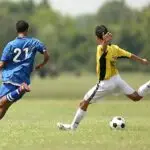
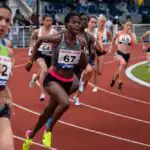
Teacher’s Activity: Teacher displays pictures of athletes performing different sports and asks pupils to identify which ones involve body contact and which do not.
Pupils’ Activity: Pupils respond by identifying and describing the sports shown.
Learning Point: Pupils recognize the difference between contact and non-contact sports.
Step 2: Concept of Non–Contact Sports
Time: 8 minutes
Teaching Skill: Explanation
Teacher’s Activity: Teacher explains the concept of non-contact sports, highlighting the absence of physical contact between players.
Pupils’ Activity: Pupils listen attentively and ask questions for better understanding.
Learning Point: Pupils understand the meaning and features of non-contact sports.
Step 3: Examples of Non–Contact Sports
Time: 10 minutes
Teaching Skill: Demonstration and Discussion
Teacher’s Activity: Teacher lists and shows pictures or videos of examples of non-contact sports.
Pupils’ Activity: Pupils mention other examples they know and identify similarities among them.
Learning Point: Pupils can list examples of non-contact sports correctly.
Step 4: Importance of Non–Contact Sports
Time: 10 minutes
Teaching Skill: Discussion
Teacher’s Activity: Teacher leads discussion on the benefits of engaging in non-contact sports and relates it to pupils’ health and school life.
Pupils’ Activity: Pupils share their views and experiences on playing sports safely.
Learning Point: Pupils appreciate the importance of non-contact sports for physical and mental well-being.
Step 5: Note-Taking
Time: 5 minutes
Teaching Skill: Explanation
Teacher’s Activity: Teacher writes the board summary and dictates for pupils to copy into their notes.
Pupils’ Activity: Pupils copy the notes neatly.
Learning Point: Pupils have a written summary of the lesson.
Step 6: Evaluation/Review
Time: 5 minutes
Teaching Skill: Questioning
Teacher’s Activity: The teacher evaluates the learning by asking the following questions:
- What are non-contact sports?
- Mention four examples of non-contact sports.
- State three importance of non-contact sports.
- How do non-contact sports help prevent injury?
Pupils’ Activity: Pupils answer the questions orally.
Learning Point: Pupils demonstrate understanding of the characteristics and benefits of non-contact sports.
Step 7: Conclusion
Time: 2 minutes
Teaching Skill: Reinforcement
Teacher’s Activity: Teacher summarizes the key points of the lesson and encourages pupils to take part in safe sports activities.
Pupils’ Activity: Pupils listen attentively and ask questions where needed.
Learning Point: Pupils understand the importance and examples of non-contact sports.
Home Task: Describe or illustrate one lesson example of Non–Contact Sports and include one safety or performance rule. Do not practise a risky activity without adult supervision.
Lesson Keywords
- Non-contact sports – sports where players do not touch each other while playing
- Coordination – the ability to move body parts smoothly and efficiently
- Endurance – the ability to perform physical activity for a long time
- Flexibility – the ability of the body to bend or move easily
- Discipline – self-control and obedience to rules during sports activities
Differentiation
Teacher simplifies explanations and uses pictures for slower learners, while advanced learners assist in listing examples and leading demonstrations.
Note for teachers using this lesson plan
Ensure safety when demonstrating non-contact sports. Use real or improvised materials to make lessons interactive. Emphasize respect, teamwork, and adherence to sports rules.


Community Join the conversation Open discussion +