

Note for teachers using this lesson plan
This lesson introduces students to the fundamental concepts of sewage and refuse, and their proper disposal. Ensure you have the necessary instructional materials readily available for demonstration. Guide students to actively participate in discussions and practical demonstrations of waste disposal methods to ensure they grasp the importance of maintaining a clean and healthy school and community environment.
Class: JSS 1
Term: First Term
Week: 4
Age: 12 years
Duration: 45 minutes
Subject: Physical and Health Education
Curriculum Theme: Health and wellness
Focal competence: Identifying proper methods of sewage and refuse disposal and applying safe practices to prevent pollution and maintain a healthy environment
Key competencies/values: Communication; Collaboration; Responsibility
Skills:
- Demonstrating the methods of sewage and refuse disposal
Previous Lesson: Characteristics of a healthy person
Topic: School And Community Health
Subject Matter: Meaning of sewage and refuse, Methods of sewage and refuse disposal in school and community
Specific Objectives
By the end of the lesson, pupils/students should be able to:
Cognitive Domain
- Define sewage.
- Define refuse.
- Differentiate sewage from refuse using familiar examples.
- Describe appropriate methods of sewage and refuse disposal in the school and community.
Affective Domain
- Appreciate the importance of proper waste disposal for a healthy environment.
- Take responsibility for maintaining a clean school and community.
- Collaborate with peers in discussing and implementing waste management practices.
Psychomotor Domain
- Demonstrate simple methods of refuse disposal using available materials.
Social Domain
- Communicate effectively about the importance of proper waste disposal.
Reference Materials
The following resources were used in planning this lesson:
- 2025 Revised 9 Years Basic Education Curriculum
- Relevant State Unified Scheme of Work
- Physical and Health Education for Junior Secondary Schools, Book 1
- The HeadTeacher Scheme of work
Instructional Materials
The teacher will teach this lesson with the aid of:
- Posters/charts showing different types of waste and disposal methods
- Waste baskets/dustbins
- Brooms
- Moping sticks
- Water
Rationale for the Lesson
This lesson is important because it educates students on distinguishing between different types of waste and understanding their proper disposal. It equips them with practical knowledge and skills to manage waste effectively, which is essential for preventing environmental pollution and promoting good health within their school and local community.
Prerequisite/Previous Knowledge
Students have basic knowledge of cleanliness and hygiene in their homes and immediate surroundings.
Lesson Content/Board Summary
School And Community Health
Meaning of Sewage
Sewage refers to the liquid waste that flows from homes, schools, and other buildings through pipes, drains, and sewers. It typically contains human waste, wastewater from bathing, washing clothes, and cooking. Sewage is harmful because it contains disease-causing germs.
Examples of sewage include:
- Wastewater from toilets.
- Water from washing dishes.
- Water from bathing and laundry.
Meaning of Refuse
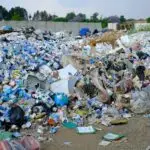
Refuse, also known as solid waste or garbage, refers to the unwanted solid materials discarded from homes, schools, and other places. It includes items that are no longer useful or are broken.
Examples of refuse include:
- Paper scraps.
- Plastic bottles and bags.
- Food leftovers and peels.
- Broken glass and ceramics.
- Empty cans and cartons.
Differences Between Sewage and Refuse
Sewage and refuse are both types of waste, but they differ in their state and origin:
- State: Sewage is liquid waste, while refuse is solid waste.
- Origin: Sewage primarily comes from plumbing systems (toilets, sinks, showers), whereas refuse comes from general daily activities (packaging, food scraps, broken items).
- Composition: Sewage contains water, human waste, and dissolved substances. Refuse consists of various solid materials like paper, plastics, and organic matter.
Methods of Sewage Disposal in School and Community
Proper disposal of sewage is crucial to prevent the spread of diseases. Common methods include:
- Septic Tanks: These are underground tanks where sewage is collected and treated. Solid waste settles at the bottom, and the liquid flows out into a soakaway system.
- Soakaway Pits: These are pits dug in the ground, often connected to septic tanks, where treated liquid waste seeps into the soil.
- Public Sewerage Systems: In some communities, sewage is collected through a network of underground pipes and transported to a central treatment plant before being safely discharged.
- Pit Latrines/Toilets: For areas without modern plumbing, well-maintained pit latrines are used for human waste disposal.
Methods of Refuse Disposal in School and Community
Effective refuse disposal helps keep the environment clean and healthy. Common methods include:
- Use of Dustbins/Waste Baskets: All solid waste should be collected in covered dustbins or waste baskets placed in strategic locations within the school and community.
- Regular Collection: Refuse collected in bins should be regularly emptied and transported to designated disposal sites by waste management authorities.
- Incineration: Controlled burning of certain types of refuse in special facilities, reducing its volume. This must be done carefully to avoid air pollution.
- Composting: Organic refuse (like food scraps, leaves) can be collected and allowed to decompose naturally to produce manure for plants.
- Recycling: Reusing materials like plastics, paper, glass, and metals after processing them into new products. This reduces the amount of waste going to landfills.
- Landfilling: Disposing of refuse by burying it in designated areas (landfills) where it is covered with soil daily.
Teaching Methods/Instructional Techniques
Discussion, Explanation, Question and Answer, Demonstration, Group Work, Guided Practice
Instructional Procedures
Step 1: Introduction
Time: 5 minutes
Teaching Skill: Activating prior knowledge
Teacher’s Activity: The teacher greets the students and asks them to mention different types of waste they see around their homes and school. The teacher then introduces the topic: “School and Community Health: Meaning of Sewage and Refuse.”
Pupils’ Activity: Students respond by mentioning various types of waste like dirt, papers, water, etc. They listen attentively to the topic introduction.
Learning Point: Prior knowledge of waste
Step 2: Meaning of Sewage
Time: 8 minutes
Teaching Skill: Explanation/Definition
Teacher’s Activity: The teacher explains the meaning of sewage, providing examples like wastewater from toilets, bathrooms, and kitchens. The teacher uses charts to illustrate sources of sewage.
Pupils’ Activity: Students listen, ask questions for clarification, and identify examples of sewage in their environment.
Learning Point: Meaning of sewage
Step 3: Meaning of Refuse
Time: 7 minutes
Teaching Skill: Explanation/Definition
Teacher’s Activity: The teacher explains the meaning of refuse, giving examples such as paper, plastic, food scraps, and broken items. The teacher shows actual examples of refuse collected in a waste basket.
Pupils’ Activity: Students listen, observe the examples, and contribute by mentioning other types of refuse they know.
Learning Point: Meaning of refuse
Step 4: Differentiating Sewage and Refuse
Time: 7 minutes
Teaching Skill: Comparative analysis
Teacher’s Activity: The teacher guides a whole-class discussion, asking students to identify the key differences between sewage and refuse based on their state (liquid/solid) and origin. The teacher uses a chart to summarize the differences.
Pupils’ Activity: Students participate in the discussion, providing examples and pointing out the distinctions between sewage and refuse.
Learning Point: Sewage and refuse differences
Step 5: Methods of Sewage Disposal
Time: 6 minutes
Teaching Skill: Explanation/Demonstration
Teacher’s Activity: The teacher describes appropriate methods of sewage disposal in school and community, such as septic tanks, soakaway pits, and public sewer systems. The teacher uses diagrams or posters to illustrate these methods.
Pupils’ Activity: Students listen, observe the illustrations, and ask questions about the disposal methods.
Learning Point: Sewage disposal methods
Step 6: Methods of Refuse Disposal
Time: 5 minutes
Teaching Skill: Explanation/Practical demonstration
Teacher’s Activity: The teacher describes and demonstrates methods of refuse disposal, such as using dustbins, regular collection, composting, and recycling. The teacher encourages students to brainstorm and discuss these methods in groups.
Pupils’ Activity: Students participate in group discussions, contribute ideas, and observe the teacher’s demonstrations of using dustbins and separating waste.
Learning Point: Refuse disposal methods
Step 7: Evaluation/Review
Time: 5 minutes
Teaching Skill: Questioning/Assessment
Teacher’s Activity: The teacher evaluates the learning by asking the following questions:
- What is sewage?
- What is refuse?
- Mention two differences between sewage and refuse.
- Name two methods of sewage disposal.
- State two ways refuse can be properly disposed of in school.
Pupils’ Activity: Pupils answer orally and in writing.
Learning Point: Waste disposal understanding
Step 8: Note-Taking
Time: 4 minutes
Teaching Skill: Guided Writing
Teacher’s Activity: The teacher guides pupils/students to copy the essential Board Summary notes on the meaning of sewage and refuse and their disposal methods into their notebooks.
Pupils’ Activity: Pupils/students copy the notes carefully into their notebooks.
Learning Point: Board summary notes
Step 9: Conclusion
Time: 3 minutes
Teaching Skill: Consolidation
Teacher’s Activity: The teacher briefly summarizes the importance of proper sewage and refuse disposal for a healthy environment and encourages students to practice these methods daily. The teacher reminds them that a clean environment prevents diseases.
Pupils’ Activity: Students listen and affirm their commitment to proper waste management.
Learning Point: Importance of hygiene
Continuous Assessment/Further Study
Type: Homework
Instruction: Answer the following questions in your notebook:
- List three examples of sewage and three examples of refuse found in your home.
- Explain why it is important to dispose of sewage and refuse properly.
- Draw and label a simple dustbin and a soakaway pit.
Lesson Keywords
- Sewage – Liquid waste from homes, schools, and buildings.
- Refuse – Solid waste or garbage.
- Disposal – The act of getting rid of something.
- Septic tank – An underground tank for treating sewage.
- Soakaway pit – A pit where liquid waste seeps into the soil.
- Dustbin – A container for refuse.
- Composting – Turning organic waste into manure.
- Recycling – Processing used materials into new products.
Differentiation
For slower learners, the teacher will provide simplified definitions and more visual aids (pictures of sewage and refuse). Faster learners can be challenged to research and present on advanced waste management techniques like waste-to-energy conversion or the impact of improper disposal on the environment.
Suggested Lesson Videos
For further understanding, search on YouTube for:
- “Meaning of sewage and refuse JSS 1”
- “Waste disposal methods for schools and communities”
Teacher Guide for Using This Lesson Plan
Before the lesson, ensure you have charts or posters illustrating sewage systems and different types of refuse, along with actual examples of waste bins and cleaning tools. Begin by engaging students with questions about waste they encounter daily to activate their prior knowledge. Clearly explain the meaning of sewage and refuse, emphasizing their distinct characteristics and providing relatable examples. Guide students through the various disposal methods for both types of waste, using demonstrations where possible. Encourage group discussions to foster collaboration and communication skills. During the note-taking stage (Step 8), ensure students copy the Board Summary accurately. Regularly check for understanding throughout the lesson and use the evaluation questions to assess their grasp of the concepts. Support weaker learners with additional explanations and visual aids, while challenging faster learners with extended research tasks.

Community Join the conversation Open discussion +