

Class: Junior Secondary School 1 (JSS1, JSS 1)
Term: 1st Term
Week: 8
Age: 12 years
Duration: 45 minutes
Subject: Basic Science And Technology
Curriculum Theme: Physical And Health Education
Previous Lesson: Posture and Postural Defects, Types and Causes
Topic: Meaning Of Sewage And Refuse
Subject Matter: Meaning Of Sewage And Refuse
Specific Objectives
By the end of the lesson, pupils should be able to:
- Cognitive Domain:
(a) Define sewage and refuse.
(b) Differentiate between sewage and refuse. - Affective Domain:
(a) Appreciate the need for proper disposal of sewage and refuse.
(b) Show concern for a clean and healthy environment. - Psychomotor Domain:
(a) Identify different examples of sewage and refuse.
(b) Demonstrate proper handling and disposal practices. - Social Domain:
(a) Work together in groups to discuss how sewage and refuse affect community health.
Reference Materials
The following resources were used in planning this lesson:
- 9 Years Basic Education Curriculum
- Lagos State Unified Scheme of work for Junior Secondary Schools
- Wikipedia – Sewage
- Relevant Textbooks
Instructional Materials
The teacher will teach this lesson with the aid of:
- Charts showing types of sewage and refuse
- Buckets, bins, and pictorial waste samples
- Flash cards with key terms
- Short video clip on waste management practices
- Whiteboard and markers
Rationale for the Lesson
This lesson sensitizes students on the meaning of sewage and refuse, helping them develop hygienic practices and environmental responsibility.
Prerequisite/Previous Knowledge
Pupils are familiar with the concept of waste in their homes and environment and have basic experience of how it is collected or disposed of.
Lesson Content/Board Summary
Meaning of Sewage and Refuse
Sewage and refuse are forms of waste that must be managed to keep the environment clean. Sewage refers mainly to liquid waste, while refuse refers to solid waste.
The following are the meanings:
- Sewage is waste water and liquid waste from homes, industries, and other places, usually containing human waste, chemicals, or dirty water.
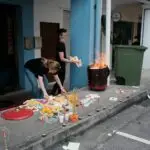
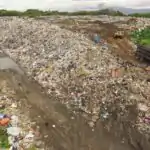
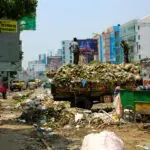
- Refuse is solid waste such as food remains, paper, bottles, plastics, metals, and other discarded materials.
Examples of Sewage
Sewage can contain both human and industrial liquid wastes.
Examples include:
- Urine and faeces carried in water.
- Dirty water from kitchens, bathrooms, and laundries.
- Industrial liquid waste.
- Storm water mixed with waste.
Examples of Refuse
Refuse is solid waste that is often visible and collected for disposal.
Examples include:
- Food remains and peelings.
- Broken bottles, plastics, and rubber.
- Papers, nylon, and cartons.
- Metals, cans, and worn-out materials.
- Ashes and other household waste.
Differences between Sewage and Refuse
Sewage and refuse differ in form and composition.
The following are the differences:
- Sewage is mainly liquid waste, while refuse is solid waste.
- Sewage is usually carried by water through pipes or drains, while refuse is collected in bins or heaps.
- Sewage is often invisible because it flows underground, while refuse is visible on the surface.
- Sewage is dangerous for water pollution, while refuse mainly causes land pollution.
Teaching Methods/Instructional Techniques:
Discussion, Lecture, Explanation, Demonstration, Group Work, Question and Answer, Visual Aids
Instructional Procedures
To deliver this lesson, the teacher will adopt the following steps:
Step 1: Introduction
Time: 5 minutes
Teaching Skill: Set Induction
Teacher’s Activity: Teacher narrates a short story about a community with overflowing waste and asks pupils to identify the problem.
Pupils’ Activity: Pupils respond by mentioning sewage and refuse.
Learning Point: Pupils are introduced to the topic through real-life experiences.
Step 2: Meaning of Sewage and Refuse
Time: 10 minutes
Teaching Skill: Explanation
Teacher’s Activity: Teacher defines sewage and refuse clearly, using charts and examples.
Pupils’ Activity: Pupils listen, observe, and repeat the meanings.
Learning Point: Pupils understand what sewage and refuse mean.
Step 3: Examples of Sewage and Refuse
Time: 10 minutes
Teaching Skill: Demonstration
Teacher’s Activity: Teacher provides examples of sewage and refuse using flash cards and actual waste materials.
Pupils’ Activity: Pupils identify and classify the items into sewage or refuse.
Learning Point: Pupils can give examples of sewage and refuse.
Step 4: Differences between Sewage and Refuse
Time: 10 minutes
Teaching Skill: Discussion
Teacher’s Activity: Teacher discusses differences between sewage and refuse using a comparison chart.
Pupils’ Activity: Pupils contribute to the discussion and answer questions.
Learning Point: Pupils distinguish between sewage and refuse.
Step 5: Note-Taking
Time: 5 minutes
Teaching Skill: Explanation
Teacher’s Activity: Teacher dictates or writes the board summary for pupils to copy.
Pupils’ Activity: Pupils copy the notes into their exercise books.
Learning Point: Pupils have a record of the lesson for reference.
Step 6: Evaluation/Review
Time: 3 minutes
Teaching Skill: Questioning
Teacher’s Activity: The teacher evaluates the learning by asking the following questions:
- Define sewage and refuse.
- Mention two examples of sewage.
- Mention three examples of refuse.
- State two differences between sewage and refuse.
Pupils’ Activity: Pupils respond to the questions orally.
Learning Point: Pupils’ understanding of the topic is assessed.
Step 7: Conclusion
Time: 2 minutes
Teaching Skill: Reinforcement
Teacher’s Activity: Teacher summarizes the lesson and emphasizes the importance of proper sewage and refuse management.
Pupils’ Activity: Pupils listen attentively.
Learning Point: Pupils appreciate the need for cleanliness in their environment.
Home Task: Describe or illustrate one lesson example of Meaning Of Sewage And Refuse and include one safety or performance rule. Do not practise a risky activity without adult supervision.
Lesson Keywords
- Sewage – liquid waste from homes, industries, and drains
- Refuse – solid waste like food remains, plastics, and bottles
- Waste – unwanted or discarded materials
- Pollution – making the environment dirty and unsafe
- Hygiene – practices that keep surroundings clean and healthy
Differentiation
Teacher supports slower learners with simplified explanations and repeated demonstrations, while advanced learners provide more examples during group discussions.
Note for teachers using this lesson plan
Encourage pupils to relate the lesson to their home environment. Use practical examples and ensure safety when handling waste samples.
Community Join the conversation Open discussion +