

Class: Junior Secondary School 1 (JSS1, JSS 1)
Term: 2nd Term
Week: 1
Age: 12 years
Duration: 45 minutes
Subject: Basic Science And Technology
Curriculum Theme: Physical And Health Education
Previous Lesson:
Topic: Contact And Non–Contact Sports
Subject Matter: Definition of contact and non–contact sports, Examples of contact sport–wrestling, judo, basketball, soccer, etc.
Specific Objectives
By the end of the lesson, pupils should be able to:
- Cognitive Domain:
(a) Distinguish between contact and non-contact sports.
(b) Identify examples of contact and non-contact sports. - Affective Domain:
(a) Appreciate the need for safety and discipline in all types of sports. - Psychomotor Domain:
(a) Demonstrate some basic movements or actions related to contact and non-contact sports. - Social Domain:
(a) Cooperate and work in teams during group discussions and demonstrations.
Reference Materials
The following resources were used in planning this lesson:
- 9 Years Basic Education Curriculum
- Lagos State Unified Scheme of work for Junior Secondary Schools
- Britannica – “Sports Classification and Categories” (https://www.britannica.com/sports)
- Relevant Textbooks
Instructional Materials
The teacher will teach this lesson with the aid of:
- Charts showing different sports and athletes
- Flash cards listing sports names
- Whistle and stop watch
- Video clips of selected sports
- Picture cards of contact and non-contact sports
- Whiteboard and marker
Rationale for the Lesson
This lesson helps pupils understand different types of sports based on physical contact, and the importance of safety, skill, and fair play in sports participation.
Prerequisite/Previous Knowledge
Pupils are familiar with general sports activities such as running, football, and swimming through school competitions and physical exercises.
Lesson Content/Board Summary
Contact and Non–Contact Sports
Definition of Contact Sports
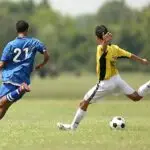
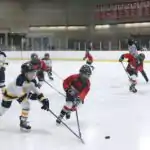
Contact sports are sports where players physically touch or make contact with each other during play. The contact may be deliberate or accidental but is part of the game’s nature.
Examples include:
- Football (Soccer)
- Basketball
- Rugby
- Judo
- Wrestling
- Boxing
- Taekwondo
Definition of Non–Contact Sports
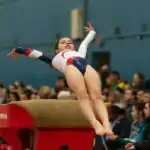
Non-contact sports are sports where players or participants do not make physical contact with one another. The players compete individually or as teams but without direct body contact.
Differences Between Contact and Non–Contact Sports
The following are the major differences between contact and non-contact sports:
- Contact sports involve body contact between players, while non-contact sports do not.
- Protective gear is usually required in contact sports but not always needed in non-contact sports.
- Injuries are more common in contact sports than in non-contact sports.
- Contact sports often require teamwork, while non-contact sports may focus on individual skill.
- Examples of contact sports include football and judo, while non-contact sports include tennis and swimming.
Importance of Understanding Contact and Non–Contact Sports
Understanding the difference between contact and non-contact sports helps pupils choose suitable sports, follow safety measures, and appreciate teamwork and sportsmanship.
The following are the importance of knowing the types of sports:
- It promotes safety awareness during play.
- It helps in selecting suitable sports according to ability and interest.
- It reduces the risk of unnecessary injuries.
- It improves teamwork and respect for rules.
- It encourages participation in healthy recreational activities.
Teaching Methods/Instructional Techniques:
Discussion, Lecture, Explanation, Demonstration, Visual Aids, Question and Answer, Group Work
Instructional Procedures
To deliver this lesson, the teacher will adopt the following steps:
Step 1: Introduction
Time: 5 minutes
Teaching Skill: Set Induction
Teacher’s Activity: The teacher shows pictures of different sports and asks pupils to identify them and describe what they observe about the players’ interaction.
Pupils’ Activity: Pupils identify and describe the sports shown.
Learning Point: Pupils’ attention is drawn to the idea of contact and non-contact in sports.
Step 2: Definition of Contact Sports
Time: 8 minutes
Teaching Skill: Explanation
Teacher’s Activity: The teacher defines contact sports and explains that players come into physical contact during play. The teacher shows examples using pictures or short video clips.
Pupils’ Activity: Pupils listen, observe, and list examples.
Learning Point: Pupils understand what contact sports mean and can identify examples.
Step 3: Definition of Non–Contact Sports
Time: 8 minutes
Teaching Skill: Explanation
Teacher’s Activity: The teacher defines non-contact sports and contrasts them with contact sports. Examples are given using charts.
Pupils’ Activity: Pupils listen and identify examples of non-contact sports.
Learning Point: Pupils can explain non-contact sports and differentiate them from contact sports.
Step 4: Differences and Importance
Time: 10 minutes
Teaching Skill: Discussion
Teacher’s Activity: The teacher discusses the major differences between both types of sports and the importance of knowing them.
Pupils’ Activity: Pupils participate in discussion and contribute examples.
Learning Point: Pupils understand the importance and differences of the two types of sports.
Step 5: Note-Taking
Time: 5 minutes
Teaching Skill: Reinforcement
Teacher’s Activity: Teacher dictates or writes the lesson summary on the board for pupils to copy.
Pupils’ Activity: Pupils copy notes into their books.
Learning Point: Pupils have a complete written record of the lesson.
Step 6: Evaluation/Review
Time: 5 minutes
Teaching Skill: Questioning
Teacher’s Activity: The teacher evaluates the learning by asking the following questions:
- What is a contact sport?
- Mention four examples of contact sports.
- What is a non-contact sport?
- Mention three examples of non-contact sports.
- List two differences between contact and non-contact sports.
Pupils’ Activity: Pupils respond orally.
Learning Point: Pupils demonstrate understanding of the key points of the lesson.
Step 7: Conclusion
Time: 4 minutes
Teaching Skill: Reinforcement
Teacher’s Activity: The teacher summarizes the main points and encourages pupils to always observe safety rules while engaging in sports.
Pupils’ Activity: Pupils listen and ask questions where necessary.
Learning Point: Pupils appreciate the importance of safety and discipline in sports.
Home Task: Describe or illustrate one lesson example of Contact And Non–Contact Sports and include one safety or performance rule. Do not practise a risky activity without adult supervision.
Lesson Keywords
- Contact Sport – sport involving body contact between players
- Non–Contact Sport – sport without physical contact among players
- Teamwork – working together to achieve a common goal in sports
- Injury – harm or damage to the body during sports
- Safety – carefulness to prevent accidents in sports
Differentiation
Teacher provides visual aids and simplified definitions for slower learners, while fast learners are encouraged to identify additional examples and lead group discussions.
Note for teachers using this lesson plan
Ensure pupils participate actively and safely during demonstrations. Emphasize sportsmanship, fair play, and teamwork. Correct misconceptions and encourage all learners to take part.

Community Join the conversation Open discussion +