

Class: Junior Secondary School 1 (JSS 1 / JS1)
Term: 3rd Term
Week: 10
Age: 12 years
Duration: 45 minutes
Subject: Basic Science and Technology
Curriculum Theme: Physical and Health Education
Previous Lesson: Soccer as a Ball Game.
Topic: Practical Performance of Soccer
Subject Matter: Practical Performance of Soccer
Specific Objectives
By the end of the lesson, pupils should be able to:
Cognitive Domain:
- Identify the basic skills involved in playing soccer.
- Explain simple rules of soccer.
Affective Domain:
- Show enthusiasm for participating in soccer activities.
- Appreciate the importance of teamwork in soccer.
Psychomotor Domain:
- Demonstrate basic soccer skills such as dribbling and passing.
- Attempt to shoot the ball towards a goal.
Social Domain:
- Cooperate with teammates during practical sessions.
- Follow instructions and rules during a soccer game simulation.
Reference Materials
The following resources were used in planning this lesson:
- 9 Years Basic Education Curriculum
- State Unified Scheme of Work
- Basic Science and Technology for Junior Secondary Schools, Book 1.
- https://en.wikipedia.org/wiki/Soccer
- https://www.youtube.com/watch?v=s5E399xWf0o
Instructional Materials
The teacher will teach this lesson with the aid of:
- A soccer ball
- Cones or markers
- An open field or playground
- Whistle
- Goalposts (if available, or improvised)
Rationale for the Lesson
This lesson helps pupils to understand the practical aspects of soccer, a popular sport. It enables them to develop physical skills, promote teamwork, and appreciate the rules of the game, contributing to their overall physical well-being.
Prerequisite/Previous Knowledge
Pupils may have seen or played soccer before and have a general idea of what the game involves.
Lesson Content/Board Summary
Practical Performance of Soccer
Definition of Soccer
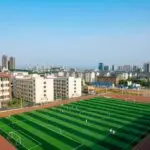
Soccer, also known as football, is a team sport played with a ball between two teams of 11 players. The game is played on a rectangular field called a pitch, with a goal at each end. The object of the game is to score by getting the ball into the opposing goal.
Basic Soccer Skills
The following are fundamental skills in soccer:
- Dribbling – Moving the ball by short taps or pushes with the feet, keeping it under control while running.
- Passing – Kicking or heading the ball to a teammate to move it across the field.
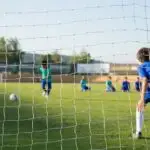
- Shooting – Kicking the ball towards the opponent’s goal to score.
- Trapping – Stopping or controlling the ball with a part of the body (foot, chest, thigh) to prepare for the next action.
- Goalkeeping – The specific role of the goalkeeper to prevent the ball from entering the goal, often involving catching, punching, or parrying the ball.
Practical Soccer Performance
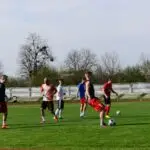
A complete performance combines ready position, dribbling with controlled touches, accurate passing, receiving with the appropriate surface, lawful tackling, shooting and movement into space. Players should look up before passing and communicate with teammates.
Practise from unopposed to opposed drills. Use shin guards where required, inspect the pitch and goals, hydrate and stop after a head impact for proper assessment.
Teaching Methods/Instructional Techniques
Discussion, Lecture, Demonstration, Question and Answer, Visual Aids, Practical Demonstration
Instructional Procedures
Step 1: Introduction
Time: 5 minutes
Teaching Skill: Set Induction
Teacher’s Activity: The teacher greets the pupils and introduces the topic, asking them about their knowledge of soccer.
Pupils’ Activity: Pupils respond to the teacher’s greetings and share what they know about soccer.
Learning Point: Pupils are engaged and the lesson topic is introduced.
Step 2: Explanation of Soccer
Time: 5 minutes
Teaching Skill: Explanation
Teacher’s Activity: The teacher defines soccer and explains its main objective, using simple terms.
Pupils’ Activity: Pupils listen attentively and ask questions for clarification.
Learning Point: Pupils understand what soccer is and its basic aim.
Step 3: Introduction of Basic Skills
Time: 10 minutes
Teaching Skill: Explanation/Lecture
Teacher’s Activity: The teacher introduces and briefly explains basic soccer skills such as dribbling, passing, shooting, and trapping.
Pupils’ Activity: Pupils listen to the explanations and mentally prepare for practical demonstration.
Learning Point: Pupils identify the key skills needed to play soccer.
Step 4: Demonstration of Dribbling and Passing
Time: 10 minutes
Teaching Skill: Demonstration/Practice
Teacher’s Activity: The teacher moves to the field and demonstrates how to dribble and pass the ball correctly. The teacher then allows pupils to practice these skills.
Pupils’ Activity: Pupils observe the demonstration and then practice dribbling and passing under the teacher’s supervision.
Learning Point: Pupils gain practical experience in dribbling and passing.
Step 5: Demonstration of Shooting and Trapping
Time: 7 minutes
Teaching Skill: Demonstration/Practice
Teacher’s Activity: The teacher demonstrates how to shoot the ball towards a target (goal) and how to trap a moving ball. Pupils are then given a chance to practice.
Pupils’ Activity: Pupils observe the demonstrations and practice shooting and trapping skills.
Learning Point: Pupils learn how to shoot and control the ball.
Step 6: Rules and Safety
Time: 3 minutes
Teaching Skill: Instruction
Teacher’s Activity: The teacher explains simple rules of soccer, such as not using hands (except the goalkeeper), and emphasizes safety precautions during play.
Pupils’ Activity: Pupils listen and ask questions about the rules and safety.
Learning Point: Pupils understand basic rules and the importance of safety.
Step 7: Evaluation/Review
Time: 5 minutes
Teaching Skill: Questioning/Assessment
Teacher’s Activity: The teacher evaluates the learning by asking the following questions:
- What is soccer?
- Mention three basic skills in soccer.
- Demonstrate how to dribble the ball.
- Why is teamwork important in soccer?
Pupils’ Activity: Pupils answer orally and in writing.
Learning Point: Pupils demonstrate understanding of the lesson.
Step 8: Conclusion
Time: 2 minutes
Teaching Skill: Summarization
Teacher’s Activity: The teacher summarizes the lesson, reiterating the importance of practical sports for physical health. The teacher assigns pupils to practice the skills learned at home.
Pupils’ Activity: Pupils listen to the summary and take note of the assignment.
Learning Point: The lesson is concluded and pupils are encouraged to practice.
Home Task: Give three correct examples of Practical Performance of Soccer and explain what each example shows.
Lesson Keywords
- Soccer – A team sport played with a ball between two teams of 11 players.
- Dribbling – Moving the ball by short taps or pushes with the feet.
- Passing – Kicking or heading the ball to a teammate.
- Shooting – Kicking the ball towards the opponent’s goal to score.
- Trapping – Stopping or controlling the ball with a part of the body.
Differentiation
For pupils who grasp the skills quickly, the teacher can introduce more advanced drills or encourage them to help slower learners. For those struggling, the teacher can provide more individual attention and simpler practice exercises.
Note for teachers using this lesson plan
Ensure a safe and open space is available for the practical session. Prioritize safety by ensuring pupils wear appropriate footwear and warm up before strenuous activity. Encourage participation from all pupils, regardless of their skill level, focusing on effort and teamwork. Emphasize the fun aspect of sports while also teaching discipline and rules.
Community Join the conversation Open discussion +