

Class: Junior Secondary School 1 (JSS 1 / JS1)
Term: 3rd Term
Week: 8
Age: 12 years
Duration: 45 minutes
Subject: Basic Science and Technology
Curriculum Theme: Physical and Health Education
Previous Lesson: Features of a Computer.
Topic: PRACTICAL PERFORMANCE OF VOLLEYBALL
Subject Matter: Practical Performance of Volleyball
Specific Objectives
By the end of the lesson, pupils should be able to:
Cognitive Domain:
- Identify the basic skills involved in playing volleyball.
- State simple rules of volleyball.
Affective Domain:
- Show enthusiasm for participating in volleyball activities.
- Appreciate the importance of teamwork and fair play in sports.
Psychomotor Domain:
- Demonstrate a basic volleyball serve.
- Perform a basic pass (bump) in volleyball.
- Execute a basic set in volleyball.
Social Domain:
- Cooperate effectively with teammates during practical drills.
Reference Materials
The following resources were used in planning this lesson:
- 9 Years Basic Education Curriculum for Basic Science and Technology (JSS 1)
- State Unified Scheme of Work for Basic Science and Technology (JSS 1)
- Adeyemi, S. (2018). Basic Science and Technology for Junior Secondary Schools Book 1. Learn Africa Plc.
- https://www.fmedu.gov.ng
- https://www.nerdc.gov.ng
Instructional Materials
The teacher will teach this lesson with the aid of:
- A volleyball
- A volleyball net (or improvised net/rope)
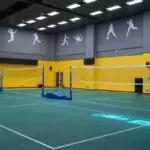
- A designated playing court (or open field)
- Whistle
- Cones or markers
Rationale for the Lesson
This lesson helps pupils to develop fundamental motor skills and understand the basics of volleyball. It promotes physical fitness, teamwork, and sportsmanship, which are important for overall well-being and social development.
Prerequisite/Previous Knowledge
Pupils are expected to have some general knowledge of sports and physical activities, and may have observed volleyball being played before.
Lesson Content/Board Summary
PRACTICAL PERFORMANCE OF VOLLEYBALL
Introduction to Volleyball
Volleyball is a team sport played by two teams over a net. The objective is to score points by grounding a ball on the opposing team’s side of the court, while preventing the opponent from doing the same. It requires agility, coordination, and teamwork.
Basic Volleyball Skills
To play volleyball effectively, certain fundamental skills must be mastered. These include:
- Serving: This is the act of putting the ball into play by hitting it over the net into the opponent’s court. There are different types of serves, such as underhand and overhand serves.
- Passing (Bumping): This is the first contact a team makes with the ball, typically used to receive a serve or an attack. The ball is usually hit with the forearms.
- Setting: This is the second contact a team makes with the ball, typically used to position the ball for an attacker. The ball is pushed upwards with the fingertips, usually above the head.
- Spiking (Attacking): This is hitting the ball forcefully downwards over the net, aiming for a spot on the opponent’s court.
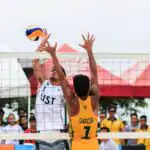
- Blocking: This is an attempt to stop the opponent’s spike at the net by jumping and raising the hands.
Basic Rules of Volleyball
Understanding simple rules helps in playing the game correctly:
- Two teams play against each other, usually with six players on each side.
- The ball is put into play with a serve.
- Teams can hit the ball a maximum of three times before sending it over the net (a block does not count as a hit).
- Players are not allowed to hit the ball twice in a row (except after a block).
- A point is scored when the ball lands on the opponent’s side of the court, or when the opponent commits a fault.
- Players rotate positions clockwise after their team wins the serve back from the opponent.
Teaching Methods/Instructional Techniques
Discussion, Lecture, Demonstration, Question and Answer, Visual Aids
Instructional Procedures
Step 1: Introduction
Time: 5 minutes
Teaching Skill: Set Induction
Teacher’s Activity: The teacher greets the pupils, reviews the previous lesson, and introduces the topic by asking pupils if they have ever played or watched volleyball.
Pupils’ Activity: Pupils respond to greetings, recall the previous lesson, and share their experiences with volleyball.
Learning Point: Pupils are prepared for the new lesson and connect it to their prior knowledge.
Step 2: Explanation of Volleyball
Time: 5 minutes
Teaching Skill: Explanation
Teacher’s Activity: The teacher explains what volleyball is, its objective, and briefly mentions the importance of teamwork and physical activity.
Pupils’ Activity: Pupils listen attentively and ask questions for clarification.
Learning Point: Pupils understand the basic concept and purpose of volleyball.
Step 3: Demonstration of Basic Skills
Time: 10 minutes
Teaching Skill: Demonstration/Coaching
Teacher’s Activity: The teacher demonstrates the basic skills of volleyball: underhand serve, forearm pass (bump), and overhead set. The teacher explains the correct body positioning and technique for each skill.
Pupils’ Activity: Pupils observe the demonstrations carefully and try to understand the techniques.
Learning Point: Pupils learn the correct techniques for basic volleyball skills through visual demonstration.
Step 4: Pupils Practice Passing/Bumping
Time: 10 minutes
Teaching Skill: Practical Application/Supervision
Teacher’s Activity: The teacher divides pupils into small groups and guides them in practicing the forearm pass (bump) without a net initially, then over a low net or rope. The teacher corrects their posture and technique.
Pupils’ Activity: Pupils practice the forearm pass, following the teacher’s instructions and receiving feedback.
Learning Point: Pupils develop practical proficiency in the forearm pass.
Step 5: Pupils Practice Setting
Time: 5 minutes
Teaching Skill: Practical Application/Coaching
Teacher’s Activity: The teacher guides pupils to practice the overhead set, focusing on hand positioning and pushing the ball upwards. Pupils practice in pairs.
Pupils’ Activity: Pupils practice the overhead set, trying to achieve proper form.
Learning Point: Pupils improve their ability to perform the overhead set.
Step 6: Pupils Practice Serving
Time: 5 minutes
Teaching Skill: Practical Application/Correction
Teacher’s Activity: The teacher instructs pupils to practice the underhand serve, emphasizing hitting the ball with the flat part of the hand and following through. Pupils attempt to serve over the net.
Pupils’ Activity: Pupils practice serving, aiming to get the ball over the net.
Learning Point: Pupils gain experience in performing a basic serve.
Step 7: Evaluation/Review
Time: 5 minutes
Teaching Skill: Questioning/Assessment
Teacher’s Activity: The teacher evaluates the learning by asking the following questions:
- Mention two basic skills in volleyball.
- What is the main objective of playing volleyball?
- Demonstrate how to perform a forearm pass.
- Why is teamwork important in volleyball?
Pupils’ Activity: Pupils answer orally and in writing.
Learning Point: Pupils demonstrate understanding of the lesson.
Step 8: Conclusion
Time: 5 minutes
Teaching Skill: Summarization
Teacher’s Activity: The teacher summarizes the key skills learned and encourages pupils to continue practicing volleyball for physical fitness and enjoyment. The teacher assigns homework to list three rules of volleyball.
Pupils’ Activity: Pupils listen to the summary and copy the homework.
Learning Point: Pupils consolidate their learning and are encouraged to continue practicing.
Home Task: Give three correct examples of PRACTICAL PERFORMANCE OF VOLLEYBALL and explain what each example shows.
Lesson Keywords
- Volleyball – A team sport where two teams hit a ball over a net.
- Serve – The action of putting the ball into play.
- Pass (Bump) – Receiving the ball with the forearms.
- Set – Positioning the ball for an attack using fingertips.
- Net – The barrier dividing the court in volleyball.
- Court – The playing area for volleyball.
Differentiation
For pupils who are struggling, the teacher will provide more one-on-one guidance and simplify the drills. More advanced pupils can be challenged by adding complex drills or asking them to demonstrate skills to their peers, fostering leadership.
Note for teachers using this lesson plan
Ensure a safe playing environment and proper warm-up exercises before practical activities. Emphasize safety instructions and encourage all pupils to participate actively, regardless of their skill level. Focus on building confidence and fundamental skills before introducing complex game strategies.

Community Join the conversation Open discussion +