

Class: Primary Five
Term: First Term
Subject: Pre-vocational Studies
Curriculum Theme: Agricultural Science
Previous Lesson: How To Grow Crops, Selection And Transplanting Of Seeds
Topic: Post Planting activities
Content/Learning Area: Watering, Mulching, supplying
Time Allocation: 40 minutes
Performance Objectives
By the end of the lesson, pupils should be able to:
- Cognitive Domain:
1. Define and describe post-planting activities of watering, mulching, and supplying.
2. Explain the importance of post-planting activities in ensuring healthy crop growth.
- Affective Domain:
1. Appreciate the importance of post-planting activities in ensuring healthy crop growth.
- Psychomotor Domain:
1. Demonstrate the correct methods of watering and mulching crops.
- Social Domain:
1. Work cooperatively with peers during practical activities.
Reference Materials
- 9 – years Basic Education Curriculum
- Abuja Educational Resource Center Scheme of Work
- NAPPS National Unified Scheme of Work
- Online Details
- Relevant Textbooks
Instructional Materials
To deliver this lesson, the teacher will use the following materials:
- Whiteboard or chart
- Markers or chalk
- pictures or diagrams of watering, mulching, and supplying
- Real-life examples of mulching materials (e.g., dry leaves, straw)
Rationale for the Lesson
Understanding post-planting activities is crucial for successful crop production. These activities ensure healthy plant growth, leading to a bountiful harvest and providing valuable life skills applicable to gardening and farming.
Prerequisite/Previous Knowledge
The teacher will begin by asking pupils what they remember from the previous lesson on growing crops. A brief review of key concepts will be conducted, followed by introducing the topic of post-planting activities as the next crucial step in prosperous crop cultivation.
Lesson Content
Watering
Watering is the process of providing plants with the moisture they need to absorb nutrients. Regular watering,especially during dry periods,keeps crops healthy.
Mulching
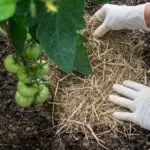
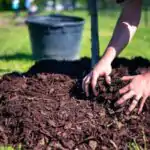
Mulching involves covering the soil with materials like dry leaves or straw. This helps retain soil moisture, prevents weed growth, and protects plants from extreme temperatures.
Supplying
Supplying refers to replacing weak or dead plants with new, healthy ones. This ensures a full crop yield and maximizes the harvest.
Post-planting Activities
Post-planting activities are tasks carried out after seeds or seedlings have been established. They include watering, weeding, mulching, thinning crowded plants, supplying empty stands, staking weak stems and applying manure or fertiliser correctly.
Each activity answers a crop need: weeding reduces competition, mulching conserves moisture, staking supports stems and supplying replaces failed plants. The farmer observes the crop before acting because too much water or fertiliser can also cause harm.
Teaching Methods
To deliver this lesson, the teacher will adopt the following methods: Discussion, Presentation, Practical Activity
Instructional Procedures
To deliver this lesson, the teacher will adopt the following steps:
Step 1: Introduction
Time: 5 minutes
Teaching Skill: Set Induction
Teacher’s Activity: Briefly review the previous lesson on growing crops.Introduce the topic of post-planting activities and their importance.
Pupils’ Activity: Participate in the review and listen attentively to the introduction.
Step 2: Explanation of Key Concepts
Time: 10 minutes
Teaching Skill: Explaining, Illustrating
Teacher’s Activity: Explain the concepts of watering, mulching, and supplying using clear and simple language, supported by visuals.
Pupils’ Activity: Listen attentively, ask clarifying questions, and take notes.
Step 3: Exhibition/Guided Practice
Time: 10 minutes
Teaching Skill: Demonstrating, guiding
Teacher’s Activity: Demonstrate the correct techniques for watering and mulching. Guide pupils in a small group activity to practice these techniques.
Pupils’ Activity: Observe the demonstration, participate in the guided practice, and ask questions.
Step 4: Self-reliant Practice
time: 5 minutes
Teaching Skill: Monitoring, Assisting
Teacher’s Activity: Supervise pupils as they independently practice watering and mulching using provided materials.
Pupils’ Activity: Independently practice watering and mulching, seeking assistance when needed.
Step 5: Note-taking
Time: 5 minutes
Teaching Skill: Guiding, Monitoring
Teacher’s activity: Guide pupils in summarizing key concepts and writng notes.
pupils’ Activity: Write notes summarizing the lesson’s key points.
Step 6: Evaluation/Review
Time: 5 minutes
Teaching Skill: Questioning, Summarizing
Teacher’s Activity: Review the lesson’s key concepts through questioning and discussion.
Pupils’ Activity: Answer questions and participate in the review.
Objective-aligned checks:
- Define and describe post-planting activities of watering , mulching, and supplying.
- Explain the importance of post-planting activities in ensuring healthy crop growth.
- Demonstrate the correct methods of watering and mulching crops.
Step 7: Conclusion
Time: 5 minutes
Teaching Skill: Summarizing, Encouraging
Teacher’s Activity: Summarize the key post-planting activities and emphasize their importance in successful crop cultivation. Encourage pupils to continue practicing these activities at home or in their school garden.
Pupils’ Activity: Listen to the summary and ask any remaining questions.
Lesson Keywords
- Watering – Providing plants with necesary moisture.
- Mulching – Covering soil to retain moisture and prevent weeds.
- supplying – Replacing weak or dead plants.
- post-Planting – Activities done after planting to ensure growth.
- Crop Cultivation – The process of growing crops.
Lesson Evaluation
To evaluate the learning, the teacher asks pupils to:
- Why is regular watering vital for crops?
- what are the benefits of mulching?
- What does supplying mean in crop growing?
- Why is it crucial to replace weak or dead plants?
- Name other important post-planting activities.
Assignment/Homework
- Research and list three additional post-planting activities.
- Explain how mulching helps in water conservation.
- Describe a situation where supplying is necessary in a garden.
Differentiation
- For slower learners: Provide one-on-one assistance during the practical activities.
- for advanced learners: Research and present additional post-planting activities.
- For visual/auditory/kinesthetic learners: Use visual aids, verbal explanations, and hands-on activities to cater to different learning styles.
Note for Teachers
Ensure to provide clear demonstrations and hands-on practice for watering and mulching techniques.Encourage pupils to ask questions and actively participate in discussions. Use real-life examples to illustrate the importance of post-planting activities in crop cultivation.


Community Join the conversation Open discussion +