

Class: Primary 3
Term: 1st Term
Week: 10
Age: 8 years
Duration: 40 minutes
Subject: Pre Vocational Studies
Curriculum Theme: Agricultural Science
Previous Lesson: Raising Seedlings In The Nursery
Topic: Watering And Mulching During Dry Season
Content/Learning Area: Pruning.
Performance Objectives
By the end of the lesson, pupils should be able to:
- Cognitive Domain: Explain the meaning of watering, mulching, and pruning during the dry season.
- Affective Domain: Show interest in caring for crops during the dry season by appreciating the importance of mulching and pruning.
- Psychomotor Domain: Demonstrate how to water plants, arrange mulch, and prune branches properly.
- Social Domain: Work in groups to discuss and practice watering, mulching, and pruning as a way of helping one another.
Reference Materials
The following resources were used in planning this lesson:
- 9 Years Basic Education Curriculum
- Abuja Educational Resource Centre Scheme of work
- NAPPS National Unified Scheme of Work
- Online information from: Wikipedia – Mulch
- Relevant Textbooks
Instructional Materials
The teacher will teach this lesson with the aid of:
- Fresh leaves, dry leaves, and grasses for mulching
- Watering can or small bucket of water
- Cutlass or small pruning knife
- Pictures or charts showing mulched crops and pruned plants
- Real plants around the school garden or pots
Rationale for the Lesson
This lesson will help pupils understand simple farm practices like watering, mulching, and pruning which protect crops during the dry season and help them grow better.
Prerequisite/Previous Knowledge
Pupils have seen farmers or parents watering crops at home or in gardens and have also observed plants with dry leaves or branches.
Lesson Content
Watering And Mulching During Dry Season
Meaning of Watering
Watering means giving plants water to drink so that they do not dry up during the dry season. It keeps the soil moist and helps the plant to stay alive.
Meaning of Mulching
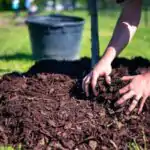
Mulching is covering the soil around a plant with materials like leaves, grass, or dry sticks. It helps the soil to keep water, stops weeds, and makes the soil cool.
Meaning of Pruning
Pruning is cutting away dry, dead, or extra branches of a plant. It makes the plant neat and helps it grow well.
Importance of Watering, Mulching, and Pruning
The following are the importance of these practices:
- Watering helps plants grow strong and fresh
- Mulching prevents the soil from losing water quickly
- Mulching reduces weed growth around crops
- Pruning removes dead and weak parts of the plant
- Pruning allows sunlight and air to reach the plant
- These practices improve harvest during dry season
Teaching Methods
Discussion, Explanation, Demonstration, Group Work, Question and Answer, Use of Visual Aids
Instructional Procedures
To deliver this lesson, the teacher will adopt the following steps:
Step 1: Introduction
Time: 5 mins
Teaching Skill: Set Induction
Teacher’s Activity: Teacher tells a short story about a farmer whose crops dried up in the dry season because he did not water or mulch. Teacher asks pupils if they have seen dry plants.
Pupils’ Activity: Pupils listen and share their experiences.
Learning Point: Plants need care during the dry season.
Step 2: Meaning of Watering
Time: 5 mins
Teaching Skill: Explanation, Demonstration
Teacher’s Activity: Teacher explains watering and demonstrates by watering a plant in class.
Pupils’ Activity: Pupils observe and repeat the demonstration.
Learning Point: Watering helps plants stay alive.
Step 3: Meaning of Mulching
Time: 7 mins
Teaching Skill: Explanation, Demonstration
Teacher’s Activity: Teacher explains mulching and shows how to cover the soil around a plant with dry leaves or grasses.
Pupils’ Activity: Pupils watch and practice mulching in groups.
Learning Point: Mulching keeps the soil cool and prevents water loss.
Step 4: Meaning of Pruning
Time: 7 mins
Teaching Skill: Explanation, Demonstration
Teacher’s Activity: Teacher explains pruning and demonstrates cutting off a dry leaf or branch.
Pupils’ Activity: Pupils watch carefully and practice pruning on small plants.
Learning Point: Pruning removes dead parts and helps plant growth.
Step 5: Importance of Practices
Time: 5 mins
Teaching Skill: Discussion
Teacher’s Activity: Teacher leads discussion on why watering, mulching, and pruning are important during the dry season.
Pupils’ Activity: Pupils give answers and examples.
Learning Point: These practices help crops grow well.
Step 6: Note Taking
Time: 4 mins
Teaching Skill: Supervision
Teacher’s Activity: Teacher dictates or writes short notes on the board.
Pupils’ Activity: Pupils copy notes into their books.
Learning Point: Pupils have correct notes for study.
Step 7: Evaluation
Time: 5 mins
Teaching Skill: Questioning
Teacher’s Activity: Teacher asks pupils questions about the lesson.
Pupils’ Activity: Pupils answer questions individually and in groups.
Learning Point: Teacher checks pupils’ understanding.
Objective-aligned checks:
- Explain the meaning of watering, mulching, and pruning during the dry season.
- Demonstrate how to water plants, arrange mulch, and prune branches properly.
Step 8: Conclusion
Time: 2 mins
Teaching Skill: Cognitive, Social Closure
Teacher’s Activity: Teacher summarizes the lesson and encourages pupils to help parents care for plants at home.
Pupils’ Activity: Pupils listen and respond.
Learning Point: Pupils are motivated to apply the lesson.
Home Task: List four lesson examples connected with Watering And Mulching During Dry Season and add one correct use, step or safety rule.
Lesson Keywords
- Watering: Giving water to plants
- Mulching: Covering soil with leaves or grasses
- Pruning: Cutting off dead or extra branches
- Dry Season: Time when there is little or no rain
- Crops: Plants grown for food or other use
Lesson Evaluation
To evaluate the learning, the teacher asks pupils to:
- Explain the meaning of watering.
- Explain what mulching means.
- Explain the meaning of pruning.
- Mention two materials that can be used for mulching.
- State two importance of watering, mulching, and pruning.
- Demonstrate watering, mulching, or pruning on a plant.
Differentiation
Fast learners will demonstrate watering, mulching, and pruning, while others will explain their meanings. Teacher supports slower learners with simpler examples and pictures.
Note for teachers using this lesson plan
Use real plants if possible to make the lesson practical. Supervise carefully when pupils use sharp tools for pruning. Encourage group participation to build teamwork.


Community Join the conversation Open discussion +