

Class: Junior Secondary School 1 (JSS 1 / JS1)
Term: Third Term
Week: 3
Age: 12 years
Duration: 45 minutes
Subject: Cultural and Creative Arts
Curriculum Theme: Cultural and Creative Arts
Previous Lesson: Types of Make Ups in Types of Makeups.
Topic: DEFINITION OF DANCES
Subject Matter: Meaning of dance, Uses of dance: How to dance
Specific Objectives
By the end of the lesson, pupils should be able to:
Cognitive Domain:
- Define dance in their own words.
- Identify at least three uses of dance in society.
- State simple ways to begin dancing.
Affective Domain:
- Appreciate the cultural importance of different dance forms.
- Show interest in learning and participating in dance activities.
- Respect various dance expressions from different cultures.
Psychomotor Domain:
- Demonstrate basic dance movements and steps.
- Imitate simple rhythmic body movements.
- Participate actively in a group dance exercise.
Social Domain:
- Collaborate with peers during practical dance sessions.
- Share their understanding of dance with others.
- Engage in discussions about the role of dance in community life.
Reference Materials
The following resources were used in planning this lesson:
- 9 Years Basic Education Curriculum for Cultural and Creative Arts JSS 1-3
- State Unified Scheme of Work for Cultural and Creative Arts JSS 1
- Cultural and Creative Arts for Junior Secondary Schools 1 by J.B. Adekunle et al.
Instructional Materials
The teacher will teach this lesson with the aid of:
- A music player with various types of music
- Pictures or video clips of different dances
- Local drums or other musical instruments
Rationale for the Lesson
This lesson helps pupils understand what dance is and its many uses in society. It enables them to appreciate dance as a form of expression and cultural heritage, encouraging their participation in creative physical activities.
Prerequisite/Previous Knowledge
Pupils have basic knowledge of body movements, rhythm, and have observed different forms of celebrations and ceremonies where dance is performed.
Lesson Content/Board Summary
DEFINITION OF DANCES
Meaning of Dance
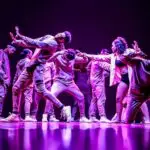
Dance is a way of expressing feelings, ideas, or stories through rhythmic body movements, usually performed to music. It involves moving the body in a planned or unplanned way, often following a beat or tempo.
Uses of Dance
The following are some uses of dance:
- Celebration: Dance is used to celebrate happy events like weddings, festivals, and birthdays.
- Worship: Many cultures use dance as a form of worship or spiritual expression.
- Communication: Dance can be used to tell stories, convey messages, or express emotions without words.
- Exercise and Recreation: Dancing is a good form of exercise that keeps the body fit and is also a fun recreational activity.
- Cultural Preservation: Traditional dances help to preserve the culture and history of a people.
- Entertainment: Dance is performed to entertain an audience.
How to Dance (Basic Steps)
Learning to dance involves listening to music and moving your body to the beat. Basic steps often include:
- Clapping to the beat: This helps to find the rhythm.
- Tapping your feet: Moving your feet to the music.
- Swaying your body: Moving your body from side to side.
- Stepping: Taking simple steps forward, backward, or sideways.
- Turning: Making simple turns while keeping the rhythm.
- Arm movements: Adding hand and arm movements to match the rhythm.
Teaching Methods/Instructional Techniques
Discussion, Lecture, Demonstration, Question and Answer, Visual Aids
Instructional Procedures
Step 1: Introduction
Time: 5 minutes
Teaching Skill: Set Induction
Teacher’s Activity: The teacher greets the pupils and briefly reviews the previous lesson. The teacher then introduces the new topic, “Definition of Dances,” by asking pupils what they understand by dance.
Pupils’ Activity: Pupils respond to the greeting and share their initial thoughts on dance.
Learning Point: Pupils are prepared for the lesson and connect it to their prior knowledge.
Step 2: Explanation of Dance Meaning
Time: 7 minutes
Teaching Skill: Explanation/Definition
Teacher’s Activity: The teacher explains the meaning of dance, emphasizing rhythmic body movements to express feelings or stories, often with music. The teacher writes the definition on the board.
Pupils’ Activity: Pupils listen attentively, ask questions for clarification, and copy the definition into their notebooks.
Learning Point: Pupils understand and can define dance.
Step 3: Discussion on Uses of Dance
Time: 7 minutes
Teaching Skill: Discussion/Brainstorming
Teacher’s Activity: The teacher leads a discussion on various uses of dance, asking pupils where they have seen people dance and why. The teacher lists the uses on the board.
Pupils’ Activity: Pupils contribute examples of dance uses from their experiences and copy the points from the board.
Learning Point: Pupils identify and understand the different purposes of dance in society.
Step 4: Demonstration of Basic Dance Steps
Time: 8 minutes
Teaching Skill: Demonstration/Modelling
Teacher’s Activity: The teacher plays some music and demonstrates simple, basic dance movements like clapping, foot tapping, swaying, and simple steps. The teacher encourages pupils to watch carefully.
Pupils’ Activity: Pupils observe the teacher’s demonstration of basic dance steps.
Learning Point: Pupils are exposed to practical dance movements.
Step 5: Pupils’ Practice
Time: 6 minutes
Teaching Skill: Practical Application/Guided Practice
Teacher’s Activity: The teacher asks pupils to stand up and imitate the basic dance steps demonstrated. The teacher provides guidance and encourages participation.
Pupils’ Activity: Pupils practice the basic dance movements, trying to follow the rhythm and steps.
Learning Point: Pupils gain practical experience in performing basic dance movements.
Step 6: Further Discussion/Examples of Dance Forms
Time: 4 minutes
Teaching Skill: Elaboration/Illustration
Teacher’s Activity: The teacher briefly discusses different types of dances (e.g., traditional, modern, social) and shows quick pictures or video clips to illustrate some examples.
Pupils’ Activity: Pupils observe the examples and ask questions about the various dance forms.
Learning Point: Pupils broaden their knowledge of different dance forms.
Step 7: Evaluation/Review
Time: 4 minutes
Teaching Skill: Questioning/Assessment
Teacher’s Activity: The teacher evaluates the learning by asking the following questions:
- What is dance?
- Mention three uses of dance.
- Name two basic ways you can start dancing.
Pupils’ Activity: Pupils answer orally and in writing.
Learning Point: Pupils demonstrate understanding of the lesson.
Step 8: Conclusion
Time: 4 minutes
Teaching Skill: Summarization/Assignment
Teacher’s Activity: The teacher summarizes the main points of the lesson, reiterating the meaning and uses of dance. The teacher then gives an assignment: “Draw and label two pictures showing different uses of dance.”
Pupils’ Activity: Pupils listen to the summary and copy the assignment.
Learning Point: The lesson is reinforced, and pupils are given a task to consolidate their learning.
Home Task: Describe or illustrate one lesson example of DEFINITION OF DANCES and include one safety or performance rule. Do not practise a risky activity without adult supervision.
Lesson Keywords
- Dance – Rhythmic body movements, often to music, expressing feelings or stories.
- Rhythm – A strong, regular, repeated pattern of movement or sound.
- Movement – An act of changing physical location or position.
- Expression – The process of making known one’s thoughts or feelings.
- Culture – The customs, arts, social institutions, and achievements of a particular nation, people, or group.
Differentiation
For pupils who are struggling, the teacher will provide more one-on-one guidance during practical sessions and simplify explanations. Advanced learners will be encouraged to demonstrate more complex movements or identify more diverse dance forms and their cultural significance.
Note for teachers using this lesson plan
Teachers should ensure a conducive learning environment with enough space for movement. Encourage all pupils to participate actively regardless of their perceived dancing ability. Emphasize that dance is a natural human expression and a valuable part of culture.
Community Join the conversation Open discussion +