

Class: Junior Secondary School 1 (JSS1, JSS 1)
Term: 1st Term
Week: 8
Age: 12 years
Duration: 45 minutes
Subject: Cultural And Creative Arts
Curriculum Theme: Cultural And Creative Arts
Previous Lesson: Modelling, Techniques, Materials and Tools
Topic: Forms And Types Of Dance
Subject Matter: Forms And Types Of Dance
Specific Objectives
By the end of the lesson, pupils should be able to:
- Cognitive Domain:
(a) Identify the different forms and types of dance.
(b) Explain the main features of each type of dance. - Affective Domain:
(a) Appreciate dance as an important aspect of cultural expression.
(b) Show interest in participating in dance activities. - Psychomotor Domain:
(a) Demonstrate basic steps of selected types of dance. - Social Domain:
(a) Work cooperatively in groups to practice short dance steps.
Reference Materials
The following resources were used in planning this lesson:
- 9 Years Basic Education Curriculum
- Lagos State Unified Scheme of work for Junior Secondary Schools
- Britannica – “Dance | Definition, Types, History, Importance, & Facts” (https://www.britannica.com/art/dance)
- Relevant Textbooks
Instructional Materials
The teacher will teach this lesson with the aid of:
- Charts showing images of people performing different dances
- Audio player with traditional and modern music
- Costumes or pictures of cultural dance attires
- Projector or video clips of traditional, social, and modern dances
- Whiteboard and markers
Rationale for the Lesson
Dance is an important part of cultural and social life. This lesson helps pupils to understand the forms and types of dance, their roles in society, and to develop interest in dance as an art.
Prerequisite/Previous Knowledge
Pupils have seen people dancing during ceremonies, festivals, parties, or on television and are familiar with some cultural and modern dance styles.
Lesson Content/Board Summary
Forms and Types of Dance
Forms of Dance
Dance can be grouped into forms based on its purpose and function. Each form serves a role in culture, entertainment, or social interaction.
The following are the forms of dance:
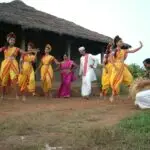
- Traditional Dance – performed to preserve cultural heritage and used in ceremonies, festivals, and rituals.
- Social Dance – performed during gatherings, parties, or celebrations for enjoyment and relaxation.
- Theatrical Dance – performed on stage or in drama for entertainment and storytelling.
- Religious Dance – performed in worship or spiritual ceremonies to honor deities or express faith.
Types of Dance
Types of dance are the specific styles or patterns of movement found within each form of dance. They differ in rhythm, steps, and cultural meaning.
Examples include:
- Ballet – a theatrical dance that uses graceful and structured body movements.
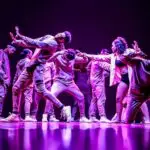
- Hip-hop – a modern social dance involving energetic and expressive moves.
- Ballroom Dance – a social dance performed in pairs, often in formal settings.
- Traditional African Dance – dances like Bata, Atilogwu, and Shaku Shaku that reflect cultural practices and festivals.
- Folk Dance – local dances of communities, often passed down from generation to generation.
- Religious Dance – dances like Sufi whirling and liturgical dances performed in places of worship.
Teaching Methods/Instructional Techniques:
Discussion, Lecture, Explanation, Demonstration, Group Work, Role Play, Question and Answer, Visual Aids
Instructional Procedures
To deliver this lesson, the teacher will adopt the following steps:
Step 1: Introduction
Time: 5 minutes
Teaching Skill: Set Induction
Teacher’s Activity: Teacher begins by asking pupils to mention the last time they saw a dance performance and the kind of dance it was. Teacher links their responses to today’s topic.
Pupils’ Activity: Pupils share their experiences of dances they have seen.
Learning Point: Pupils are prepared to understand the forms and types of dance.
Step 2: Forms of Dance
Time: 10 minutes
Teaching Skill: Explanation
Teacher’s Activity: Teacher explains the forms of dance and shows charts or video clips of each form.
Pupils’ Activity: Pupils listen, observe, and note the forms.
Learning Point: Pupils understand the different forms of dance and their functions.
Step 3: Types of Dance
Time: 10 minutes
Teaching Skill: Discussion
Teacher’s Activity: Teacher outlines examples of types of dance and explains their characteristics.
Pupils’ Activity: Pupils take notes and give examples of dances they know.
Learning Point: Pupils recognize different types of dance and their features.
Step 4: Demonstration of Dance Steps
Time: 10 minutes
Teaching Skill: Demonstration
Teacher’s Activity: Teacher demonstrates simple steps of traditional or social dance and guides pupils to practice in groups.
Pupils’ Activity: Pupils perform basic dance steps with guidance.
Learning Point: Pupils gain practical experience of dance movements.
Step 5: Note-Taking
Time: 5 minutes
Teaching Skill: Explanation
Teacher’s Activity: Teacher dictates or writes the board summary for pupils to copy.
Pupils’ Activity: Pupils copy the notes into their exercise books.
Learning Point: Pupils have written notes for revision.
Step 6: Evaluation/Review
Time: 3 minutes
Teaching Skill: Questioning
Teacher’s Activity: The teacher evaluates the learning by asking the following questions:
- Mention two forms of dance.
- Give three examples of types of dance.
- Explain one difference between a form of dance and a type of dance.
Pupils’ Activity: Pupils respond orally to the questions.
Learning Point: Pupils demonstrate understanding of the lesson objectives.
Step 7: Conclusion
Time: 2 minutes
Teaching Skill: Reinforcement
Teacher’s Activity: Teacher summarizes the lesson, reinforces key points, and encourages pupils to practice dance responsibly.
Pupils’ Activity: Pupils listen and ask questions where necessary.
Learning Point: Pupils appreciate the cultural and social value of dance.
Home Task: Describe or illustrate one lesson example of Forms And Types Of Dance and include one safety or performance rule. Do not practise a risky activity without adult supervision.
Lesson Keywords
- Dance – rhythmic movement of the body often to music
- Traditional Dance – dance that represents cultural practices and heritage
- Theatrical Dance – dance performed for entertainment on stage
- Folk Dance – community dance passed from generation to generation
- Ballroom Dance – formal partnered dance performed socially or competitively
Differentiation
Teacher simplifies explanations for slow learners with repeated demonstrations, while fast learners lead groups in practicing dance steps.
Note for teachers using this lesson plan
Ensure safety during dance practice by providing enough space. Use age-appropriate music and encourage pupils to respect cultural diversity in dance forms.

Community Join the conversation Open discussion +