

Class: Junior Secondary School 1 (JSS1, JSS 1)
Term: 2nd Term
Week: 9
Age: 12 years
Duration: 45 minutes
Subject: Cultural And Creative Arts
Curriculum Theme: Cultural And Creative Arts
Previous Lesson: Functions of Drama, Educational, Informative, Entertainment, Therapeutic, and Developmental Roles
Topic: Elements Of Drama
Subject Matter: Script improvisation, Characters, Stage (setting), Audience, Sound, Songs, Music, Light etc., Identifying elements in drama, Forms of drama: Comedy, Tragedy
Specific Objectives
By the end of the lesson, pupils should be able to:
- Cognitive Domain:
(a) Identify and list the major elements of drama.
(b) Explain the functions of the basic elements of drama. - Affective Domain:
(a) Appreciate the importance of teamwork and expression in drama. - Psychomotor Domain:
(a) Demonstrate short improvisations using simple drama elements. - Social Domain:
(a) Cooperate with others during role-play and group drama activities.
Reference Materials
The following resources were used in planning this lesson:
- 9 Years Basic Education Curriculum
- Lagos State Unified Scheme of work for Junior Secondary Schools
- Windmill Production Company – Elements of Drama
- Relevant Textbooks
Instructional Materials
The teacher will teach this lesson with the aid of:
- Drama script excerpts
- Pictures or drawings of stage setups
- Props (chair, table, costumes)
- Flashcards showing drama terms
- Audio clips of sound effects and background music
- Whiteboard and marker
Rationale for the Lesson
This lesson helps students understand and identify the major elements that make up a drama, building creativity and appreciation for performance art.
Prerequisite/Previous Knowledge
Pupils have previously learned about drama as a form of creative expression and can recognize it as a performance involving characters and actions.
Lesson Content/Board Summary
Elements of Drama
Drama is a form of art that tells a story through spoken words, actions, and expressions performed by actors before an audience. Every drama contains essential elements that bring it to life.
The following are the major elements of drama:
- Script or Improvisation: The written or imagined story that guides what actors say and do on stage.
- Characters: The people or roles in the drama who act out the story.
- Plot: The sequence of events or actions that make up the story.
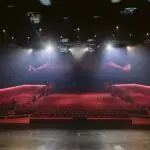
- Stage or Setting: The place or environment where the drama is performed.
- Audience: The people who watch the performance.
- Dialogue: The spoken words or conversations between characters.
- Sound, Songs, and Music: These add emotion, mood, and rhythm to the performance.
- Light: Used to create visibility and show time, mood, or focus during the play.
Identifying the Elements in a Drama
In every play, these elements work together to create meaning and enjoyment for the audience. The teacher or director ensures that all elements are properly balanced.
The following are examples of how to identify drama elements:
- A character speaking lines from the script shows dialogue.
- Costumes and props placed on a stage show setting.
- Singing or background sounds demonstrate music or sound effects.
- The audience reacting with laughter or applause represents audience involvement.
Forms of Drama
Drama can take different forms based on the type of story or emotion it presents.
The main forms of drama include:
- Comedy: A type of drama that is humorous and ends happily.
- Tragedy: A serious drama that often ends with sadness or loss.
- Tragicomedy: A combination of serious and funny events.
- Farce: A form of comedy that exaggerates actions and characters to create laughter.
- Opera: A drama performed mainly through songs and music.
Teaching Methods/Instructional Techniques:
Lecture, Discussion, Demonstration, Role Play, Explanation, Question and Answer, Group Work, Visual Aids
Instructional Procedures
To deliver this lesson, the teacher will adopt the following steps:
Step 1: Introduction
Time: 5 minutes
Teaching Skill: Set Induction
Teacher’s Activity: Teacher engages pupils by asking if they have ever acted in a school play or watched a stage performance.
Pupils’ Activity: Pupils respond and share their experiences about drama.
Learning Point: Pupils’ interest in the topic is aroused and they are ready to learn.
Step 2: Explanation of Elements of Drama
Time: 10 minutes
Teaching Skill: Explanation
Teacher’s Activity: Teacher explains the meaning of elements of drama and lists them with examples using charts and props.
Pupils’ Activity: Pupils listen and identify familiar drama elements.
Learning Point: Pupils understand the basic components that make up a drama.
Step 3: Identifying Elements in a Drama Scene
Time: 10 minutes
Teaching Skill: Demonstration
Teacher’s Activity: Teacher presents a short script and guides pupils to point out the script, characters, setting, and dialogue.
Pupils’ Activity: Pupils identify and describe the elements used in the drama.
Learning Point: Pupils can identify drama elements within a short performance.
Step 4: Forms of Drama
Time: 10 minutes
Teaching Skill: Discussion
Teacher’s Activity: Teacher explains different forms of drama and gives examples of comedy and tragedy.
Pupils’ Activity: Pupils mention examples of plays or movies they have seen that fit each form.
Learning Point: Pupils understand that dramas can be serious or funny depending on their form.
Step 5: Note-Taking
Time: 5 minutes
Teaching Skill: Explanation
Teacher’s Activity: Teacher dictates or writes the lesson content summary on the board.
Pupils’ Activity: Pupils copy the notes neatly into their exercise books.
Learning Point: Pupils have written notes for future reference.
Step 6: Evaluation/Review
Time: 3 minutes
Teaching Skill: Questioning
Teacher’s Activity: The teacher evaluates the learning by asking the following questions:
- Mention five elements of drama.
- Explain what a script is.
- State two forms of drama.
- Give an example of how sound or light is used in a play.
Pupils’ Activity: Pupils answer the questions orally.
Learning Point: Pupils demonstrate understanding of the topic.
Step 7: Conclusion
Time: 2 minutes
Teaching Skill: Reinforcement
Teacher’s Activity: Teacher summarizes the lesson and encourages pupils to participate in drama activities.
Pupils’ Activity: Pupils listen and ask questions.
Learning Point: Pupils appreciate the importance of drama elements in performances.
Home Task: Describe or illustrate one lesson example of Elements Of Drama and include one safety or performance rule. Do not practise a risky activity without adult supervision.
Lesson Keywords
- Drama – a story acted out before an audience
- Script – written words and directions of a play
- Character – person or role in a drama
- Setting – place or environment where drama occurs
- Dialogue – conversation between characters
Differentiation
Teacher provides visual aids and simplified examples for slower learners, while faster learners engage in short role-plays to demonstrate drama elements.
Note for teachers using this lesson plan
Encourage pupils to take part actively in short drama exercises. Use simple props available in class. Reinforce teamwork and creativity among pupils.



Community Join the conversation Open discussion +