

Class: Junior Secondary School 1 (JSS1, JSS 1)
Term: 1st Term
Week: 7
Age: 12 years
Duration: 45 minutes
Subject: Cultural And Creative Arts
Curriculum Theme: Cultural And Creative Arts
Previous Lesson: Tie and Dye Materials and Fabric Design
Topic: Dance
Subject Matter: Dance
Specific Objectives
By the end of the lesson, pupils should be able to:
- Cognitive Domain:
(a) Identify the meaning of dance.
(b) State the types of dance and their uses in society. - Affective Domain:
(a) Appreciate dance as an important cultural and recreational activity.
(b) Show respect for cultural dances practiced in different communities. - Psychomotor Domain:
(a) Demonstrate simple traditional and creative dance steps. - Social Domain:
(a) Work in groups to practice and perform simple dance movements together.
Reference Materials
The following resources were used in planning this lesson:
- 9 Years Basic Education Curriculum
- Lagos State Unified Scheme of work for Junior Secondary Schools
- Britannica – “Dance” (https://www.britannica.com/art/dance)
- Relevant Textbooks
Instructional Materials
The teacher will teach this lesson with the aid of:
- Pictures and posters showing traditional dances
- Drums or percussion instruments
- Audio player with traditional and modern music
- Costumes or cultural attire for demonstration
- Whiteboard and markers
Rationale for the Lesson
This lesson helps students understand the cultural and artistic value of dance, its role in expression, communication, and recreation, as well as its importance in society.
Prerequisite/Previous Knowledge
Pupils have seen or participated in cultural dances during festivals, school events, or social gatherings, and are familiar with music and rhythm.
Lesson Content/Board Summary
Dance
Dance is the rhythmic movement of the body, usually performed to music, to express ideas, emotions, or cultural traditions. It is an important part of human culture and recreation.
Types of Dance
Dances are performed in different ways and for different purposes across the world.
The following are the main types of dance:
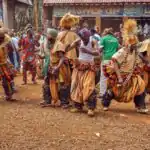
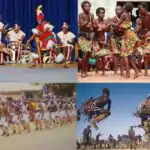
- Traditional Dance – dances performed to preserve culture and customs, e.g., Bata dance of the Yoruba, Atilogwu dance of the Igbo.
- Social Dance – dances performed during parties, celebrations, or social events.
- Religious Dance – dances used for worship, rituals, or spiritual expressions.
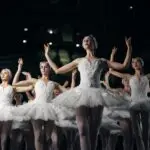
- Creative/Contemporary Dance – modern dances created for entertainment or artistic expression.
- Dramatic Dance – dances performed in theatre or stage plays to tell stories.
Importance of Dance
Dance plays vital roles in the life of individuals and communities.
The following are the importance of dance:
- It serves as a form of cultural expression and identity.
- It promotes unity and social interaction among people.
- It provides recreation and entertainment.
- It helps in physical fitness and healthy living.
- It is used in ceremonies and religious worship.
- It communicates emotions and tells stories without words.
- It provides opportunities for talent development and career in the arts.
Teaching Methods/Instructional Techniques:
Discussion, Lecture, Demonstration, Explanation, Group Work, Storytelling, Role Play, Question and Answer
Instructional Procedures
To deliver this lesson, the teacher will adopt the following steps:
Step 1: Introduction
Time: 5 minutes
Teaching Skill: Set Induction
Teacher’s Activity: Teacher plays a short piece of traditional or modern music and asks pupils if they feel like moving or dancing, then connects it to the lesson.
Pupils’ Activity: Pupils respond by reacting to the music and answering the teacher’s questions.
Learning Point: Pupils are motivated and prepared to learn about dance.
Step 2: Meaning of Dance
Time: 8 minutes
Teaching Skill: Explanation
Teacher’s Activity: Teacher defines dance and explains its role as cultural expression and recreation.
Pupils’ Activity: Pupils listen and repeat the definition.
Learning Point: Pupils understand what dance means.
Step 3: Types of Dance
Time: 10 minutes
Teaching Skill: Discussion
Teacher’s Activity: Teacher lists and explains the types of dance, giving local examples.
Pupils’ Activity: Pupils identify examples of dances they know in their communities.
Learning Point: Pupils can identify and classify different types of dance.
Step 4: Importance of Dance
Time: 10 minutes
Teaching Skill: Explanation and Discussion
Teacher’s Activity: Teacher explains the importance of dance to individuals and society.
Pupils’ Activity: Pupils discuss how dance benefits them in festivals, ceremonies, or personal enjoyment.
Learning Point: Pupils understand the value of dance in daily life and culture.
Step 5: Note-Taking
Time: 5 minutes
Teaching Skill: Explanation
Teacher’s Activity: Teacher dictates or writes the board summary for pupils to copy.
Pupils’ Activity: Pupils copy the notes into their exercise books.
Learning Point: Pupils have a record of the lesson content.
Step 6: Evaluation/Review
Time: 5 minutes
Teaching Skill: Questioning
Teacher’s Activity: The teacher evaluates the learning by asking the following questions:
- What is dance?
- Mention three types of dance.
- State three importance of dance.
Pupils’ Activity: Pupils answer the questions orally.
Learning Point: Pupils show understanding of the lesson objectives.
Step 7: Conclusion
Time: 2 minutes
Teaching Skill: Reinforcement
Teacher’s Activity: Teacher summarizes the key points and encourages pupils to respect and practice dance as part of cultural heritage.
Pupils’ Activity: Pupils listen and ask questions if necessary.
Learning Point: Pupils appreciate dance as both cultural and recreational activity.
Home Task: Describe or illustrate one lesson example of Dance and include one safety or performance rule. Do not practise a risky activity without adult supervision.
Lesson Keywords
- Dance – rhythmic movement of the body to music
- Traditional – relating to customs passed down from the past
- Recreation – activity done for enjoyment or relaxation
- Ceremony – a formal event or occasion
- Expression – showing feelings or ideas through actions
Differentiation
Teacher uses visual aids and music for learners with difficulty in abstract understanding, while advanced learners are encouraged to lead group demonstrations.
Note for teachers using this lesson plan
Ensure pupils are actively engaged by allowing them to demonstrate simple dance steps. Use local examples for better understanding and make the class lively with music.

Community Join the conversation Open discussion +