

Examination on Cultural and Creative Arts
Class: Primary 2
Term: Second Term
Time: 1 Hour
Total Marks: 70
SECTION A: OBJECTIVES (40 Marks)
Instruction: Answer all questions.
1. ________ are songs passed down from generation to generation. (a) Folk songs (b) Pop songs (c) Nursery rhymes
2. Which of these is a use of traditional music? (a) To make noise (b) To bring joy (c) To sleep
3. All of these are characteristics of folk songs except ________. (a) They are simple (b) They are new every day (c) They tell stories
4. Which town is known for leatherwork? (a) Benin (b) Kano (c) Lagos
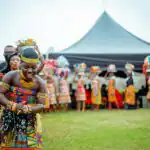
5. Traditional dances are often performed for ________ purposes. (a) funny (b) cultural (c) sad
6. Which of these is a traditional dance in Nigeria? (a) Ballet (b) Atilogwu (c) Hip-hop
7. The solfa note ‘d’ stands for ________. (a) do (b) re (c) mi
8. When dancing to music from a CD, it is important to ________. (a) close your eyes (b) keep time with the music (c) shout
9. Music can be defined as ________. (a) loud noise (b) organized sound (c) talking
10. Benin is famous for making ________. (a) leather shoes (b) beads (c) clothes
11. Which of the following helps us to form simple songs? (a) Reading books (b) Clapping patterns (c) Eating food
12. The main reason for singing traditional songs is to ________. (a) make people sad (b) preserve our culture (c) forget our past
13. Which of these is NOT a solfa note? (a) d (b) f (c) x
14. To respond to rhythm from recordings, we can sing and ________. (a) sit still (b) move our bodies (c) whisper
15. An example of a craft from Kano is ________. (a) bead making (b) leatherwork (c) carving
16. Gbagi dance is a special traditional dance performed in Nigeria for ________. (a) fun (b) anger (c) sadness
17. Which of these is not a function of dance? (a) Enjoyment (b) Cultural purpose (c) Making trouble
18. The correct step in forming simple songs is to use ________ and clapping patterns. (a) silence (b) rhythm (c) shouting
19. We can identify traditional songs from recordings played from ________ sources. (a) audio/video (b) books (c) drawings
20. Traditional music helps us to feel ________. (a) worried (b) relaxed (c) angry
SECTION B: THEORY (30 Marks)
Instruction: Answer any THREE questions.
1. (a) What is a traditional folk song? (2 marks)
(b) State two (2) characteristics of folk songs. (3 marks)
(c) Mention two (2) uses of traditional music. (3 marks)
(d) Give one example of a Nigerian traditional song. (2 marks)
2. (a) Name two (2) towns in Nigeria known for special artworks or crafts. (2 marks)
(b) For each town mentioned in (a), state one craft it is famous for. (3 marks)
(c) How can you respond to the rhythm of traditional music played from a recording? (3 marks)
(d) List two (2) solfa notes. (2 marks)
3. (a) What is traditional dance? (2 marks)
(b) Give two (2) examples of traditional dances in Nigeria. (3 marks)
(c) State two (2) functions of traditional dance. (3 marks)
(d) Name one special dance and where it is performed. (2 marks)
4. (a) Define music in your own words. (2 marks)
(b) How can simple songs be formed using rhythm? (3 marks)
(c) What are the solfa notes? List them all. (3 marks)
(d) Why is it important to follow dance steps and keep time with music when dancing to recordings? (2 marks)
Objective Marking Scheme
Question 1 – ✅ (a) Folk songs
Question 2 – ✅ (b) To bring joy
Question 3 – ✅ (b) They are new every day
Question 4 – ✅ (b) Kano
Question 5 – ✅ (b) cultural
Question 6 – ✅ (b) Atilogwu
Question 7 – ✅ (a) do
Question 8 – ✅ (b) keep time with the music
Question 9 – ✅ (b) organized sound
Question 10 – ✅ (b) beads
Question 11 – ✅ (b) Clapping patterns
Question 12 – ✅ (b) preserve our culture
Question 13 – ✅ (c) x
Question 14 – ✅ (b) move our bodies
Question 15 – ✅ (b) leatherwork
Question 16 – ✅ (a) fun
Question 17 – ✅ (c) Making trouble
Question 18 – ✅ (b) rhythm
Question 19 – ✅ (a) audio/video
Question 20 – ✅ (b) relaxed




Community Join the conversation Open discussion +