

Class: Junior Secondary School 1 (JSS1, JSS 1)
Term: 2nd Term
Week: 1
Age: 12 years
Duration: 45 minutes
Subject: Cultural And Creative Arts
Curriculum Theme: Cultural And Creative Arts
Previous Lesson:
Topic: Theory Of Music
Subject Matter: Meaning and definition of music, Theory of music – the study of music in its entirety, how music works, the language, notation and elements of music.
Specific Objectives
By the end of the lesson, pupils should be able to:
- Cognitive Domain:
(a) Explain the theory of music as the study of how music works.
(b) Identify and describe the elements and notations used in music. - Affective Domain:
(a) Develop an appreciation for the structure and beauty of music as an art form. - Psychomotor Domain:
(a) Demonstrate simple recognition of musical notations and symbols on the staff. - Social Domain:
(a) Work together in groups to analyze and discuss the elements of music.
Reference Materials
The following resources were used in planning this lesson:
- 9 Years Basic Education Curriculum
- Lagos State Unified Scheme of work for Junior Secondary Schools
- Britannica – “Music Theory” (https://www.britannica.com/art/music-theory)
- Relevant Textbooks
Instructional Materials
The teacher will teach this lesson with the aid of:
- Charts showing musical notes and staff
- Flash cards with musical symbols
- A real or improvised musical instrument (keyboard or recorder)
- Audio samples of simple melodies
- Whiteboard and marker
Rationale for the Lesson
This lesson introduces students to the basic structure and rules that guide the creation and understanding of music, helping them appreciate how music functions as both an art and science.
Prerequisite/Previous Knowledge
Pupils have listened to and participated in singing simple songs and rhythms in previous classes, and they are familiar with basic sounds, beats, and melody.
Lesson Content/Board Summary
Theory of Music
Music theory is the study of the structure, language, and rules that make up music. It explains how sounds are organized to create harmony, melody, and rhythm.
Meaning of Music
Music is the combination of sounds that are pleasing to the ear. It is an art form that expresses emotions, ideas, and culture through organized sound.
Aspects of the Theory of Music
The theory of music helps us understand how music is written, read, and performed.
The following are the major aspects of music theory:
- Notation: The writing of music using signs and symbols.
- Pitch: The highness or lowness of a sound.
- Rhythm: The pattern of beats or movement of sounds in time.
- Melody: A series of musical notes that sound pleasant when played or sung together.
- Harmony: The combination of sounds that blend together to support the melody.
- Tempo: The speed at which a piece of music is played.
- Dynamics: The variation in loudness or softness in music.
The Language and Notation of Music
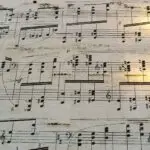
The language of music is written on a set of five parallel lines called the staff or stave. Notes are written on these lines and spaces to represent different sounds.
The following are the main musical notations and symbols:
- Staff (or Stave): The five lines and four spaces on which music is written.
- Clefs: Symbols placed at the beginning of the staff to show the pitch of notes (e.g., treble and bass clefs).
- Notes: Signs that represent musical sounds and their duration (e.g., semibreve, minim, crotchet).
- Rests: Symbols that represent silence in music.
- Bar Lines: Lines that divide the music into equal parts called bars or measures.
Importance of Studying Music Theory
Music theory helps musicians and learners understand and create music correctly.
The following are the importance of studying music theory:
- It helps in reading and writing music.
- It enables good performance and composition.
- It improves understanding of rhythm, melody, and harmony.
- It helps musicians communicate easily using standard symbols.
- It builds appreciation for different types of music.
Teaching Methods/Instructional Techniques:
Lecture, Discussion, Explanation, Demonstration, Question and Answer, Group Work, Audio-Visual Aids
Instructional Procedures
To deliver this lesson, the teacher will adopt the following steps:
Step 1: Introduction
Time: 5 minutes
Teaching Skill: Set Induction
Teacher’s Activity: Teacher asks pupils to sing a short familiar song and then introduces the lesson by explaining that every song follows certain rules known as the theory of music.
Pupils’ Activity: Pupils sing and respond to the teacher’s questions.
Learning Point: Pupils understand that music follows certain rules and patterns.
Step 2: Explanation of Theory of Music
Time: 10 minutes
Teaching Skill: Explanation
Teacher’s Activity: Teacher explains the meaning of music theory and its importance in understanding how music works.
Pupils’ Activity: Pupils listen and note down important points.
Learning Point: Pupils learn what theory of music is and its purpose.
Step 3: Elements and Language of Music
Time: 10 minutes
Teaching Skill: Demonstration
Teacher’s Activity: Teacher displays a chart showing the staff, clefs, and musical notes while explaining their uses.
Pupils’ Activity: Pupils identify the musical symbols and practice naming them.
Learning Point: Pupils recognize and understand the basic musical notations.
Step 4: Importance of Studying Music Theory
Time: 10 minutes
Teaching Skill: Discussion
Teacher’s Activity: Teacher leads a discussion on the benefits of learning music theory and connects it to how musicians read and compose music.
Pupils’ Activity: Pupils contribute examples of how music theory helps singers and instrumentalists.
Learning Point: Pupils understand the importance of learning music theory.
Step 5: Note-Taking
Time: 5 minutes
Teaching Skill: Explanation
Teacher’s Activity: Teacher dictates or writes the summarized notes on the board.
Pupils’ Activity: Pupils copy the notes neatly into their exercise books.
Learning Point: Pupils have a written summary of the lesson.
Step 6: Evaluation/Review
Time: 3 minutes
Teaching Skill: Questioning
Teacher’s Activity: The teacher evaluates the learning by asking the following questions:
- What is theory of music?
- List three elements of music.
- Mention three musical notations and their meanings.
- State two importance of studying music theory.
Pupils’ Activity: Pupils answer questions orally.
Learning Point: Pupils demonstrate understanding of the topic.
Step 7: Conclusion
Time: 2 minutes
Teaching Skill: Reinforcement
Teacher’s Activity: Teacher summarizes the main points, encourages pupils to observe musical patterns in songs they hear, and praises their participation.
Pupils’ Activity: Pupils listen attentively and ask final questions.
Learning Point: Pupils appreciate the structure and value of music theory.
Home Task: Describe or illustrate one lesson example of Theory Of Music and include one safety or performance rule. Do not practise a risky activity without adult supervision.
Lesson Keywords
- Notation – writing of music using signs and symbols
- Pitch – how high or low a sound is
- Rhythm – regular pattern of sounds and beats in music
- Melody – series of musical notes that sound pleasant together
- Harmony – combination of sounds that blend well in music
Differentiation
Teacher uses charts and real examples to support slower learners while advanced learners are tasked to identify musical symbols on their own and explain their use.
Note for teachers using this lesson plan
Make the lesson practical and engaging by allowing pupils to identify notations on real instruments or music sheets. Use songs they already know to demonstrate rhythm and melody.


Community Join the conversation Open discussion +