

Class: Junior Secondary School 1 (JSS 1 / JS1)
Term: 3rd Term
Week: 4
Age: 12 years
Duration: 45 minutes
Subject: Cultural and Creative Arts
Curriculum Theme: Cultural and Creative Arts
Previous Lesson: Meaning of Dance in Definition of Dances.
Topic: INTRODUCTION TO CHOREOGRAPHY
Subject Matter: Meaning of choreography, Principles of choreography (Order, Beauty: Variety), Meaning of choreographer.
Specific Objectives
By the end of the lesson, pupils should be able to:
Cognitive Domain:
- Define choreography.
- State the principles of choreography.
- Explain the concepts of order and variety in choreography.
- Define a choreographer.
Affective Domain:
- Appreciate the importance of well-arranged dance movements.
- Show interest in creating simple dance sequences.
Psychomotor Domain:
- Identify ordered and varied movements in a dance.
- Participate in a simple guided movement sequence.
Social Domain:
- Collaborate with peers in discussing dance movements.
Reference Materials
The following resources were used in planning this lesson:
- 9 Years Basic Education Curriculum for Cultural and Creative Arts.
- State Unified Scheme of Work.
- Cultural and Creative Arts for Junior Secondary Schools Book 1.
Instructional Materials
The teacher will teach this lesson with the aid of:
- Charts showing different dance formations.
- Pictures of dancers in various poses.
- Video clips of simple choreographed dances (if available).
Rationale for the Lesson
This lesson helps pupils understand how dance movements are created and arranged. It enables them to appreciate the structure and artistry behind dance performances, which is useful for creating their own movements and understanding cultural dances.
Prerequisite/Previous Knowledge
Pupils are expected to have basic knowledge of different types of dances and simple body movements.
Lesson Content/Board Summary
INTRODUCTION TO CHOREOGRAPHY
Meaning of Choreography
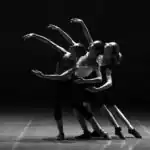
Choreography is the art of creating and arranging sequences of movements for a performance, especially for dance. It involves designing steps, gestures, and patterns to tell a story, express an idea, or simply create an appealing visual display.
Principles of Choreography
Good choreography follows certain principles to make the performance effective, clear, and appealing. These principles include:
- Order: This refers to the logical arrangement and flow of movements and sequences. Movements should progress smoothly and make sense to the audience, creating a coherent performance.
- Beauty (Variety): This involves using different types of movements, speeds, levels, and formations to keep the performance interesting and visually engaging. Variety prevents monotony and adds richness to the dance.
Meaning of Choreographer
A choreographer is a person who creates and arranges dances. They are responsible for designing the movements, directing the dancers, and deciding on the overall structure, theme, and feel of a dance performance.
Principles of Choreography
Choreography is the planned arrangement of movement in a dance. Important principles include space, time, energy, level, direction, pathway, balance, repetition, contrast, transition and relationship among dancers.
A short phrase can be developed by changing direction, speed, level or group formation. Rehearse in a clear area, mark entrances and exits, avoid unsafe lifts and make movement suitable for the performers’ ability.
Teaching Methods/Instructional Techniques
Discussion, Lecture, Demonstration, Question and Answer, Visual Aids
Instructional Procedures
Step 1: Introduction
Time: 5 minutes
Teaching Skill: Set Induction
Teacher’s Activity: The teacher greets the pupils and asks them to mention different types of dances they know. The teacher then asks what they think makes a dance beautiful or interesting.
Pupils’ Activity: Pupils respond to the greetings and mention various dances like cultural dances, modern dances, etc. They share their ideas on what makes a dance appealing.
Learning Point: Pupils recall prior knowledge about dance and prepare for the new topic.
Step 2: Meaning of Choreography
Time: 10 minutes
Teaching Skill: Explanation
Teacher’s Activity: The teacher explains the meaning of choreography, emphasizing that it is the art of creating and arranging dance movements. The teacher writes the definition on the board.
Pupils’ Activity: Pupils listen attentively, ask questions for clarity, and copy the definition into their notebooks.
Learning Point: Pupils understand the definition of choreography.
Step 3: Principles of Choreography (Order)
Time: 10 minutes
Teaching Skill: Explanation/Demonstration
Teacher’s Activity: The teacher introduces “Order” as a principle of choreography. The teacher explains that movements must be arranged logically and demonstrates simple ordered movements (e.g., walking forward, turning, walking backward).
Pupils’ Activity: Pupils observe the demonstration and discuss how the movements flow smoothly. They practice a simple ordered sequence.
Learning Point: Pupils understand the concept of order in choreography.
Step 4: Principles of Choreography (Beauty: Variety)
Time: 7 minutes
Teaching Skill: Explanation/Illustration
Teacher’s Activity: The teacher introduces “Beauty (Variety)” as another principle. The teacher explains that using different movements, speeds, and levels makes a dance interesting and demonstrates with varied movements (e.g., fast/slow, high/low).
Pupils’ Activity: Pupils observe the varied movements and identify how they add interest. They might suggest other ways to create variety.
Learning Point: Pupils understand the importance of variety in dance movements.
Step 5: Meaning of Choreographer
Time: 5 minutes
Teaching Skill: Definition
Teacher’s Activity: The teacher defines a choreographer as the person who creates and arranges the dance movements. The teacher gives examples of famous choreographers if known, or simply states their role.
Pupils’ Activity: Pupils listen and copy the definition of a choreographer into their notebooks.
Learning Point: Pupils learn the role of a choreographer.
Step 6: Class Activity/Discussion
Time: 3 minutes
Teaching Skill: Group Work
Teacher’s Activity: The teacher divides pupils into small groups and asks them to create a very short, simple sequence of 3-4 movements that shows both order and variety.
Pupils’ Activity: Pupils discuss within their groups and try to create a simple movement sequence.
Learning Point: Pupils practice applying the principles learned.
Step 7: Evaluation/Review
Time: 5 minutes
Teaching Skill: Questioning/Assessment
Teacher’s Activity: The teacher evaluates the learning by asking the following questions:
- What is choreography?
- Mention two principles of choreography.
- Explain what “Order” means in choreography.
- Who is a choreographer?
Pupils’ Activity: Pupils answer orally and in writing.
Learning Point: Pupils demonstrate understanding of the lesson.
Step 8: Conclusion
Time: 2 minutes
Teaching Skill: Summarization
Teacher’s Activity: The teacher summarizes the lesson by reiterating the meaning of choreography, its principles (order and variety), and the role of a choreographer. The teacher assigns homework: Ask pupils to observe any dance performance and identify elements of order and variety.
Pupils’ Activity: Pupils listen to the summary, ask final questions, and note down the homework.
Learning Point: Pupils consolidate their understanding of the topic.
Home Task: Describe or illustrate one lesson example of INTRODUCTION TO CHOREOGRAPHY and include one safety or performance rule. Do not practise a risky activity without adult supervision.
Lesson Keywords
- Choreography – The art of creating and arranging dance movements.
- Choreographer – A person who creates and arranges dances.
- Order – The logical arrangement and flow of movements in a dance.
- Variety – Using different types of movements, speeds, and levels to make a dance interesting.
Differentiation
For pupils who grasp concepts quickly, the teacher can challenge them to create a slightly longer or more complex movement sequence. For those needing more support, the teacher can provide more guided demonstrations and simpler movement tasks.
Note for teachers using this lesson plan
Encourage pupils to actively participate in movement activities, even if it’s just simple gestures. Use visual aids like videos or pictures to make the concepts more concrete. Emphasize that choreography is not just for professional dancers but is a creative process anyone can engage in.

Community Join the conversation Open discussion +