

Class: Junior Secondary School 1 (JSS 1 / JS1)
Term: Third Term
Week: 5
Age: 12 years
Duration: 45 minutes
Subject: Cultural and Creative Arts
Curriculum Theme: Cultural and Creative Arts
Previous Lesson: Meaning of Choreography Principles of Choreography in Introduction to Choreography.
Topic: CONTEMPORARY DANCE
Subject Matter: 1. Meaning of contemporary dance 2. Features of contemporary dance: Individual styles, Creativities: Does not have fixed movement Practicing contemporary dance 1. performing some contemporary dance movement 2. Listening and dancing form DVD music
Specific Objectives
By the end of the lesson, pupils should be able to:
Cognitive Domain:
- Define contemporary dance.
- State at least two features of contemporary dance.
Affective Domain:
- Appreciate the freedom and expressiveness of contemporary dance.
- Show interest in learning different dance styles.
Psychomotor Domain:
- Perform some basic contemporary dance movements.
- Dance along to music, incorporating contemporary styles.
Social Domain:
- Participate actively in group contemporary dance activities.
- Collaborate with peers to create simple dance sequences.
Reference Materials
The following resources were used in planning this lesson:
- 9 Years Basic Education Curriculum
- State Unified Scheme of Work
- Cultural and Creative Arts for Junior Secondary Schools 1 by various authors.
Instructional Materials
The teacher will teach this lesson with the aid of:
- Pictures or video clips of contemporary dance performances.
- DVD player and speakers.
- Music suitable for contemporary dance.
- Open space for movement.
Rationale for the Lesson
This lesson helps pupils understand contemporary dance as a modern art form that allows for personal expression and creativity. It enables them to appreciate diverse dance styles and engage in physical activity through movement.
Prerequisite/Previous Knowledge
Pupils are expected to have some basic knowledge of different types of dance and movement from previous lessons or everyday experiences.
Lesson Content/Board Summary
CONTEMPORARY DANCE
Meaning of Contemporary Dance
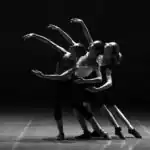
Contemporary dance is a style of expressive dance that combines elements of several dance genres including modern, jazz, lyrical, and classical ballet. It is not bound by strict rules or techniques, allowing dancers to explore new movements and expressions.
Features of Contemporary Dance
The following are features of contemporary dance:
- Individual Styles: Dancers often develop their unique movement vocabulary and style.
- Creativity: It highly encourages personal interpretation and innovative movement.
- Does not have Fixed Movements: Unlike classical ballet, contemporary dance does not rely on a set of traditional steps; it emphasizes fluidity and improvisation.
- Expressive: It often focuses on conveying emotions and stories through movement.
Practicing Contemporary Dance
Practicing contemporary dance involves:
- Performing various contemporary dance movements, which can include floor work, turns, jumps, and expressive gestures.
- Listening to different types of music and freely dancing, either individually or in groups, to express the music’s mood and rhythm.
- Watching and learning from contemporary dance performances, often from videos or live demonstrations.
Teaching Methods/Instructional Techniques
Discussion, Lecture, Demonstration, Question and Answer, Visual Aids
Instructional Procedures
Step 1: Introduction
Time: 5 minutes
Teaching Skill: Set Induction
Teacher’s Activity: The teacher greets the pupils and asks them to mention different types of dance they know or have seen. The teacher then introduces the topic, “Contemporary Dance.”
Pupils’ Activity: Pupils respond to the greetings and mention various dance types like cultural dance, hip-hop, etc. They listen attentively as the teacher introduces the new topic.
Learning Point: Pupils are engaged and link previous knowledge to the new topic.
Step 2: Meaning of Contemporary Dance
Time: 7 minutes
Teaching Skill: Explanation/Definition
Teacher’s Activity: The teacher explains the meaning of contemporary dance, emphasizing its expressive nature and blend of styles. The teacher may show a short video clip to illustrate.
Pupils’ Activity: Pupils listen to the explanation, watch the video, and ask questions for clarification. They attempt to define contemporary dance in their own words.
Learning Point: Pupils understand the definition of contemporary dance.
Step 3: Features of Contemporary Dance
Time: 7 minutes
Teaching Skill: Elucidation/Listing
Teacher’s Activity: The teacher discusses the key features of contemporary dance, such as individual styles, creativity, and the absence of fixed movements, writing them on the board.
Pupils’ Activity: Pupils listen, take notes, and contribute ideas about what makes contemporary dance unique.
Learning Point: Pupils identify and understand the characteristics of contemporary dance.
Step 4: Demonstration of Contemporary Dance Movements
Time: 8 minutes
Teaching Skill: Demonstration/Modelling
Teacher’s Activity: The teacher demonstrates some simple contemporary dance movements, focusing on fluidity, floor work, and expressive gestures. The teacher encourages pupils to observe closely.
Pupils’ Activity: Pupils watch the teacher’s demonstration carefully and try to imitate some of the movements in their space.
Learning Point: Pupils observe and begin to understand the physical aspect of contemporary dance.
Step 5: Practicing Contemporary Dance
Time: 8 minutes
Teaching Skill: Guided Practice
Teacher’s Activity: The teacher plays suitable music and guides pupils to perform the demonstrated movements. The teacher encourages them to explore their own creative movements.
Pupils’ Activity: Pupils participate by performing the movements and trying to express themselves through dance to the music.
Learning Point: Pupils gain practical experience in performing contemporary dance movements.
Step 6: Group Activity/Practice
Time: 5 minutes
Teaching Skill: Collaborative Learning
Teacher’s Activity: The teacher divides pupils into small groups and asks them to create a short, simple contemporary dance sequence based on what they have learned and practiced.
Pupils’ Activity: Pupils work in their groups to create and practice a short dance sequence, showing teamwork and creativity.
Learning Point: Pupils develop teamwork and further practice contemporary dance skills.
Step 7: Evaluation/Review
Time: 5 minutes
Teaching Skill: Questioning/Assessment
Teacher’s Activity: The teacher evaluates the learning by asking the following questions:
- What is contemporary dance?
- Mention two features of contemporary dance.
- Demonstrate one contemporary dance movement you learned today.
Pupils’ Activity: Pupils answer orally and in writing.
Learning Point: Pupils demonstrate understanding of the lesson.
Step 8: Conclusion
Time: 5 minutes
Teaching Skill: Summarization
Teacher’s Activity: The teacher summarizes the main points of the lesson, reiterating the meaning and features of contemporary dance. The teacher encourages pupils to continue exploring different dance forms. The teacher gives homework.
Pupils’ Activity: Pupils listen to the summary and copy the homework into their notebooks.
Learning Point: The lesson is reinforced, and pupils are encouraged to continue learning.
Home Task: Describe or illustrate one lesson example of CONTEMPORARY DANCE and include one safety or performance rule. Do not practise a risky activity without adult supervision.
Lesson Keywords
- Contemporary – Modern or happening in the present time.
- Dance – A series of movements that follow a pattern or music.
- Expressive – Showing feelings or thoughts.
- Creativity – The ability to use imagination to produce new ideas or things.
- Movement – An act of changing physical location or position.
Differentiation
For pupils who are struggling, the teacher will provide more one-on-one guidance during practical sessions and simplify explanations. For advanced learners, the teacher will encourage them to create more complex dance sequences and research different contemporary dancers.
Note for teachers using this lesson plan
Ensure adequate space for pupils to move freely during the practical sessions. Encourage pupils to be creative and not fear trying new movements. Use music that is engaging and appropriate for the age group to maintain interest.

Community Join the conversation Open discussion +