

Class: Primary Two
Term: Second Term
Subject: Cultural & Creative Arts
Topic: Customary Dance
Previous Lesson: Traditional Songs/Folk Songs, Towns Where Art Works And Crafts Are Practiced
Content/Learning Area: Defining Nigerian traditional dance, mentioning functions of traditional dance in Nigeria, explaining the importance of traditional dance in social activities
Time Allocation: 40 minutes
Performance Objectives
By the end of the lesson, pupils should be able to:
- Cognitive Domain:
1. Define Nigerian traditional dance.
2. Mention two functions of traditional dance in Nigeria.
3. Explain the importance of traditional dance in social activities.
- psychomotor Domain:
1. Imitate basic movements of a Nigerian traditional dance (if applicable).
- Affective Domain:
1. Show thankfulness for Nigerian traditional dance and its cultural meaning.
- Social Domain:
1. Participate actively in class discussions about traditional dance.
Reference Materials
- 9 – Years Basic Education Curriculum
- Abuja Educational Resource Center Scheme of Work
- NAPPS National Unified Scheme of Work
- Relevant Textbooks
Instructional Materials
to deliver this lesson, the teacher will use the following materials:
- Whiteboard or chart paper
- Markers or crayons
- Pictures or videos of Nigerian traditional dances
- Music player (optional)
Rationale for the Lesson
Understanding traditional dance helps pupils connect with their cultural heritage and appreciate the diversity of Nigerian culture. This lesson fosters an recognition for art and builds a sense of national identity.
Prerequisite/Previous Knowledge
pupils have likely seen people dancing at social events or on television.
Lesson Content
Nigerian Traditional Dance
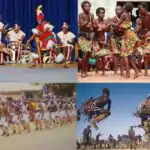
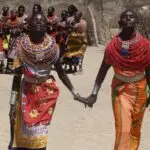
Nigerian traditional dance is a stunning way to express our culture. It involves moving our bodies to music, often with special steps and costumes. It’s like a story told through dance!
Functions of Traditional Dance in Nigeria
Traditional dance serves several purposes within Nigerian communities. These include:
The following are functions of traditional dance in Nigeria:
1. Cultural Expression: Traditional dance helps us show the world who we are and what we believe in. It’s like a unique fingerprint for each ethnic group.
2. Social Bonding: Dancing together brings people closer. It’s a way to celebrate our shared heritage and build strong communities.
3.Spiritual Practices: Some dances are connected to our beliefs and traditions. They help us connect with the spiritual world and ask for blessings.
4. Entertainment: Traditional dance is a lot of fun! It brings joy and excitement to celebrations and festivals.
5. Education and storytelling: Dances can tell stories about our history,teach us critically important lessons,and help us remember our past.
6. Preservation of History: traditional dances often recount historical events, preserving cultural memory and passing it down through generations.
7. Ritual and Ceremony: Many dances are performed during important ceremonies such as weddings,funerals,and initiations,adding solemnity and importance to these events.
Teaching Methods
To deliver this lesson, the teacher will adopt the following methods: Discussion,question and answer,Visual aids
Instructional Procedures
To deliver this lesson,the teacher will adopt the following steps:
Step 1: Introduction
Time: 5 minutes
Teaching Skill: Set Induction
Teacher’s Activity: Asks pupils if they know what traditional dance is and shows pictures of different traditional dances.
Pupils’ Activity: Respond to teacher’s questions and observe the pictures.
Step 2: Clarification of Key Concepts
Time: 15 minutes
Teaching Skill: Explaining
Teacher’s Activity: Explains the definition and functions of traditional dance in Nigeria.
pupils’ Activity: Listen attentively and ask questions.
Step 3: Presentation/Guided Practice
Time: 10 minutes
Teaching Skill: Demonstrating
Teacher’s Activity: Shows a short video clip of a Nigerian traditional dance (if available) and explains some basic movements.
Pupils’ Activity: Watch the video and try to imitate the simple movements.
Step 4: Independent Practice
Time: 5 minutes
Teaching Skill: Monitoring
Teacher’s Activity: Allows pupils to practice the movements they have learned.
Pupils’ Activity: Practice the movements individually or in small groups.
Step 5: Note-Taking
Time: 2 minutes
Teaching Skill: guiding
Teacher’s Activity: Guides pupils in writing down key points about traditional dance.
Pupils’ Activity: Write down key points in their notebooks.
Step 6: Evaluation/Review
Time: 3 minutes
Teaching Skill: Questioning
Teacher’s Activity: Asks review questions to assess understanding.
Pupils’ Activity: Answer the review questions.
Objective-aligned checks:
- Define Nigerian traditional dance.
- Mention two functions of traditional dance in Nigeria.
- Explain the importance of traditional dance in social activities.
Step 7: Conclusion
Time: 2 minutes
Teaching Skill: Summarizing
Teacher’s Activity: Summarizes the key points about Nigerian traditional dance and its importance.
Pupils’ Activity: Listen to the summary and ask any remaining questions.
Lesson Keywords
- Traditional Dance – A dance form that reflects the cultural traditions of a particular group of people.
- cultural Expression – The way a group of people show their beliefs,values,and customs.
- Social Bonding – The process of building relationships and connections within a community.
- Spiritual Practices – Activities related to religious or spiritual beliefs.
- Heritage – The traditions, achievements, and beliefs that are part of the history of a group or nation.
Lesson Evaluation
To evaluate the learning, the teacher asks pupils to:
1. What is traditional dance?
2. Name two reasons why people dance in Nigeria.
3. Why is traditional dance critically important?
4. Can you name a traditional dance you know?
Assignment/Homework
1. Ask yoru parents or grandparents about a traditional dance from your ethnic group. Write down what you learn about the dance, including when it is performed and what it means.
2.Draw a picture of people performing a traditional Nigerian dance.
Differentiation
- For slower learners: Provide one-on-one assistance and simplify the instructions.
- For advanced learners: Encourage them to research and present on a specific Nigerian traditional dance.
- For visual/auditory/kinesthetic learners: Use visual aids, play music, and incorporate movement into the lesson.
Note for Teachers
Encourage pupils to share their personal experiences with traditional dance to make the lesson more engaging and relevant. Be sensitive to the diverse cultural backgrounds of the pupils in the class.

Community Join the conversation Open discussion +