

Class: Primary 4
Term: 2nd Term
Subject: Creative And Cultural Arts
Curriculum Theme: Creative And Cultural Arts
Previous Lesson: Types Of Texture In Arts and Classification Of Local Musical Instruments In Membranophone
Topic: Color Wheel On Primary Colours & traditional Dances In nigeria
Content/Learning Area: Colour Wheel On Primary Colours & Traditional Dances In Nigeria
Time Allocation: 40 minutes
Performance Objectives
by the end of the lesson,pupils should be able to:
- Cognitive Domain: Identify the primary colours and describe a colour wheel.
- Affective Domain: Appreciate the beauty of traditional dances and art.
- Psychomotor Domain: Create a simple colour wheel using primary colours.
- Social Domain: Demonstrate a basic traditional dance in groups.
Reference Materials
The following resources were used in planning this lesson:
- 9–Years Basic Education Curriculum
- Abuja Educational Resource Center Scheme of Work
- NAPPS National Unified Scheme of Work
- Online Information from: Steemit – Nigerian Traditional Dances You Should definitely Know
- Relevant Textbooks
Instructional Materials
To deliver this lesson, the teacher will use the following materials:
- A printed or handmade colour wheel
- Paints or crayons in red, yellow, and blue
- Pictures or videos of Nigerian traditional dances
- Chart showing traditional dances in Nigeria
Rationale for the Lesson
Understanding the colour wheel and traditional dances helps pupils appreciate art and culture. It encourages creativity and fosters cultural identity and pride.
prerequisite/Previous Knowledge
pupils have learned about types of textures in art and can identify local musical instruments.
Lesson Content
Colour Wheel On Primary Colours & Traditional dances In Nigeria
Traditional dances are an expression of culture and are used to celebrate important events. Some examples include:
- Bata dance (Yoruba) – Performed during festivals and ceremonies.
- Atilogwu dance (Igbo) – Known for its acrobatics and energy.
- Sharo Dance (Fulani) – A dance performed during the Sharo festival.
- Ekombi Dance (Efik) – Represents the grace of young maidens.
- Swange Dance (Tiv) – A rhythmic dance from Benue state.
Primary colours are the base colours that cannot be created by mixing other colours. They are:
- red
- Yellow
- Blue
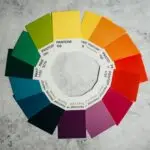
These colours are arranged in a circular pattern called the colour wheel, which helps artists mix and understand colours better.
Primary Colours and a Colour Wheel
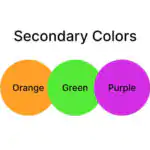
In school paint mixing, red, yellow and blue are primary colours. Arrange them around a simple colour wheel; the spaces between them show the secondary colours made by mixing pairs: orange, green and purple.
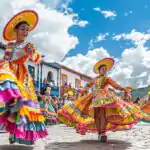
Traditional dance is learned in a community and may mark festivals, work, worship, history or celebration. Examples and movements should be taught with their correct community names and meaning, not treated as one single Nigerian dance.
Teaching Methods
To deliver this lesson, the teacher will adopt the following methods: Set Induction, Explanation, Discussion, Demonstration, Dictation, Interactive Learning, Summary
Instructional Procedures
To deliver this lesson, the teacher will adopt the following steps:
Step 1: Introduction (Set Induction)
Time: 5 mins
Teaching Skill: Set Induction
Teacher’s Activity: Asks pupils about their favorite colours and dances.
Pupils’ Activity: Respond with their ideas and experiences.
Step 2: Colour Wheel Explanation
Time: 10 mins
teaching Skill: Explanation
Teacher’s Activity: Explains primary colours (red, yellow, blue) using a colour wheel.
Pupils’ Activity: Observe and listen actively.
Step 3: Traditional Dances Discussion
Time: 10 mins
Teaching Skill: Discussion
Teacher’s Activity: Talks about the significance of traditional dances in Nigeria.
Pupils’ Activity: Share knowledge of any dance they know.
Step 4: Activity Demonstration
Time: 10 mins
Teaching Skill: Demonstration
Teacher’s Activity: Guides pupils in creating their colour wheel and basic dance moves.
Pupils’ Activity: Participate in the activity.
Step 5: Note-Taking
Time: 5 mins
Teaching Skill: Dictation
teacher’s Activity: Dictates short notes for pupils to copy.
Pupils’ Activity: Copy the notes neatly.
Step 6: Evaluation/Review
Time: 5 mins
Teaching Skill: Oral Questions
Teacher’s Activity: Asks review questions to gauge understanding.
Pupils’ Activity: Answer questions confidently.
Objective-aligned checks:
- Identify the primary colours and describe a colour wheel.
- Demonstrate a basic traditional dance in groups.
Step 7: Conclusion
Time: 5 mins
Teaching Skill: Summary
Teacher’s Activity: Summarizes the key points and encourages pupils to practice more.
Pupils’ Activity: Listen and ask final questions.
Lesson Keywords
- Primary Colours – Basic colours that cannot be created by mixing other colours.
- Colour Wheel – A circular arrangement of colours used to understand colour relationships.
- Traditional Dances – Cultural dances that are part of a community’s heritage.
- Bata Dance – A Yoruba dance performed during festivals and ceremonies.
- Atilogwu Dance – An Igbo dance known for its acrobatics and energy.
Lesson Evaluation
To evaluate the learning, the teacher asks pupils to:
- Name the three primary colours.
- What is a colour wheel?
- Mention any two traditional dances in Nigeria and their origin.
- Why are traditional dances critically important?
- Create a simple colour wheel using crayons.
Assignment/Homework
- Research and write about another traditional dance from Nigeria.
- Mix primary colours to create secondary colours (green, orange, purple).
- Draw and label a colour wheel.
Differentiation
- For slower learners: Provide pre-drawn colour wheel templates and focus on one traditional dance.
- For advanced learners: Research the history and cultural significance of different Nigerian dances.
- For visual/auditory/kinesthetic learners: Use videos, music, and hands-on activities to engage different learning styles.
Note for Teachers
Ensure you engage pupils actively through hands-on activities and demonstrations.Relate the dances to their local communities to make the lesson more relatable. Always encourage questions and creativity. Happy teaching!

Community Join the conversation Open discussion +