

class: Primary 4
Term: 2nd Term
Subject: Creative and Cultural Arts
Curriculum Theme: Creative and Cultural Arts
Previous Lesson:
Topic: Colours in Our Surroundings and Characteristics of Traditional Dance
Content/Learning Area: Colours in Our Environment and Characteristics of Traditional Dance
Time Allocation: 40 minutes
Performance Objectives
By the end of the lesson, pupils should be able to:
- Cognitive Domain: Identify eight common colours in thier environment.
- Affective domain: Appreciate the role of colours and traditional dance in cultural expression.
- Psychomotor Domain: Demonstrate basic traditional dance steps.
- Social Domain: Collaborate with peers to identify colours in their surroundings and discuss their cultural significance.
Reference Materials
The following resources were used in planning this lesson:
- 9-Years Basic Education Curriculum Abuja.
- educational Resource Center Scheme of Work.
- NAPPS National Unified Scheme of Work.
- Online information from: Britannica – African dance | History,Styles,Culture,& Facts
- Relevant textbooks.
Instructional Materials
To deliver this lesson, the teacher will use the following materials:
- Chart showing colours and their names.
- Video clips of traditional dances.
- Colouring materials (crayons, markers).
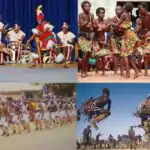
- Pictures of cultural events showcasing traditional dances.
Rationale for the Lesson
Understanding colours and traditional dance fosters cultural gratitude and helps pupils recognize how art and culture contribute to identity and expression.
Prerequisite/Previous Knowledge
Pupils can identify primary colours and have experienced traditional music and dance during cultural events.
Lesson Content
Colours in Our Environment and Characteristics of Traditional Dance
Traditional dances are cultural performances that use rhythm, movement, and music to tell stories, celebrate events, or express emotions.
Colours in Our Environment:
Colours evoke different emotions and meanings in our environment. The following are examples of colours and what they symbolize:
- Red: Symbolizes love or danger.
- Blue: Represents calmness or water.
- Yellow: Signifies brightness or happiness.
- Green: Associated with nature or life.
- White: Represents purity or peace.
- Black: Stands for strength or elegance.
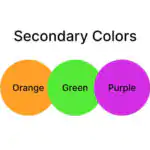
- Orange: A mix of energy and warmth.
- Purple: often linked to royalty or creativity.
- Brown: Represents earthiness and stability.
- Grey: Signifies neutrality and balance.
Characteristics of Traditional Dance:
Traditional dances are unique and have distinct features that define them. These include:
- Uses rhythmic body movements.
- Performed to live music or drums.
- Represents cultural identity.
- Includes costumes or traditional attire.
- Tells a story or conveys a message.
- Involves specific steps and patterns.
- Reflects the values and beliefs of a community.
- Often performed during festivals and ceremonies.
Teaching Methods
To deliver this lesson, the teacher will adopt the following methods: Question-and-Answer, Direct Teaching, Visual Aids, Modeling, Guided Practice, Discussion, Interactive Learning, Questioning, Reflective Learning, Recap, Summary Discussion.
Instructional Procedures
To deliver this lesson, the teacher will adopt the following steps:
Step 1: Introduction
Time: 5 mins
Teaching Skill: Set Induction
teacher’s Activity: Asks pupils about their favorite colours and dances.
Pupils’ Activity: Respond to questions.
Step 2: Explanation of Colours and Dances
Time: 10 mins
Teaching Skill: Direct teaching
Teacher’s Activity: Displays chart of colours and explains each. Shows pictures/videos of traditional dances.
Pupils’ Activity: Observe, listen, and answer teacher’s questions.
Step 3: Demonstration of Dance Steps
Time: 10 mins
Teaching Skill: Modeling
Teacher’s Activity: Demonstrates basic dance steps and uses cultural examples.
Pupils’ Activity: Practice simple steps in groups.
Step 4: Note-Taking
Time: 5 mins
Teaching Skill: Discussion
Teacher’s Activity: Guides pupils to copy notes from the board.
Pupils’ activity: Copy notes.
Step 5: Evaluation/Review
Time: 5 mins
Teaching Skill: Questioning
Teacher’s Activity: Asks questions related to colours and traditional dances.
Pupils’ Activity: Answer questions.
Objective-aligned checks:
- Identify eight common colours in thier environment.
- Demonstrate basic traditional dance steps.
- Collaborate with peers to identify colours in their surroundings and discuss their cultural significance.
Step 6: Conclusion
Time: 5 mins
Teaching Skill: Recap
Teacher’s Activity: Summarizes the lesson and encourages cultural pride.
Pupils’ Activity: Reflect and discuss in pairs.
Lesson Keywords
- Colours – Visual elements with different meanings and uses.
- Traditional Dance – Cultural performances using rhythm and movement.
- Cultural Identity – The sense of belonging to a particular culture.
- Rhythmic Movements – Patterns of motion in dance.
- Cultural Expression – Ways of showing cultural values and beliefs.
Lesson Evaluation
To evaluate the learning, the teacher asks pupils to:
- Name four colours in their environment.
- Mention three characteristics of traditional dance.
- Demonstrate one simple traditional dance step.
- discuss the significance of colours in cultural celebrations.
Assignment/Homework
- List five colours you see at home and what they might represent.
- Describe a traditional dance you have seen and its main features.
- Draw a picture of a cultural event showcasing traditional dances.
Differentiation
- For slower learners: Provide simplified charts with fewer colours and basic dance steps.
- For advanced learners: Encourage research on the cultural significance of specific colours and dances in different Nigerian ethnic groups.
- For visual/auditory/kinesthetic learners: Use visual aids, play traditional music, and incorporate movement-based activities.
Note for Teachers
This lesson provides an excellent chance to integrate cultural appreciation with creative expression.Encourage pupils to actively participate and share their experiences with traditional dances or colours they’ve observed.Happy teaching!
Community Join the conversation Open discussion +