

Class: primary 4
Term: 3rd term
Subject: Cultural and Creative Arts
curriculum Theme: Cultural And Creative Arts
Previous lesson: Meaning Of Finger And Thumb Printing
Topic: Meaning And Types Of Drawing And Responding Too Music Using Body movements
Content/Learning Area: Definition and types of drawing, Responding to Music using body movements
Time Allocation: 40 minutes
Performance Objectives
By the end of the lesson, pupils should be able to:
- Cognitive Domain: Define drawing and list different types of drawing
- Affective Domain: Show appreciation for the use of drawing and music in daily life
- Psychomotor Domain: demonstrate body movements that match different music rhythms
- Social Domain: Participate actively in group drawing and movement activities
Reference Materials
The following resources were used in planning this lesson:
- 9 Years Basic Education Curriculum
- Abuja Educational Resource Center Scheme of Work
- NAPPS National Unified scheme of Work
- Online Information from: Wikipedia – Drawing
- Relevant Textbooks
Instructional Materials
To deliver this lesson, the teacher will use the following materials:
- Samples of different types of drawings
- Flashcards showing body movements
- Audio player with recorded music
- Drawing materials (paper, pencils, crayons)
- Charts with musical rhythm illustrations
Rationale for the Lesson
Understanding drawing and music response helps pupils express ideas visually and emotionally, encouraging creativity and body coordination.
Prerequisite/Previous Knowledge
Pupils are familiar with basic use of crayons and dancing to songs during school activities.
Lesson Content
Meaning and Types of Drawing and Responding to Music Using Body Movements
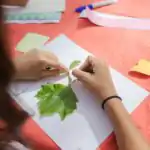
Drawing means making pictures or shapes using lines. We draw to show ideas, people, and things.
Types of Drawing
There are different kinds of drawing we can do in art. they are:
- Imaginative drawing
- Observational drawing
- Nature drawing
- Abstract drawing
- Life drawing
Responding to Music Using Body Movements
Responding to music with body movements means moving your body to match the sound or beat of music.
ways of Responding to Music Using Body Movements
We can use parts of our body to show how music feels. These include:
- Clapping hands
- Nodding head
- Stamping feet
- Waving hands
- Twisting body
Types of Drawing and Movement to Music
Drawing may be observational, imaginative, memory-based, still life, landscape or figure drawing. The type describes the source or subject, while tools and techniques describe how it is made.
People respond to music through clapping, stepping, swaying, gesture and dance. Movement should follow rhythm, tempo, mood and available space. Pupils should control their bodies, respect personal space and stop on the teacher’s signal.
Teaching Methods
To deliver this lesson, the teacher will adopt the following methods: Discussion, Explanation, Demonstration, Group Work, Storytelling, Role Play, Visual Aids
Instructional Procedures
To deliver this lesson, the teacher will adopt the following steps:
Step 1: Introduction
Time: 5 mins
Teaching Skill: Set Induction
teacher’s Activity: Tells a short story about how a child uses drawing to show his ideas and how music makes people dance
Pupils’ Activity: Pupils listen and respond to the story
Step 2: Meaning of Drawing
Time: 5 mins
Teaching Skill: Explanation
Teacher’s Activity: Explains what drawing means and shows simple drawings
Pupils’ Activity: pupils observe and repeat the meaning of drawing
Step 3: Types of Drawing
Time: 6 mins
Teaching Skill: Visual Aids
Teacher’s Activity: Shows pictures of different drawing types and names them
Pupils’ Activity: pupils identify and repeat the names of each type
Step 4: Meaning of Responding to Music
Time: 6 mins
Teaching Skill: Storytelling
Teacher’s Activity: Plays music and explains how our body can move to the sound
Pupils’ Activity: Pupils listen and observe the demonstration
Step 5: Ways of Responding to Music
Time: 6 mins
Teaching Skill: Demonstration
Teacher’s Activity: Demonstrates clapping, stamping, and waving to music
Pupils’ Activity: Pupils follow and copy the body movements
Step 6: Note-Taking
Time: 4 mins
Teaching Skill: Writing
Teacher’s Activity: Guides pupils to copy key points from the board
Pupils’ Activity: Pupils write notes in their books
Step 7: Evaluation/Review
Time: 5 mins
Teaching Skill: Questioning
Teacher’s Activity: Asks questions about the lesson and checks their notes
Pupils’ activity: Pupils answer questions and show their notes
Objective-aligned checks:
- Define drawing and list different types of drawing.
- demonstrate body movements that match different music rhythms.
Step 8: Conclusion
Time: 3 mins
Teaching Skill: Instructional & Social Closure
Teacher’s Activity: Praises pupils for participation, summarizes lesson and encourages them to draw and dance at home
Pupils’ Activity: Pupils respond with excitement and reflect on the lesson
Lesson keywords
- drawing – Making pictures using lines
- Imaginative – From the mind or ideas
- Observational – From looking at things
- Rhythm – The beat in music
- Movement – How we use the body
lesson Evaluation
To evaluate the learning, the teacher asks pupils to:
- What is drawing?
- Mention three types of drawing
- What does it mean to respond to music?
- mention two ways we can respond to music using our body
- Demonstrate any body movement that matches music
Assignment/Homework
Differentiation
- For slower learners: Use group work for slower learners, pair drawing practice with more active peers, and provide visual aids and music cues for all learning styles.
- For advanced learners:
- For visual/auditory/kinesthetic learners:
Note for Teachers
Allow pupils to express freely through art and movement. Use real-life examples and maintain an encouraging surroundings.



Community Join the conversation Open discussion +