

Class: Primary 4
Term: 3rd Term
Subject: Cultural and Creative Arts
curriculum Theme: Cultural And Creative Arts
Previous Lesson: Benefits Of Caring For Our Environment
Topic: Differences Between Local And Foreign Instruments
Content/Learning Area: Differences Between Local And Foreign Instruments
Time Allocation: 40 minutes
Performance Objectives
By the end of the lesson, pupils should be able too:
- Cognitive Domain: state at least two differences between local and foreign musical instruments
- Affective Domain: Appreciate the value of both local and foreign musical instruments
- Psychomotor Domain: Identify and classify samples or pictures of local and foreign instruments
- Social Domain: Work together in groups to sort instruments by type
Reference Materials
The following resources were used in planning this lesson:
- 9 Years Basic Education Curriculum
- Abuja Educational Resource Center Scheme of Work
- NAPPS National Unified Scheme of Work
- Online Information from: wikipedia – Musical instrument
- relevant Textbooks
Instructional Materials
To deliver this lesson, the teacher will use the following materials:
- Chart showing pictures of local and foreign instruments
- Real or model musical instruments (e.g., drum, flute, piano, guitar)
- Flashcards labeled “local” and “foreign”
- Audio recordings of music played with different instruments
- Videos of performances using various instruments
Rationale for the Lesson
Understanding the differences between local and foreign instruments helps pupils appreciate cultural diversity and respect different musical heritages.
Prerequisite/Previous Knowledge
Pupils have previously seen or used simple musical instruments and heard different types of music.
Lesson Content
Differences Between Local And Foreign Instruments
Local and foreign instruments are different in how they are made and where they come from.
The following are differences:
- Local instruments are made with natural materials, foreign instruments use processed materials
- Local instruments are used in traditional music, foreign instruments are used in modern music
- Local instruments are handmade, foreign instruments are machine-made
- Local instruments are common in villages, foreign instruments are seen in cities
- Local instruments have cultural designs, foreign instruments have modern looks
Local and Foreign Instruments
A local instrument is associated with a community’s musical tradition; a foreign instrument entered from another cultural tradition. Origin is about historical association, not where an individual instrument was manufactured or who is allowed to play it.
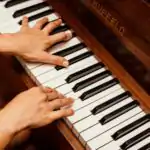
Examples used in Nigerian traditions include talking drums, udu, goje, ekwe and ogene. Piano, violin, trumpet and saxophone came through other musical traditions but are now used by Nigerian musicians too.
- Compare the material used.
- Identify what vibrates to produce sound.
- Explain whether it is struck, shaken, blown, plucked or bowed.
Teaching Methods
To deliver this lesson, the teacher will adopt the following methods: Discussion, Lecture, Explanation, Demonstration, Group Work, Visual Aids
Instructional Procedures
To deliver this lesson, the teacher will adopt the following steps:
Step 1: Introduction
Time: 5 mins
Teaching Skill: Set Induction
Teacher’s Activity: Tells a short story about a local festival and plays sounds from both local and foreign instruments
Pupils’ Activity: Listen and share any similar experience
Step 2: Meaning of Local Instruments
Time: 5 mins
Teaching Skill: Explanation
Teacher’s Activity: Explains the meaning and gives examples of local instruments using charts
Pupils’ Activity: Observe and mention any local instruments they know
Step 3: Meaning of Foreign Instruments
Time: 5 mins
Teaching Skill: Explanation
Teacher’s Activity: Defines foreign instruments and displays real or picture samples
Pupils’ Activity: Look closely and name any foreign instruments they have seen
Step 4: Differences Between Them
Time: 10 mins
Teaching Skill: Comparison
Teacher’s Activity: Uses a table chart to show clear differences, explains each difference
Pupils’ Activity: Watch, listen, and repeat the differences aloud
Step 5: group Sorting Activity
Time: 5 mins
Teaching Skill: Group Work
Teacher’s Activity: Groups pupils, gives picture cards and asks them to sort into local or foreign
Pupils’ Activity: Work in groups to sort and explain their sorting
Step 6: Note-Taking
Time: 3 mins
Teaching Skill: Explanation
Teacher’s Activity: Guides pupils to copy the structured notes from the board
Pupils’ Activity: Copy notes neatly and ask for spellings where needed
Step 7: Evaluation/Review
Time: 5 mins
Teaching Skill: Questioning
Teacher’s Activity: Asks oral and board questions on differences and examples
Pupils’ Activity: Answer questions individually and in turns
Objective-aligned checks:
- state at least two differences between local and foreign musical instruments.
- Identify and classify samples or pictures of local and foreign instruments.
Step 8: Conclusion
Time: 2 mins
Teaching Skill: Instructional Closure
Teacher’s Activity: Reviews key points, praises group efforts, and connects topic to real-life uses
Pupils’ Activity: Listen, share what they liked in the lesson
Lesson Keywords
- Instrument – a tool used to make music
- Local – from our country or culture
- Foreign – from other countries
- Traditional – old and cultural
- Modern – new and current
Lesson Evaluation
To evaluate the learning, the teacher asks pupils to:
- Mention two local musical instruments
- mention two foreign musical instruments
- Say one difference between local and foreign instruments
- Group a set of instrument pictures into local and foreign
- Say which instrument they have seen at home or on TV
Assignment/Homework
- draw one local and one foreign instrument.
- Write down three differences between them.
- Ask your parents about a traditional instrument they know.
Differentiation
- For slower learners: Visual aids and group activities are used to support slower learners
- For advanced learners: Advanced pupils are encouraged to explain and demonstrate classification.
- For visual/auditory/kinesthetic learners: Use real instruments for kinesthetic learners,audio recordings for auditory learners,and charts for visual learners.
Note for Teachers
Use real or picture-based materials to help learners connect with the topic easily. Encourage storytelling and songs that use both types of instruments.


Community Join the conversation Open discussion +