

Class: Primary Four
Term: Frist Term
subject: Cultural & Creative Arts
Topic: Origin of Arts
Previous Lesson: Definition of Arts
Content/Learning Area: Origin of Arts, Features of Traditional Dance
Time Allocation: 40 minutes
Performance Objectives
By the end of the lesson, pupils should be able to:
- Cognitive Domain:
1.Discuss the origin of Arts.
2. List three features of traditional dance.
- Affective Domain:
1. Show interest in learning about the origin of arts.
2. Appreciate the cultural significance of traditional dance.
- Psychomotor Domain:
1. Participate actively in class discussions.
- Social Domain:
1. Work collaboratively with peers.
Reference Materials
- 9 – Years Basic Education Curriculum
- Abuja educational Resource Centre Scheme of Work
- NAPPS national Unified Scheme of Work
- Relevant Textbooks
Instructional Materials
To deliver this lesson, the teacher will use the following materials:
- Whiteboard or chart paper
- Markers or crayons
- Pictures or videos of traditional dances
Rationale for the lesson
Understanding the origin of arts helps pupils appreciate the rich history and cultural heritage of human expression. This knowledge fosters creativity and cultural awareness, valuable skills for future learning and life.
Prerequisite/previous Knowledge
The teacher will begin by asking pupils what they know about dance and art. The teacher will then show pictures of diffrent art forms and ask pupils to identify them. This will help to engage the pupils and set the stage for the lesson.
Lesson Content
The origin Of Arts
The origin of arts is deeply rooted in human expression and creativity. It began in prehistoric times when early humans used symbols, colors, and shapes to communicate and represent their experiences.From cave paintings to intricate sculptures, art has been a way to tell stories, show cultural identity, and express emotions throughout history.
Features Of Traditional Dance
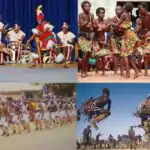
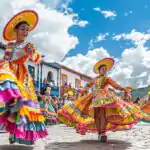
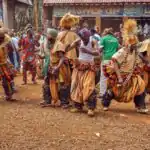
Traditional dances are unique to different cultures and regions, each with distinct characteristics that reflect their heritage. The following are key features of traditional dance:
- Cultural Significance: Traditional dances often reflect the beliefs, values, and traditions of a specific culture.
- Costumes and Attires: Traditional dances frequently have unique costumes and clothing specific to a region or culture.
- Movement and Steps: Traditional dances have unique movements and steps passed down through generations.
- Rhythmic Patterns: traditional dances often follow specific rhythms created by drums, gongs, or other instruments.
- Symbolism: Many traditional dances use symbolic gestures and movements to convey meanings or stories.
- Narrative Experiment: traditional dances frequently tell stories or show ancient events.
- Live Music Accompaniment: Traditional dances are often accompanied by live music, adding to the atmosphere.
- Celebratory Occasions: Traditional dances are often performed at special events like weddings or festivals.
- Community Participation: traditional dances often involve community members, fostering a sense of belonging and shared identity.
- Spiritual Connection: Some traditional dances are performed for religious or spiritual purposes, connecting participants to their faith.
Teaching Methods
To deliver this lesson, the teacher will adopt the following methods: Discussion, Question and answer, Visual aids
Instructional Procedures
To deliver this lesson, the teacher will adopt the following steps:
Step 1: Introduction
Time: 5 minutes
teaching skill: Set Induction
Teacher’s Activity: Ask pupils what they know about art and dance.
Pupils’ Activity: Respond to the teacher’s questions.
Step 2: Description of Key Concepts
Time: 10 minutes
Teaching Skill: Explaining
Teacher’s Activity: Explain the origin of arts and its significance.
Pupils’ Activity: Listen attentively and ask questions.
Step 3: Demonstration/Guided Practice
Time: 10 minutes
Teaching Skill: Demonstrating
Teacher’s activity: Show pictures or videos of traditional dances and explain their features.
Pupils’ Activity: Observe and participate in discussions.
Step 4: Autonomous Practice
time: 5 minutes
Teaching Skill: Monitoring
Teacher’s Activity: Guide pupils as they list features of traditional dance.Pupils’ Activity: List features of traditional dance individually.
Step 5: Note-Taking
Time: 5 minutes
Teaching Skill: Note-taking
Teacher’s Activity: Guide pupils in taking notes on key concepts.
Pupils’ Activity: Take notes on key concepts.
Step 6: Evaluation/Review
Time: 5 minutes
Teaching Skill: Questioning
Teacher’s Activity: Ask review questions to assess understanding.
Pupils’ Activity: Answer review questions.
Objective-aligned checks:
- List three features of traditional dance.
- Show interest in learning about the origin of arts.
Step 7: Conclusion
Time: 5 minutes
Teaching Skill: Summarizing
Teacher’s Activity: Summarize the key points of the lesson and assign homework.
Pupils’ activity: Listen to the summary and note the homework assignment.
Lesson Keywords
- Origin – The point or place where something begins or is created.
- Arts – The expression or request of human creative skill and imagination.
- Traditional Dance – A dance form that is passed down through generations and reflects the culture of a community.
- Features – Distinctive attributes or characteristics of something.
- Culture – The customs, arts, social institutions, and achievements of a particular nation, people, or group.
Lesson Evaluation
To evaluate the learning, the teacher asks pupils to:
- What is art?
- Name three features of traditional dance.
- Give examples of traditional dances.
- How do traditional dances help us understand different cultures?
Assignment/Homework
- Research and draw a picture of a traditional dance from their culture.
- Write a short paragraph about the origin of arts in Nigeria.
- List five features of a traditional dance they have seen or heard about.
Differentiation
- For slower learners: Provide one-on-one assistance and use simpler language.
- For advanced learners: Encourage them to research and present examples of traditional dances from different cultures.
- For visual/auditory/kinesthetic learners: Use visual aids, play music, and incorporate movement activities to cater to different learning styles.
Note for Teachers
Ensure to use local examples of traditional dances to make the lesson more relatable and engaging for the pupils. Encourage active participation and create a supportive learning habitat.

Community Join the conversation Open discussion +