

Class: Primary 3
Term: 1st Term
Week: 5
Age: 8 years
Duration: 40 minutes
Subject: Pre Vocational Studies
Curriculum Theme: Home Economics
Previous Lesson: Reasons For Care Of The Hand And Feet
Topic: Care Of The Hair: Types
Content/Learning Area: types of hair, tools used for hair care and cleaning.
Performance Objectives
By the end of the lesson, pupils should be able to:
- Cognitive Domain: Identify and describe the different types of hair.
- Affective Domain: Appreciate the importance of keeping the hair neat and tidy.
- Psychomotor Domain: Demonstrate how to use simple hair care tools correctly.
- Social Domain: Work together to share ideas on hair care practices.
Reference Materials
The following resources were used in planning this lesson:
- 9 Years Basic Education Curriculum
- Abuja Educational Resource Centre Scheme of work
- NAPPS National Unified Scheme of Work
- Online information from: wikiHow – How to Take Care of Your Hair
- Relevant Textbooks
Instructional Materials
The teacher will teach this lesson with the aid of:
- Chart showing types of hair
- Real hair care tools (comb, brush, scissors, hair cream)
- Picture cards of long hair and short hair
- Mirror for demonstration
- Clean towel
Rationale for the Lesson
To help pupils understand the types of hair and tools used for hair care so they can keep their hair clean and presentable.
Prerequisite/Previous Knowledge
Pupils have seen different hairstyles at home, in school, and in their community.
Lesson Content
Care of the Hair: Types
Our hair can be long or short. Hair needs good care to look neat and healthy. We should keep our hair clean always.
Types of Hair
Hair is different for people. Some are long while some are short. The following are the types of hair:
- Long hair
- Short hair
Tools Used for Hair Care
To keep our hair neat, we use different tools. These include:
- Comb
- Brush
- Scissors
- Hair cream
- Shampoo
- Towel
Importance of Hair Care
Taking care of the hair is very important. The following are reasons for hair care:
- It makes us look neat
- It prevents lice and dirt
- It keeps the scalp healthy
- It makes us smell fresh
Hair Types and Safe Care
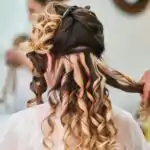
Hair may be tightly coiled, curly, wavy or straight, and strands may be fine or thick. No natural hair type is better than another.
Keep the scalp clean, use a clean wide-toothed comb where suitable, avoid very tight styles and do not share combs or clippers. Itching, sores or hair loss should be reported to an adult rather than hidden with harsh chemicals.
Teaching Methods
Discussion, Lecture, Explanation, Demonstration, Question and Answer, Group Work, Visual Aids
Instructional Procedures
To deliver this lesson, the teacher will adopt the following steps:
Step 1: Introduction
Time: 5 mins
Teaching Skill: Set Induction
Teacher’s Activity: Teacher greets pupils, shows a picture of different hairstyles, and asks: “What type of hair do you have?”
Pupils’ Activity: Pupils respond and share what they know about their hair
Learning Point: Pupils’ attention is gained and linked to topic
Step 2: Types of Hair
Time: 7 mins
Teaching Skill: Explanation
Teacher’s Activity: Teacher explains long and short hair using chart and real examples
Pupils’ Activity: Pupils observe and listen
Learning Point: Pupils learn the types of hair
Step 3: Tools for Hair Care
Time: 8 mins
Teaching Skill: Demonstration
Teacher’s Activity: Teacher shows comb, brush, scissors, and cream, explains their uses
Pupils’ Activity: Pupils watch and mention names of tools
Learning Point: Pupils identify tools for hair care
Step 4: Importance of Hair Care
Time: 7 mins
Teaching Skill: Discussion
Teacher’s Activity: Teacher asks pupils why they should keep hair neat and lists answers on board
Pupils’ Activity: Pupils discuss and respond
Learning Point: Pupils understand reasons for hair care
Step 5: Note Taking
Time: 5 mins
Teaching Skill: Explanation
Teacher’s Activity: Teacher dictates notes on types of hair, tools, and importance of hair care
Pupils’ Activity: Pupils write notes
Learning Point: Pupils have correct notes for study
Step 6: Evaluation
Time: 5 mins
Teaching Skill: Questioning
Teacher’s Activity: Teacher asks pupils to list types of hair and tools for hair care
Pupils’ Activity: Pupils answer questions
Learning Point: Pupils show understanding of lesson
Objective-aligned checks:
- Identify and describe the different types of hair.
- Demonstrate how to use simple hair care tools correctly.
Step 7: Closure/Conclusion
Time: 3 mins
Teaching Skill: Cognitive & Social Closure
Teacher’s Activity: Teacher summarizes lesson and reminds pupils to keep hair clean at home
Pupils’ Activity: Pupils listen and agree to practice
Learning Point: Pupils apply lesson to real life
Lesson Keywords
- Hair – The covering on the head
- Comb – A tool used to arrange hair
- Brush – A tool for smoothing hair
- Scissors – A tool for cutting hair
- Shampoo – A liquid used to wash hair
Lesson Evaluation
To evaluate the learning, the teacher asks pupils to:
- Mention the two types of hair.
- List three tools used for hair care.
- State two reasons why we care for our hair.
- Show how to use a comb correctly.
- Say what happens when we do not care for our hair.
Differentiation
Teacher uses pictures, real tools, and simple questions to help all pupils, including slow learners, understand the lesson.
Note for teachers using this lesson plan
Encourage pupils to practice proper hair care at home. Emphasize neatness and hygiene in personal appearance. Use real examples to make the lesson practical.
Community 1 comment Open discussion +