

Class: Primary Three
Term: Second Term
Subject: Pre-vocational Studies
Curriculum Theme: Home Economics
Previous Lesson:
Topic: Clothing
Content/Learning Area: defining clothing, Types of clothing, Importance of clothing, Cultural meaning of clothing
Time Allocation: 40 minutes
Performance Objectives
By the end of the lesson, pupils should be able to:
- Cognitive Domain:
1. Define the term “clothing”.
2. List five types of clothing.
3. Explain the importance of wearing appropriate clothing.
4. Discuss the cultural significance of certain types of clothing.
- Psychomotor Domain:
1. Identify different types of clothing from pictures or real-life examples.
- Affective Domain:
1. Appreciate the importance of wearing appropriate clothing.
2. Show respect for different cultural clothing styles.
- Social Domain:
1. Participate actively in class discussions about clothing.
2. Work cooperatively with peers in group activities.
Reference Materials
- 9 – Years Basic Education Curriculum
- Abuja Educational Resource Center Scheme of Work
- NAPPS National Unified Scheme of Work
- Relevant Textbooks
Instructional Materials
To deliver this lesson, the teacher will use the following materials:
- Pictures of different types of clothing
- Whiteboard or chart paper
- Markers
Rationale for the Lesson
Understanding clothing is crucial for personal hygiene, cultural awareness, and appropriate social behavior. This lesson lays the foundation for future lessons on fashion, textiles, and design.
Prerequisite/Previous Knowledge
Pupils are familiar with different types of clothing they wear daily.
Lesson Content
What is Clothing?
Clothing refers to items worn to protect, beautify, or provide modesty. They are garments and accessories designed to cover, decorate, or enhance the body.
Types of Clothing
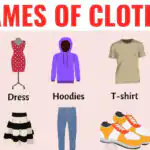
Clothing comes in various forms, each serving different purposes and occasions. These include:
- Shirts: Worn on the upper body,usually with sleeves and a collar. Examples include T-shirts, polo shirts, and button-down shirts.
- Trousers: Cover the lower body from waist to ankles. Examples include jeans, khakis, and sweatpants.
- Dresses: one-piece garments covering the upper and lower body, often worn by females. Examples include sundresses, cocktail dresses, and maxi dresses.
- Footwear: Shoes or boots worn on the feet. Examples include sneakers, sandals, and boots.
- Hats: Head coverings for protection or decoration. examples include baseball caps, beanies, and fedoras.
- Skirts: Worn on the lower body, usually by females, hanging from the waist or hips. Examples include mini skirts, midi skirts, and maxi skirts.
- Blouses: A loose-fitting upper garment, typically worn by women. Examples include silk blouses, cotton blouses, and chiffon blouses.
- Suits: A set of garments made from the same cloth, usually including a jacket and trousers or a skirt. Examples include business suits, pant suits, and skirt suits.
Importance of Clothing
Clothing serves several vital functions in our daily lives. These include:
- Protection: Protects from cold, heat, and rain.
- Modesty: Helps maintain privacy.
- Comfort: Makes us feel good.
- Self-expression: Allows us to express our personality.
- Cultural significance: Certain clothing can be linked to traditions or events.
- Hygiene: Helps to keep the body clean by preventing direct contact with dirt and germs.
- Occupational Safety: Provides protection in certain professions, such as uniforms for doctors, construction workers, and firefighters.
Teaching Methods
To deliver this lesson, the teacher will adopt the following methods: discussion, Question and answer, Visual aids.
Instructional Procedures
to deliver this lesson, the teacher will adopt the following steps:
Step 1: Introduction
Time: 5 minutes
Teaching Skill: Set Induction
Teacher’s Activity: Asks pupils what they are wearing and why.
Pupils’ Activity: Respond to the teacher’s questions.
Step 2: Explanation of Key Concepts
Time: 10 minutes
Teaching Skill: Explaining
Teacher’s Activity: Defines clothing and explains its purpose.
Pupils’ Activity: Listen attentively and ask clarifying questions.
Step 3: Exhibition/Guided Practice
Time: 10 minutes
Teaching Skill: Demonstrating
Teacher’s Activity: Shows pictures of different clothing types and discusses their features.
Pupils’ activity: Identify and name the different types of clothing.
Step 4: Independent Practice
Time: 5 minutes
Teaching Skill: Monitoring
Teacher’s activity: Asks pupils to list five types of clothing.
Pupils’ Activity: Write down their answers individually.
Step 5: Note-Taking
Time: 5 minutes
Teaching Skill: Guiding
Teacher’s Activity: Guides pupils in taking notes on key concepts.
pupils’ Activity: Write down critically meaningful points in their notebooks.
Step 6: Evaluation/Review
Time: 5 minutes
Teaching Skill: Questioning
Teacher’s activity: Asks review questions to assess understanding.
Pupils’ Activity: Answer the review questions.
Objective-aligned checks:
- Define the term “clothing”.
- List five types of clothing.
- Explain the importance of wearing appropriate clothing.
Step 7: Conclusion
Time: 2 minutes
Teaching Skill: Summarizing
Teacher’s Activity: Summarizes the key points about clothing and its importance.Pupils’ Activity: Listen attentively and ask questions for clarification.
Lesson Keywords
- Clothing – Items worn to cover and protect the body.
- Protection – Shielding the body from harm or weather.
- Modesty – Covering the body appropriately.
- Self-expression – Showing personality through clothing choices.
- Cultural significance – Clothing that represents traditions or events.
Lesson Evaluation
To evaluate the learning, the teacher asks pupils to:
- What is clothing?
- Name two types of formal clothing.
- Why is appropriate clothing important?
- Give examples of culturally important clothing.
- How can clothing show your personality?
Observation: Teacher will observe pupil participation in discussions,accuracy of answers,and engagement in activities.
Assignment/Homework
- Draw your favorite outfit and explain why you like it.
- List three types of clothing worn during a traditional nigerian festival.
- Write a short paragraph on how clothing protects us from the weather.
Differentiation
- for slower learners: Provide one-on-one assistance and simplified explanations.
- For advanced learners: Encourage them to research and present on different cultural clothing styles.
- For visual/auditory/kinesthetic learners: Use visual aids, discussions, and hands-on activities to cater to different learning styles.
Note for Teachers
Ensure to use real-life examples and visual aids to make the lesson engaging and relatable for the pupils. Encourage pupils to share their personal experiences and cultural backgrounds related to clothing.


Community Join the conversation Open discussion +