

Class: Primary Three
Term: Second Term
Subject: Pre-vocational Studies
Curriculum Theme: Home Economics
Previous Lesson: Personal Clothing, Clothes And Footwears
Topic: Care and Uses of Clothes
content/Learning Area: What is Clothes Care?, Ways of Caring for Clothes, Materials for clothes Care, Uses of Clothes
Time Allocation: (Time allocation needs to be added hear)
Performance Objectives
By the end of the lesson, pupils should be able to:
- Cognitive Domain:
- List two ways of caring for clothes.
- List two materials used for the care of clothes.
- List two uses of clothes.
- Affective Domain:
- Appreciate the importance of proper clothes care in daily life.
- Psychomotor Domain:
- Demonstrate proper folding techniques for clothes.
- Social Domain:
- cooperate with peers during group activities.
Reference Materials
- 9 – Years Basic Education Curriculum
- Abuja Educational Resource Center Scheme of Work
- NAPPS National Unified Scheme of Work
- Relevant Textbooks
Instructional Materials
To deliver this lesson, the teacher will use the following materials:
- Whiteboard or chart paper
- Markers or crayons
- Examples of different fabrics
- Pictures illustrating clothes care and uses
Rationale for the Lesson
This lesson teaches pupils essential life skills in caring for their clothes, promoting hygiene, and understanding the value of their belongings. These skills are crucial for personal obligation and contribute to a sense of order and self-respect.
Prerequisite/Previous Knowledge
the teacher will begin by asking pupils what they wore that day and how they keep their clothes clean. A brief discussion about the importance of clean clothes will follow, leading into the lesson’s topic.
Lesson Content
What is Clothes Care?
Clothes care involves keeping clothes clean, looking good, and lasting longer. this includes washing, drying, ironing, folding, and storing clothes properly.
Ways of Caring for Clothes
Caring for clothes involves several practices that help maintain their quality and appearance. These include:
The following are ways of caring for clothes:
- Regular washing removes dirt and bacteria.
- Proper folding prevents wrinkles.
- Airing clothes removes odors.
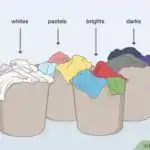
- Separating colors prevents colour bleeding.
- Avoiding overloading the washing machine protects fabrics.
- Promptly addressing stains prevents them from setting.
- Storing clothes in a cool, dry place prevents mildew.
Materials for Clothes Care
Clothes care requires specific materials to ensure effective cleaning and maintenance. These include:
The following are materials for clothes care:
- Soap and water are essential for washing.
- Hangers help clothes dry properly and prevent wrinkles.
- A pressing iron removes wrinkles.
- A clothesline or drying rack is used for airing clothes.
- Fabric softener can be used to make clothes feel softer and reduce static cling.
- Stain remover helps to remove stubborn stains from clothes.
- A washing machine is used for washing clothes.
Uses of Clothes
Clothes serve multiple purposes beyond just covering the body. These include:
They are:
- Clothes protect us from the weather.
- Clothes express our style and personality.
- Clothes help us stay clean and presentable.
- Clothes can reflect our culture.
- Clothes can provide comfort and warmth.
- Clothes can be used to make a fashion statement.
- Clothes can be used to express individuality.
Teaching Methods
To deliver this lesson, the teacher will adopt the following methods: Discussion, Question and Answer, Presentation, Group Activity
Instructional Procedures
To deliver this lesson, the teacher will adopt the following steps:
Step 1: Introduction
Time: 5 minutes
Teaching Skill: Questioning
Teacher’s Activity: Asks pupils about their clothes and how they care for them.
Pupils’ Activity: Respond to teacher’s questions and share their experiences.
Step 2: Description of Key Concepts
Time: 10 minutes
Teaching Skill: Explaining
Teacher’s Activity: Explains the meaning of clothes care and its importance.
Pupils’ Activity: Listen attentively and ask clarifying questions.
Step 3: Demonstration/Guided Practice
Time: 15 minutes
teaching Skill: Demonstrating
Teacher’s Activity: demonstrates proper folding and airing techniques.
pupils’ Activity: Observe the demonstration and practice folding clothes under guidance.
Step 4: Autonomous Practice
Time: 10 minutes
Teaching Skill: Monitoring
Teacher’s Activity: Supervises pupils as they independently fold and air clothes.
pupils’ Activity: Practice folding and airing clothes independently.
step 5: Note-Taking
Time: 5 minutes
Teaching Skill: Note-taking
Teacher’s Activity: Guides pupils in taking notes on key concepts.
Pupils’ Activity: Write down vital points from the lesson.
Step 6: Evaluation/Review
Time: 10 minutes
Teaching Skill: Questioning
Teacher’s Activity: Asks evaluation questions to assess understanding.
Pupils’ Activity: Answer the evaluation questions.
Objective-aligned checks:
- List two ways of caring for clothes.
- List two materials used for the care of clothes.
- List two uses of clothes.
Step 7: Conclusion
Time: 5 minutes
Teaching Skill: Summarizing
Teacher’s activity: Summarizes the lesson and assigns homework.
Pupils’ Activity: Listen attentively and note down homework.
Lesson Keywords
- Clothes Care – Keeping clothes clean and in good condition.
- Folding – Arranging clothes neatly to prevent wrinkles.
- Airing – Exposing clothes to fresh air to remove odors.
- Washing – Cleaning clothes with soap and water.
- Ironing – Using a heated iron to remove wrinkles from clothes.
Lesson Evaluation
To evaluate the learning, the teacher asks pupils to:
- Name two ways to care for your clothes.
- List two materials used for cleaning clothes.
- Explain two reasons why we wear clothes.
- Why is it critically significant to fold clothes neatly?
- How can we prevent our clothes from fading?
Assignment/Homework
- List five different types of clothing materials and how to care for each.
- Write a short paragraph explaining why it is important to keep clothes clean.
- Practice folding three different types of clothing items (e.g.,shirt,trousers,socks).
Differentiation
- For slower learners: Provide one-on-one assistance and simplified instructions.
- For advanced learners: Challenge with additional research tasks on different fabric types and care instructions.
- For visual/auditory/kinesthetic learners: Use visual aids, verbal explanations, and hands-on activities to cater to different learning styles.
Note for teachers
Encourage pupils to practice clothes care at home and share their experiences in the next lesson. Emphasize the importance of hygiene and personal presentation.



Community Join the conversation Open discussion +