

Class: Primary Three
Term: Third Term
Subject: Pre-vocational Studies
Curriculum theme: Home Economics
Previous Lesson: Cleaning And Arranging The Bedroom
Topic: Cleaning Bathroom and Toilet
Content/Learning Area: Identifying different types of toilets and bathrooms, Appreciating the importance of maintaining cleanliness in the toilet and bathroom, Discussing best practices for maintaining toilet and bathroom hygiene
Time Allocation: 40 minutes
Performance Objectives
By the end of the lesson, pupils should be able to:
- Cognitive Domain:
1. Identify different types of toilets and bathrooms.
2. Explain the importance of maintaining cleanliness in the toilet and bathroom.
3. List materials used for cleaning the toilet and bathroom.
- Affective Domain:
1. Appreciate the importance of maintaining a clean and hygienic bathroom.
2. Show willingness to participate in cleaning the bathroom.
- psychomotor Domain:
1. Demonstrate the proper way to clean a toilet and bathroom.
- Social Domain:
1. Discuss with peers the best practices for maintaining toilet and bathroom hygiene.
2. Cooperate with others during cleaning activities.
Reference Materials
- 9 – Years Basic Education curriculum
- Abuja educational Resource Center Scheme of Work
- NAPPS National unified Scheme of Work
- Relevant Textbooks
Instructional Materials
To deliver this lesson, the teacher will employ the help of the following materials:
- Whiteboard or chart
- Markers or pens
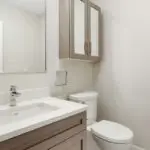
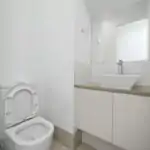
- Pictures of different types of toilets and bathrooms
- Cleaning materials (e.g., toilet brush, sponge, disinfectant)
Rationale for the Lesson
This lesson is crucial for teaching pupils about hygiene and the importance of maintaining a clean environment. Understanding bathroom and toilet cleaning is essential for personal health and well-being, contributing to a healthier lifestyle.
Prerequisite/Previous Knowledge
The teacher will start by asking pupils about their experiences with bathrooms and toilets, prompting a discussion about cleanliness and hygiene. A rapid review of the previous lesson on bedroom cleaning will be done.
lesson Content
Cleaning Bathroom and Toilet
Keeping a clean bathroom is very vital for our health. It stops germs from spreading, keeps our homes smelling nice, and makes the bathroom a better place to be.
What is Cleaning Bathroom and Toilet?
Cleaning the bathroom means removing dirt, grime, and germs. This includes the toilet, sink, shower or bath, floor, and walls.
Types of Toilets and Bathrooms
There are many kinds of toilets and bathrooms:
these include:
- Water cistern (WC) toilets: These use a tank to flush waste.
- Composting toilets: These break down waste naturally, often used where water is scarce.
- Squat toilets: You squat to use these.
- Bucket Toilets: simple toilets that use a bucket to collect waste.
- En-suite bathrooms: Bathrooms attached to bedrooms.
- Public restrooms: Bathrooms in public places.
- Portable Toilets: Toilets that can be easily moved from one place to another.
- Vacuum Toilets: Toilets that use vacuum suction to remove waste.
Reasons for Cleaning the Toilet and Bathroom
We clean bathrooms to:
The following are reasons to clean the toilet and bathroom:
- Prevent germs and diseases.
- Keep our families healthy.
- Avoid bad smells.
- Make the bathroom look nice.
- Make bathroom fixtures last longer.
- Prevent mold and mildew growth.
- Ensure a comfortable and pleasant environment.
- Maintain hygiene standards.
Materials for Cleaning the Toilet and bathroom
We use these things to clean:
Examples are:
- Toilet brush
- Disinfectant cleaner
- Scrubbing sponges
- Protective gloves
- Mops and buckets
- Toilet Bowl Cleaner
- Glass Cleaner
- Floor cleaner
teaching Methods
To deliver this lesson, the teacher will adopt the following methods: Discussion, Question and answer, Exhibition
Instructional Procedures
To deliver this lesson, the teacher will adopt the following steps:
step 1: Introduction
Time: 5 minutes
Teaching Skill: Questioning
Teacher’s Activity: Asks pupils about their experiences with bathrooms and toilets, reviews the previous lesson.
Pupils’ Activity: Respond to teacher’s questions, share their experiences.
Step 2: Explanation of Key concepts
Time: 10 minutes
teaching Skill: Explaining
Teacher’s Activity: Explains the importance of bathroom and toilet cleanliness, introduces different types of toilets and bathrooms.
Pupils’ Activity: Listen attentively, ask clarifying questions.
Step 3: Exhibition/Guided Practise
Time: 10 minutes
Teaching Skill: Demonstrating
Teacher’s Activity: Demonstrates proper cleaning techniques using the instructional materials.Pupils’ Activity: Observe the demonstration, ask questions.
Step 4: Self-reliant Practice
Time: 5 minutes
Teaching Skill: Monitoring
Teacher’s Activity: Supervises pupils as they practice cleaning techniques.
Pupils’ Activity: practice cleaning techniques under supervision.
Step 5: Note-Taking
Time: 5 minutes
Teaching Skill: Guiding
Teacher’s Activity: Guides pupils in taking notes on key concepts and cleaning procedures.
Pupils’ Activity: Take notes on key concepts and cleaning procedures.
Step 6: Evaluation/Review
Time: 5 minutes
Teaching Skill: questioning
teacher’s Activity: Asks evaluation questions to assess understanding.
Pupils’ activity: answer evaluation questions.
Objective-aligned checks:
- Identify different types of toilets and bathrooms.
- Explain the importance of maintaining cleanliness in the toilet and bathroom.
- List materials used for cleaning the toilet and bathroom.
Step 7: Conclusion
Time: 5 minutes
teaching Skill: Summarizing
teacher’s Activity: Summarizes the key points and assigns a small cleaning task for pupils to complete at home.
Pupils’ Activity: Listen to the summary and note the assignment.
Lesson Keywords
- Hygiene – Practices that maintain health and prevent the spread of diseases.
- Disinfectant – A chemical liquid that destroys bacteria.
- Germs – Tiny organisms that can cause disease.
- Cleanliness – The state of being clean and free from dirt.
- Sanitation – Maintaining hygienic conditions to promote health.
Lesson Evaluation
To evaluate the learning, the teacher asks pupils to:
- Name three types of toilets.
- Why is a clean bathroom critically important?
- What are two things we use to clean the toilet?
- How can we keep our bathroom clean?
- What are some good ways to keep the bathroom hygienic?
Assignment/homework
- List five materials used for cleaning the bathroom and toilet.
- describe the steps you would take to clean a toilet.
- Explain why it is important to wash your hands after using the toilet.
Differentiation
- For slower learners: The teacher will provide one-on-one assistance and use simpler language.
- For advanced learners: The teacher will encourage them to research different cleaning methods and products.
- For visual/auditory/kinesthetic learners: Use visual aids, demonstrations, and hands-on activities to cater to different learning styles.
Note for Teachers
Ensure that all cleaning materials are used safely and under supervision. Emphasize the importance of personal hygiene and handwashing after cleaning activities. Encourage pupils to apply what they have learned at home to maintain a clean and healthy environment.


Community Join the conversation Open discussion +