

Class: Primary Three
Term: Second Term
Subject: Pre-vocational Studies
Curriculum Theme: Home Economics
Previous Lesson: Care and Uses of Clothes
Topic: Clothes For Diffrent Occasions
Content/Learning Area: Identifying and listing clothes for different occasions, Appreciating the importance of appropriate clothing, Demonstrating the ability to match clothes with occasions, Participating in group discussions about clothes
Time Allocation: [Time Allocation to be inserted here]
Performance Objectives
By the end of the lesson, pupils should be able to:
- Cognitive Domain:
1. Identify and list two types of clothes suitable for different occasions.
2. Explain the importance of wearing appropriate clothes for various social activities.
- Psychomotor Domain:
1. Demonstrate the ability to match clothes with specific occasions.
- Affective Domain:
1. Appreciate the importance of wearing appropriate clothes for various social activities.
- Social Domain:
1. Participate in group discussions about clothes for different occasions.
reference Materials
- 9 – Years Basic Education Curriculum
- Abuja Educational resource Center Scheme of Work
- NAPPS National Unified Scheme of Work
- Relevant Textbooks
Instructional Materials
To deliver this lesson, the teacher will use the following materials:
- Pictures of different clothes and occasions
- Whiteboard or chart paper
- Markers
Rationale for the Lesson
understanding appropriate attire is crucial for social interaction and self-expression.This lesson builds a foundation for appropriate behaviour and cultural awareness, applicable throughout life.
Prerequisite/Previous Knowledge
The teacher will begin by asking pupils what they wore that day and why they chose those clothes. A brief discussion about the appropriateness of clothing for different situations will follow,leading into the lesson’s topic.
Lesson Content
Clothes For Different Occasions
Clothes for different occasions are the types of clothing we wear for different events or activities. We choose our clothes based on the event, time of day, and weather.
Types of Occasions
Occasions dictate the type of clothing we wear.
The following are:
- School: School uniforms promote focus and belonging.
- Parties: Parties (birthdays, festivals) often call for more formal or stylish clothes.
- Weddings: Weddings require formal attire, sometimes with specific dress codes.
- Casual Events: Casual events (park visits,errands) allow cozy clothing.
- Sports: Sports and exercise need comfortable, functional clothing.
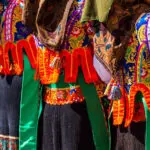
- Customary Events: Customary events (religious ceremonies, cultural events) often involve traditional clothing representing heritage.
- Religious Gatherings: Churches, mosques, and temples often have dress codes that require modest and respectful attire.
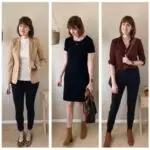
- Job Interviews: Professional attire is essential for job interviews to make a good first impression.
- Funerals: Funerals typically require dark, somber clothing to show respect for the deceased and their family.
Importance of Wearing Appropriate Clothes
Wearing appropriate clothes is critically important for various reasons.
These include:
- Showing Respect: Appropriate clothing shows respect for the occasion and people.
- Expressing Yourself: Clothes express personality and style.
- feeling Comfortable: Appropriate clothes improve comfort and confidence.
- Connecting with Culture: Traditional clothing connects you with your heritage.
- Maintaining Hygiene: Wearing clean and appropriate clothing helps maintain personal hygiene and prevents the spread of germs.
- Protecting from Weather: Appropriate clothing protects you from the elements, such as heat, cold, rain, and sun.
- Ensuring Safety: Certain activities require specific clothing for safety, such as helmets for biking or reflective vests for construction work.
Teaching Methods
To deliver this lesson, the teacher will adopt the following methods: Discussion, Question and Answer, Presentation.
Instructional Procedures
To deliver this lesson, the teacher will adopt the following steps:
Step 1: Introduction
Time: 5 minutes
Teaching Skill: Questioning
Teacher’s Activity: Asks pupils about their outfits and why they chose them.
Pupils’ Activity: Respond to the teacher’s questions.
Step 2: Clarification of Key Concepts
Time: 10 minutes
Teaching Skill: Explaining
Teacher’s Activity: Explains the concept of clothes for different occasions.Pupils’ Activity: Listen attentively and ask clarifying questions.
Step 3: Demonstration/Guided Practice
Time: 15 minutes
Teaching Skill: Demonstrating
Teacher’s Activity: Shows pictures of different occasions and asks pupils to suggest appropriate clothing.
Pupils’ Activity: Suggest clothing options and participate in discussions.
Step 4: Self-reliant Practice
Time: 10 minutes
Teaching Skill: Monitoring
Teacher’s Activity: Guides pupils in matching clothes to occasions individually.
Pupils’ Activity: Complete individual matching exercises.
Step 5: Note-Taking
Time: 5 minutes
teaching Skill: Note-taking
Teacher’s Activity: Guides pupils in taking notes on key concepts.
Pupils’ Activity: Take notes on key concepts.
Step 6: Evaluation/Review
Time: 10 minutes
Teaching Skill: Questioning
Teacher’s Activity: Asks evaluation questions.
Pupils’ Activity: Answer evaluation questions.
Objective-aligned checks:
- Identify and list two types of clothes suitable for different occasions.
- Explain the importance of wearing appropriate clothes for various social activities.
- Demonstrate the ability to match clothes with specific occasions.
Step 7: Conclusion
Time: 5 minutes
Teaching Skill: Summarizing
Teacher’s Activity: Summarizes the lesson.
pupils’ activity: Listen attentively.
Lesson keywords
- Occasion – A particular event or time.
- Attire – Clothes, especially of a particular or formal type.
- appropriate – Suitable or proper in the circumstances.
- Traditional – Relating to customs or beliefs passed down from generation to generation.
- Respect – A feeling of deep admiration for someone or something elicited by their abilities, qualities, or achievements.
lesson Evaluation
To evaluate the learning,the teacher asks pupils to:
- Why is it important to wear suitable clothes for different events?
- Name two outfits suitable for a birthday party.
- Describe your school day outfit.
- What are some traditional clothes worn in your community?
- How does wearing the right clothes boost your confidence?
Assignment/Homework
- Draw pictures of yourself in outfits suitable for different occasions.
- List three different occasions and describe what clothes would be appropriate for each.
- Ask your parents or guardians about traditional clothes worn in your community and write a short paragraph about it.
differentiation
- For slower learners: Provide one-on-one assistance and simplified explanations.
- For advanced learners: Research and present examples of traditional clothing from different cultures.
- For visual/auditory/kinesthetic learners: Use visual aids, discussions, and hands-on activities to cater to different learning styles.
Note for Teachers
Ensure to use real-life examples and visual aids to make the lesson engaging and relatable for the pupils. Encourage pupils to share their own experiences and cultural backgrounds related to clothing.

Community Join the conversation Open discussion +