

Class: Primary 5
Term: 3rd Term
Subject: Cultural And Creative Arts
Curriculum Theme:
Previous Lesson:
Topic: Meaning Of Nigeria Traditional Architecture And Basic Techniques In Dance
content/Learning Area: Meaning Of Nigeria Traditional Architecture And Basic Techniques In Dance
Time Allocation: 40 minutes
Performance Objectives
by the end of the lesson, pupils should be able to:
- Cognitive Domain: Explain the meaning of Nigerian traditional architecture and list basic techniques in dance.
- Affective Domain: Appreciate the beauty of Nigerian culture through its architecture and dance styles.
- Psychomotor Domain: Demonstrate at least two basic techniques used in traditional dance.
- social Domain: Work together in groups to perform simple dance routines.
Reference Materials
The following resources were used in planning this lesson:
- 9 Years Basic Education Curriculum
- Abuja Educational Resource Center Scheme of Work
- NAPPS National Unified Scheme of Work
- Online Details from: wikipedia – Dance
- Relevant textbooks
Instructional Materials
To deliver this lesson, the teacher will use the following:
Pictures and videos of traditional Nigerian buildings, cultural dance costumes, audio recordings of traditional music, charts showing dance steps, whiteboard and markers.
Rationale for the Lesson
This lesson helps pupils understand and value their cultural identity through architecture and dance, promoting creativity and cultural pride.
Prerequisite/previous Knowledge
Pupils have seen traditional buildings and have watched cultural dances during school or community events.
Lesson Content
Meaning Of Nigeria Traditional Architecture And Basic Techniques In Dance
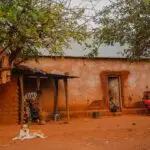
Traditional architecture in Nigeria refers to the way houses and buildings were made in the past using local materials and cultural designs.
The following are examples of Nigerian traditional architecture:
- Hausa round mud houses
- Igbo thatched roof buildings
- Yoruba courtyard houses
- Tiv mosaic decorated walls
- Kanuri rectangular huts
- Fulani conical huts
- Edo mud brick houses
Basic Techniques in Dance
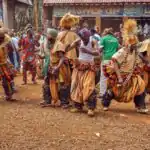
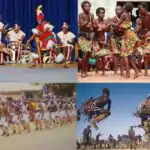
Dance techniques are the basic body movements used when dancing.The following are basic techniques in traditional dance:
- Body bending
- Foot stamping
- Hand clapping
- Waist twisting
- Head nodding
- Shoulder shaking
- Rhythmic walking
- Arm waving
- Hip movements
Traditional Architecture and Dance as Cultural Evidence
Traditional architecture reflects local materials, climate, skills and social use. Examples may include earth walls, courtyards, carved posts, thatch or decorated surfaces, but forms vary across Nigerian communities. Dance also communicates identity through rhythm, gesture, costume and occasion. Learners should name the community and source of an example rather than calling one style ‘the Nigerian tradition’.
Teaching Methods
To deliver this lesson, the teacher will adopt the following methods: Discussion, lecture, storytelling, explanation, visual aids, group work, exhibition
Instructional Procedures
To deliver this lesson, the teacher will adopt the following steps:
Step 1: Introduction
Time: 5 mins
Teaching Skill: set Induction
Teacher’s activity: Teacher tells a short story of a child visiting a village and seeing local dances.
Pupils’ Activity: Pupils listen attentively and respond to questions.
Step 2: Meaning of Traditional Architecture
Time: 10 mins
Teaching Skill: Explanation
Teacher’s Activity: Teacher explains the meaning using pictures and names of buildings in Nigeria.
Pupils’ Activity: Pupils observe and identify traditional buildings.
Step 3: Techniques in dance
Time: 10 mins
Teaching Skill: Demonstration
Teacher’s Activity: Teacher demonstrates dance steps and plays traditional music.
Pupils’ Activity: Pupils imitate and practice the steps shown.
Step 4: Group Dance Practice
Time: 5 mins
Teaching Skill: Group Work
Teacher’s Activity: Teacher divides class into groups and guides them to perform simple routines.
Pupils’ Activity: Pupils dance in groups using learned techniques.
Step 5: Note-taking
Time: 3 mins
Teaching skill: Writing
Teacher’s Activity: Teacher guides pupils to write down the class note in their exercise books.Pupils’ Activity: Pupils copy the note correctly.
Step 6: Evaluation/Review
Time: 5 mins
Teaching Skill: Questioning
Teacher’s Activity: Teacher asks oral questions and observes dance demonstration by pupils.
Pupils’ Activity: Pupils answer questions and demonstrate dance steps.
Objective-aligned checks:
- Explain the meaning of Nigerian traditional architecture and list basic techniques in dance.
- Demonstrate at least two basic techniques used in traditional dance.
- Work together in groups to perform simple dance routines.
Step 7: Conclusion
Time: 2 mins
Teaching Skill: instructional, Social
Teacher’s Activity: Teacher gives praise for participation and reminds pupils of cultural importance.
Pupils’ Activity: Pupils reflect on what they have learnt.
Lesson Keywords
- Architecture – How buildings are made
- Traditional – Old ways of doing things
- Dance – Moving the body to music
- Technique – A way of doing something
- Culture – Beliefs and ways of life of a people
Lesson Evaluation
To evaluate the learning, the teacher asks pupils to:
- What is traditional architecture?
- Mention two types of traditional buildings in Nigeria.
- List three basic dance techniques.
- Why is traditional dance critically important in Nigeria?
- Demonstrate two traditional dance movements.
Assignment/Homework
- Draw a picture of a traditional Nigerian building.
- Research and write about a traditional dance from your state.
- Practice the dance steps learned in class and be ready to perform next lesson.
Differentiation
- For slower learners: Pair slow learners with faster ones for group dance practice.
- For advanced learners: Encourage advanced learners to create their own dance routine incorporating more complex steps.
- For visual/auditory/kinesthetic learners: Visual and physical demonstrations will support all learners’ understanding.
Note for Teachers
Ensure pupils participate actively in dance practice and correct any wrong movements gently. Reinforce respect for all cultures.
Community Join the conversation Open discussion +