

Class: Primary 5
Term: 3rd Term
Subject: Cultural And Creative Arts
Curriculum Theme:
Previous Lesson: Meaning Of Nigeria Traditional Architecture And Basic Techniques In Dance
Topic: Forms Of Architecture In Nigeria And Clapping In Rythm
Content/Learning Area: Forms Of Architecture In Nigeria And Clapping In Rhythm
Time Allocation: 40 minutes
Performance Objectives
By the end of the lesson, pupils should be able to:
- Cognitive Domain: Identify and explain the types of conventional architecture in Nigeria and describe the concept of clapping in rhythm.
- Affective Domain: Show appreciation for cultural architecture and musical expression through rhythm.
- Psychomotor Domain: Demonstrate clapping in rhythm correctly with the class.
- Social Domain: Cooperate in group clapping activities and respect others’ participation.
Reference Materials
The following resources were used in planning this lesson:
- 9 Years Basic education Curriculum
- Abuja Educational Resource Centre Scheme of work
- NAPPS National Unified Scheme of Work
- Online information from: wikipedia – Mud House
- Relevant Textbooks
Instructional Materials
To deliver this lesson, the teacher will use the following: Charts showing different Nigerian traditional houses, flashcards with architectural terms, audio recordings of rhythmic clapping, drum or local percussion instrument, pictures or drawings of mud houses, bamboo houses, and grass houses, whiteboard and marker.
Rationale for the Lesson
Understanding local architecture and rhythmic clapping helps pupils connect with their culture and express creativity.
Prerequisite/Previous Knowledge
Pupils have seen different types of houses and have clapped along to songs during school activities.
Lesson Content
Forms Of Architecture In Nigeria And clapping In Rhythm
Traditional Architecture in Nigeria
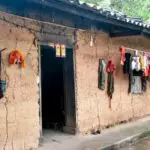
Traditional architecture means the way people in different parts of Nigeria build their homes using local materials.
The following are types of traditional architecture in Nigeria:
- Mud house
- Grass house
- Bamboo house
- Thatched roof hut
- Round clay hut
- Swish homes
- Adobe buildings
Clapping In Rhythm
Clapping in rhythm means clapping your hands in a steady and repeated way that matches a beat or song.The following are examples of clapping in rhythm:
- Clapping along with a drumbeat
- Clapping in a repeated pattern
- Clapping during a song or dance
- Clapping in a group to the same beat
- Clapping to a song’s tempo
- Clapping during a performance
- Clapping to a metronome
Teaching Methods
To deliver this lesson, the teacher will adopt the following methods: Discussion, lecture, storytelling, description, visual aids, group work, demonstration
instructional Procedures
To deliver this lesson, the teacher will adopt the following steps:
Step 1: Introduction
Time: 5 mins
Teaching Skill: Set Induction
Teacher’s Activity: The teacher plays a local song and asks pupils to clap along, then shows images of traditional houses.
Pupils’ Activity: pupils clap and observe the pictures.
Step 2: Traditional Architecture
Time: 10 mins
Teaching Skill: Explanation
Teacher’s Activity: The teacher explains traditional architecture and shows pictures of different houses built in Nigeria.
Pupils’ Activity: Pupils observe and identify the types of houses shown.
Step 3: Types of Architecture
Time: 5 mins
Teaching Skill: Discussion
Teacher’s Activity: The teacher discusses each type of house and what materials they are made of.
Pupils’ Activity: Pupils listen,ask questions,and mention familiar house types.
step 4: Introduction to Rhythm
time: 5 mins
Teaching Skill: Demonstration
Teacher’s Activity: The teacher explains rhythm, gives examples, and claps a steady beat.
Pupils’ Activity: Pupils listen and try to repeat the clapping pattern.
Step 5: Group Clapping practice
Time: 5 mins
Teaching Skill: Group Work
Teacher’s Activity: The teacher leads the class in a clapping game, guiding them through different patterns.
Pupils’ Activity: Pupils follow and clap in rhythm with the teacher.
Step 6: Note-Taking
Time: 3 mins
Teaching Skill: Writing
Teacher’s Activity: The teacher dictates the main points of the lesson on the board.Pupils’ Activity: Pupils copy the notes neatly into their notebooks.
Step 7: Evaluation/Review
Time: 4 mins
Teaching Skill: Oral Questioning
Teacher’s Activity: The teacher asks pupils to name types of houses and demonstrate rhythm clapping.
Pupils’ Activity: Pupils respond to questions and clap as instructed.
Objective-aligned checks:
- Identify and explain the types of conventional architecture in Nigeria and describe the concept of clapping in rhythm.
- Demonstrate clapping in rhythm correctly with the class.
Step 8: Conclusion
Time: 3 mins
Teaching Skill: Instructional,Social
Teacher’s Activity: The teacher reviews the key points and praises pupils for their participation.
Pupils’ Activity: Pupils listen, reflect, and prepare to end the class.
Lesson Keywords
- Architecture – the design and building of structures
- Rhythm – steady repeated beat or pattern in music
- Mud House – a house made from earth or clay
- Clapping – making sound by hitting hands together
- Bamboo – a plant used for building in some Nigerian houses
Lesson Evaluation
To evaluate the learning, the teacher asks pupils to:
- List two types of traditional houses in Nigeria
- mention materials used to build mud and bamboo houses
- Explain what clapping in rhythm means
- Clap in rhythm to a beat demonstrated by the teacher
- Identify the type of roof used in traditional Nigerian huts
Assignment/Homework
- draw a picture of a traditional Nigerian house and label the materials used.
- Practice clapping in different rhythms and record yourself.
- Research and write a short paragraph about a specific type of traditional architecture in your local area.
Differentiation
- For slower learners: Provide visual aids and one-on-one rhythm practice.
- For advanced learners: Give more complex clapping patterns and research tasks.
- For visual/auditory/kinesthetic learners: Use pictures,sounds,and movement activities.
Note for Teachers
Use real pictures and sounds where possible.Let pupils try clapping in different groups and rhythms to boost interaction.


Community Join the conversation Open discussion +