

Class: Primary 5
Term: 3rd Term
Subject: Cultural And Creative Arts
Curriculum Theme:
Previous Lesson: Materials For Building Traditional Houses And Warm Up Exercise For Dance
Topic: Purpose Of Local Architecture and Setting Poem To sofa
Content/Learning Area: Purpose Of Local Architecture And Setting Poem To Sofa
Time Allocation: 40 minutes
Performance objectives
By the end of the lesson, pupils should be able to:
- Cognitive Domain: State at least three purposes of local architecture.
- Affective Domain: Show appreciation for local architectural designs in their environment.
- Psychomotor Domain: Demonstrate how to set a simple poem to solfa notation.
- Social domain: Participate cooperatively in group recitations of poem with solfa notation.
reference Materials
The following resources were used in planning this lesson:
- 9 Years Basic Education Curriculum
- Abuja Educational Resource Center Scheme of work
- NAPPS National Unified Scheme of Work
- Online Information from: wikipedia – Vernacular architecture
- Relevant Textbooks
Instructional Materials
To deliver this lesson, the teacher will use the following: Chart showing different types of local buildings, Pictures of conventional houses, Cardboard with poem lyrics, Musical chart showing solfa syllables, Flashcards with d, r, m, f, s, l, t, d.
Rationale for the Lesson
This lesson helps pupils understand the cultural value of local buildings and how music can be expressed through solfa, promoting cultural identity and creativity.
Prerequisite/Previous Knowledge
Pupils have seen local buildings in their environment and have previously recited nursery rhymes and simple songs.
Lesson Content
Purpose Of Local Architecture And Setting Poem To Sofa
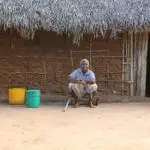
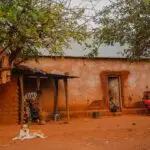
Local architecture refers to traditional buildings made by people in a specific place using local materials. Setting poem to solfa means turning the words of a poem into musical notes.
Purpose Of local Architecture
Local architecture helps people live in ways that match their weather, culture and lifestyle. These buildings are usually made from local things like mud, wood or straw. the following are the purposes of local architecture:
- Provides shelter for families
- Reflects the culture of the people
- Protects people from bad weather
- Brings people together in a community
- Uses materials that are easy to find
- Saves money by using local resources
- Shows the identity of a tribe or area
- Provides natural cooling in hot climates
- Offers protection from wild animals
- Preserves traditional building skills
Setting Poem To Solfa
Poems can be turned into musical sounds using solfa syllables. Solfa syllables are d, r, m, f, s, l, t, d. these include:
- Reading the poem aloud
- Breaking it into short lines
- Matching each word or syllable with a solfa sound
- Singing the solfa tune together
examples are:
Twinkle, Twinkle, Little Star – d d | r r | m m | r
How I wonder what you are – f f | m m | r r | d
Teaching Methods
To deliver this lesson, the teacher will adopt the following methods: Discussion, Lecture, Explanation, Exhibition, Group Work, Visual Aids
Instructional Procedures
To deliver this lesson, the teacher will adopt the following steps:
Step 1: Introduction
Time: 5 mins
Teaching Skill: Set induction
TeacherS Activity: Tells a story about her grandfather’s traditional house and shows a picture chart.
Pupils’ Activity: Pupils listen attentively and observe the chart.
Step 2: Meaning of Local Architecture
Time: 6 mins
teaching Skill: Explanation
Teacher’s Activity: Explains local architecture with examples and displays pictures of traditional homes.
Pupils’ Activity: Pupils listen and give examples of buildings in their community.
Step 3: Purposes of Local Architecture
Time: 6 mins
Teaching Skill: Discussion
Teacher’s Activity: Leads discussion on reasons people build traditional houses.
Pupils’ Activity: Pupils suggest and list reasons.
Step 4: Setting Poem to Solfa
Time: 8 mins
Teaching Skill: Demonstration
Teacher’s Activity: demonstrates how to turn lines of a poem into solfa syllables.
Pupils’ Activity: Pupils practice by repeating after the teacher.
Step 5: Group Practice
Time: 6 mins
Teaching Skill: Group Work
Teacher’s Activity: Splits class into groups to practice another short poem using solfa.
Pupils’ Activity: Pupils work in groups to recite poem with solfa.
Step 6: Note-Taking
Time: 3 mins
Teaching Skill: Writing
Teacher’s Activity: Writes key points and examples on the board for pupils to copy.
Pupils’ Activity: Pupils copy notes into their books.
Step 7: Evaluation/Review
Time: 4 mins
Teaching Skill: Assessment
Teacher’s Activity: Asks pupils questions from the lesson and observes their group recitation.
Pupils’ Activity: Pupils answer questions and demonstrate poem to solfa activity.
Objective-aligned checks:
- State at least three purposes of local architecture.
- Demonstrate how to set a simple poem to solfa notation.
Step 8: Conclusion
Time: 2 mins
teaching Skill: Instructional, Cognitive
Teacher’s Activity: Reviews the lesson and encourages pupils to notice local buildings in their area.
Pupils’ Activity: Pupils respond and express appreciation for the lesson.
Lesson Keywords
- Architecture – the design of buildings
- Solfa – musical sounds like d, r, m, f
- Poem – a piece of writing with rhythm or rhyme
- Shelter – a place to live or stay safe
- cultural – related to the way of life of a people
- Vernacular – local or traditional building style
Lesson Evaluation
To evaluate the learning, the teacher asks pupils to:
- Mention three purposes of local architecture
- Say what solfa syllables are
- Recite one line of a poem with solfa notation
- Identify materials used in local buildings
- Work in a group to recite a new poem with solfa notes
Assignment/Homework
- Find a picture of a local building in your community.
- Write a short poem about your favorite thing in your home.
- Try to find the solfa notes for a simple song you know.
Differentiation
- For slower learners: Provide simpler poems and solfa examples.
- For advanced learners: Encourage them to create their own poem and solfa notation.
- For visual/auditory/kinesthetic learners: Use visual aids, songs, and movement activities to reinforce learning.
Note for Teachers
Encourage pupils to bring photos or draw local buildings they know.Use simple poems with strong rhythm for easier solfa conversion.


Community Join the conversation Open discussion +