

Class: Primary Two
Term: Second Term
Subject: Cultural & Creative Arts
Curriculum theme:
Previous Lesson:
Topic: Traditional Songs/Folk Songs
Content/Learning Area: Identifying three uses and functions of nigerian traditional music, Appreciating the cultural importance of traditional songs for joy and relaxation, Participating in group activities involving traditional songs
Time Allocation: 40 minutes
Performance Objectives
By the end of the lesson, pupils should be able to:
- Cognitive Domain:
1. Identify three uses and functions of Nigerian traditional music.
2. explain the importance of traditional songs in preserving cultural heritage.
- Psychomotor Domain:
1. Participate actively in group singing of traditional songs.
2. Demonstrate an understanding of rythm and melody in traditional songs.
- Affective Domain:
1. show appreciation for the cultural meaning of traditional songs.
2. Express enjoyment and enthusiasm while participating in musical activities.
- Social Domain:
1.Cooperate with peers during group singing activities.
2. Share their knowledge and understanding of traditional songs with others.
Reference Materials
- 9 – years Basic Education Curriculum
- Abuja educational Resource Center Scheme of Work
- NAPPS National unified Scheme of work
- Relevant Textbooks
Instructional Materials
To deliver this lesson,the teacher will use the following materials:
- Whiteboard or chart paper
- Markers or crayons
- Audio recordings of traditional songs
- Musical instruments (optional)
Rationale for the Lesson
Understanding traditional songs helps pupils connect with their cultural heritage and appreciate the diverse musical traditions of Nigeria. This lesson fosters creativity and teamwork.
Prerequisite/Previous Knowledge
Pupils have likely heard traditional songs at home or in their community.
Lesson Content
Traditional Songs/Folk Songs
Traditional folk songs are songs passed down through generations. They reflect a community’s culture, history, and values, forming a vital part of its heritage, often linked to specific events or rituals.
What are Traditional Songs?
Traditional songs are songs passed down through generations, often sung in the community’s native language, reflecting its history, beliefs, and values.
Uses and Functions of Nigerian Traditional Music
Traditional music serves various purposes within Nigerian communities.These include:
The following are uses and functions of Nigerian traditional music:
- Cultural Preservation: Traditional music preserves and transmits cultural heritage, including language, customs, and values.
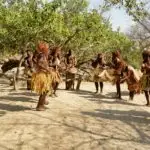
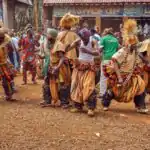
- Entertainment and Joy: It provides entertainment during celebrations, festivals, and social gatherings.
- Relaxation and Meditation: Some songs offer relaxation and a calming atmosphere.
- Rituals and Ceremonies: Traditional music plays a key role in rituals like weddings and funerals.
- Storytelling and Education: Songs tell stories,convey moral lessons,and educate about history.
- Social Commentary: Traditional music can be used to express opinions on social issues and promote change.
- Occupational Support: Some traditional songs are sung to accompany work activities, such as farming or fishing.
Teaching Methods
To deliver this lesson, the teacher will adopt the following methods: Discussion, group work, Singing, Question and answer
Instructional Procedures
To deliver this lesson, the teacher will adopt the following steps:
Step 1: Introduction
Time: 5 minutes
Teaching Skill: Set Induction
teacher’s Activity: Asks pupils if they know any traditional songs and encourages sharing.
Pupils’ Activity: Share known traditional songs and participate in the discussion.
Step 2: Clarification of Key Concepts
Time: 10 minutes
Teaching Skill: Explaining
Teacher’s Activity: Explains what traditional songs are and their significance.
Pupils’ Activity: Listen attentively and ask clarifying questions.
Step 3: Demonstration/Guided practice
Time: 10 minutes
Teaching Skill: Guiding
Teacher’s Activity: Plays audio recordings of traditional songs and guides pupils in singing along.
Pupils’ Activity: Sing along to the songs and try to identify the rhythm and melody.
Step 4: Autonomous Practice
Time: 5 minutes
Teaching Skill: Facilitating
Teacher’s Activity: Divides pupils into groups and assigns them to practice singing a chosen song.
Pupils’ Activity: Practice singing in groups, supporting each other.
Step 5: Note-Taking
time: 5 minutes
teaching Skill: Summarizing
Teacher’s Activity: Summarizes key points and encourages pupils to take notes.
Pupils’ Activity: Take notes on the key points of the lesson.
Step 6: Evaluation/Review
Time: 5 minutes
Teaching Skill: Assessing
Teacher’s Activity: Asks evaluation questions to assess understanding.
Pupils’ Activity: Answer the evaluation questions.
Objective-aligned checks:
- Identify three uses and functions of Nigerian traditional music.
- explain the importance of traditional songs in preserving cultural heritage.
- Demonstrate an understanding of rythm and melody in traditional songs.
Step 7: conclusion
Time: 2 minutes
Teaching Skill: Summarizing
Teacher’s Activity: Summarizes the key points, praises pupils’ participation, and assigns homework.
Pupils’ Activity: Listen to the summary and note the homework assignment.
Lesson Keywords
- Traditional Songs – Songs passed down through generations, reflecting a community’s culture.
- Cultural Heritage – The traditions, customs, and artifacts of a cultural group.
- Rhythm – The pattern of sounds and silences in music.
- Melody – A sequence of musical notes that form a recognizable tune.
- folk songs – Songs originating among the common people of a nation or region and passed down orally.
Lesson Evaluation
To evaluate the learning, the teacher asks pupils to:
- Why are traditional songs vital for joy and relaxation?
- Name one occasion where traditional songs are commonly used.
- Can you think of a traditional song you know and tell us what it’s about?
- What are some of the ways traditional songs help preserve a community’s culture?
- How do traditional songs make you feel?
Assignment/Homework
- Learn another traditional song.
- Ask your parents or grandparents about their favorite traditional songs and write down the lyrics.
Differentiation
- For slower learners: Provide one-on-one assistance and simplified instructions.
- For advanced learners: Encourage them to research and present additional traditional songs.
- For visual/auditory/kinesthetic learners: use visual aids, audio recordings, and hands-on activities to cater to different learning styles.
Note for Teachers
Encourage pupils to share their own experiences with traditional songs to make the lesson more engaging and relevant. Be sensitive to cultural differences and ensure that all pupils feel comfortable participating.
Community Join the conversation Open discussion +